Bee hoon, chicken curry and Lee Kuan Yew: This tiny eatery serves a slice of Singapore in Seoul


Down a narrow side street near Ewha Women’s University in the historic district of Seodaemun-gu, Seoul, squeezed in among multiple F&B establishments, is a little slice of Singapore — complete with a mini tribute to Lee Kuan Yew.
Tucked in a corner of Huat Ah!, a hole-in-the-wall eatery that opened in December 2024 and seats around 10, is a copy of the late Lee’s One Man’s View of the World (2013), alongside knitted toys and vertical photo strips of owner Anges Ang and her friends.
A Lee Kuan Yew commemorative coin, a calligraphy scroll signed by Prime Minister Lawrence Wong, and a photo of the Merlion at Marina Bay also adorn the walls. In addition, a small poster explains the meaning of the store’s name in both Korean and English.
“It is looking after my territory for me,” said Ms Ang wryly when asked why she had placed Lee’s book in her store. When Stomp suggested that it was akin to a little shrine, she replied: “Yeah, our Ah Kong what.”
Comfort food, Singapore-style in Seoul
While there is a myriad of Singaporean cuisine to be found in the South Korean capital, from the ever-popular chicken rice and kaya toast to a Jumbo Seafood and even a mini Lau Pa Sat, Ms Ang’s may be the only one serving up bee hoon, chicken curry, and lor bak or braised pork.
The generously portioned sets, which come with stir-fried vegetables, an egg and a light chicken broth, range from 11,500 to 13,500 won (about $10 to $12). Roti prata and chicken rice are also available, with the former currently offered by pre-order only. This is comparable with the cost of an average set lunch in Seoul.
When Stomp visited Huat Ah! in April, Chris Ku, a 31-year-old Korean who grew up in Singapore, was eating there for the first time. The teacher had travelled some 45 minutes to the eatery after discovering it on Instagram.
“I think I will be a frequent guest,” said Mr Ku, who spoke with a very familiar Singaporean accent.
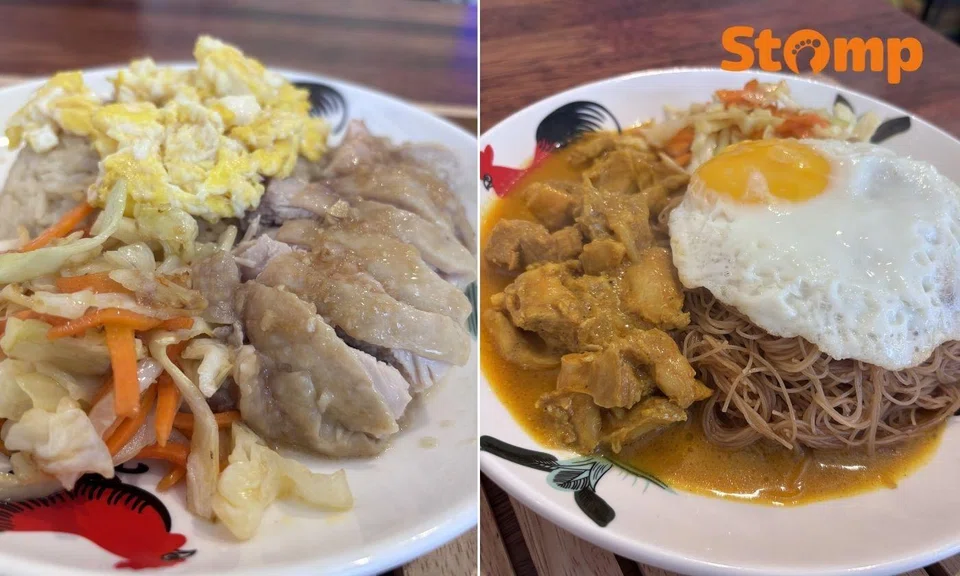
He described the bee hoon as less oily but “authentic” and “better than the Singaporean version”, and was also impressed by Ms Ang’s homemade sambal chilli, which provided a real kick.
“The curry is not that spicy, but (when you eat the meat with the sambal and) dip in the curry, I think that’s like a perfect balance,” he added.
Reviewers on Naver, South Korea’s equivalent of Google Maps, appear to agree with Mr Ku. The more than 200 reviews are overwhelmingly positive, with one writing: “It tastes like home.”
More than a decade in Seoul
When Ms Ang first came to Seoul 12 years ago, she never imagined she would stay this long — much less open a restaurant on her own and sink almost $100,000 into the business.
“I just wanted to come here for a year to learn the language, have a feel of living out of Singapore, learn new things,” she recounted.



But over time, the hospitality industry veteran got used to the different rhythms of life, and experiencing the four seasons. Crucially, the debilitating acne she once suffered back home — necessitating the use of heavy makeup to cover the spots — also cleared up. “Now, I don’t even put makeup on.”
Ms Ang previously operated an escape room business with a partner in Seoul for about five years. Then from 2020 to 2021, during an enforced return to Singapore during the pandemic, she took the opportunity to learn cooking from her Hainanese grandfather, a former chef.
It took a couple more years of planning and discussions with property agents and interior designers before she finally took the plunge and opened Huat Ah!.
The eatery is entirely a one-woman operation, with Ms Ang cooking everything from scratch, serving, and cleaning up.
“Just try loh,” she said simply when asked why she launched her solo business venture. She chose to showcase bee hoon as her signature dish as no one else in Seoul was selling it.
“Bee hoon is a comfort food in Singapore. When people travel to Singapore, they only know chicken rice, laksa, chili crab. My favorite is bee hoon, so I thought (it would be) a good opportunity to introduce our comfort food to Koreans.”
Appropriately, her nearest rival is a restaurant across the road that serves Korean comfort food such as kimbap and ramyeon.
‘Never try, never know’
Business has been encouraging.
“So far, so good,” said Ms Ang of her 17-month-old restaurant. She estimated that some 85 per cent of her customers are Korean, many of them undergraduates from the nearby women’s campus, in an area with a surfeit of students of all ages.
“To them, bee hoon is something very new, but it also suits their taste. Once they try, they actually love it.”
Chicken rice will soon be a daily offering due to its popularity, and Huat Ah! has also found many regulars among the scores of Singaporeans in Seoul.
Nevertheless, Ms Ang acknowledged that there has been a dip in customers of late “because of the economy, the war and everything that’s happening”.
“It’s scary, being a female (business owner) and alone. I’m also not really perfect in my Korean,” she said. “But you never try, you never know.”

Explore more on these topics
See something interesting? Contribute your story to us.
