At 17, he cleans homes filled with blood, death and decomposition — and says ghosts are ‘quite normal’

Think Singapore is just a nation of people working typical corporate jobs? Introducing Stomp’s new original series, Don’t Try This At Work, where we spotlight individuals with risky, exciting, unconventional and even downright terrifying jobs.
From cleaning up after death to exploring kink, the series offers a behind-the-scenes look at occupations most people would never dare to try — and the people who do them every single day.
As a child, Darwisy Rahman was into martial arts.
Today, at just 17, he suits up in full personal protective equipment (PPE) before stepping into homes where he confronts death, decomposition and gore on a weekly basis.
At 15, he made the decision to join his parents in their work as trauma cleaners. Their family-run business, DDQ Services — founded by his father, Rahman Razali, in 2012 — is one of the few companies in Singapore that specialises in cleaning biohazards and scenes involving murder, suicide and unattended deaths.
What first piqued his interest were the stories his parents and older sister would share over dinner. But one account, in particular, lingered, sparking a curiosity he couldn’t shake.
His father had told him about an elderly man who had already laid out his Hari Raya clothes and decorated his home, only to suddenly pass away before the celebrations began.
“I felt really sad and bad for him,” Darwisy told Stomp.
Seeing how hard his family worked also made him wonder what they went through on the job. Over time, he realised trauma cleaning was not just physically demanding, but came with heavy emotional responsibility too.
Now a Secondary Five student, Darwisy joins his parents and their team about once or twice a week on weekends, and more frequently during school holidays.
He said he has learnt to balance his studies alongside the work, noting that his parents are “very strict” about ensuring school comes first.
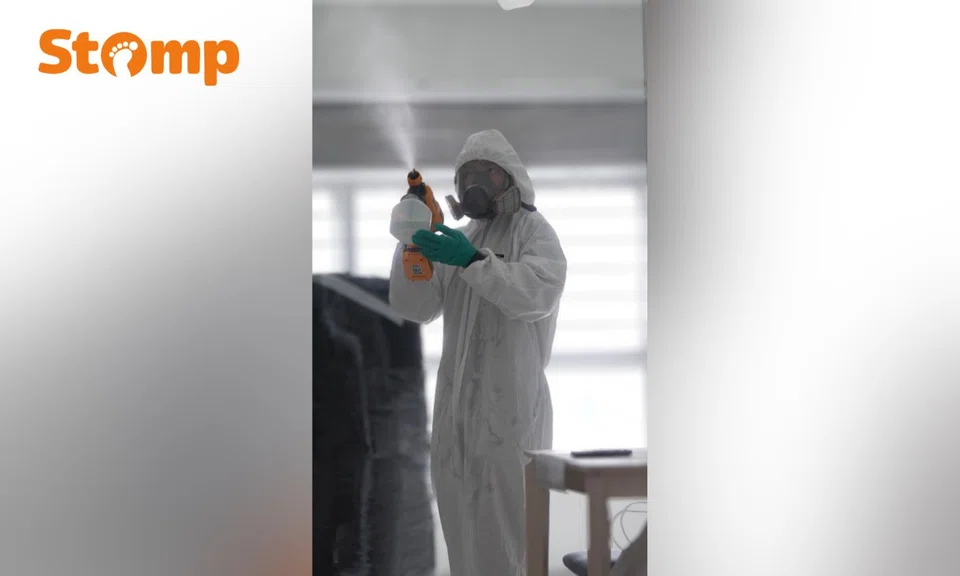
Trauma cleaning became something he felt ‘connected’ to
When he first started out, Darwisy admitted he felt embarrassed about the job and kept it to himself, worried that others might find it strange.
“Some friends made jokes, but my close friends respect it,” he said, adding that he has since accepted that not everyone will understand the nature of his work, and “that’s okay”.
Today, he is even considering taking over the family business one day.
“It wasn’t something I planned, it just slowly became something I felt connected to,” he said.
After two years on the job and working closely with his team of around eight staff, Darwisy said trauma cleaning has developed his social, leadership and problem-solving skills.
As he became more experienced, he occasionally took on leadership roles during jobs, guiding newer workers and reminding them to stay calm during overwhelming scenes in certain homes.
Still, getting used to the work took time.
His first cleaning job alongside his father was a “good experience”, but nerve-wracking. While it was a relatively straightforward session with few challenges, he admitted he is afraid of insects such as lizards and cockroaches.
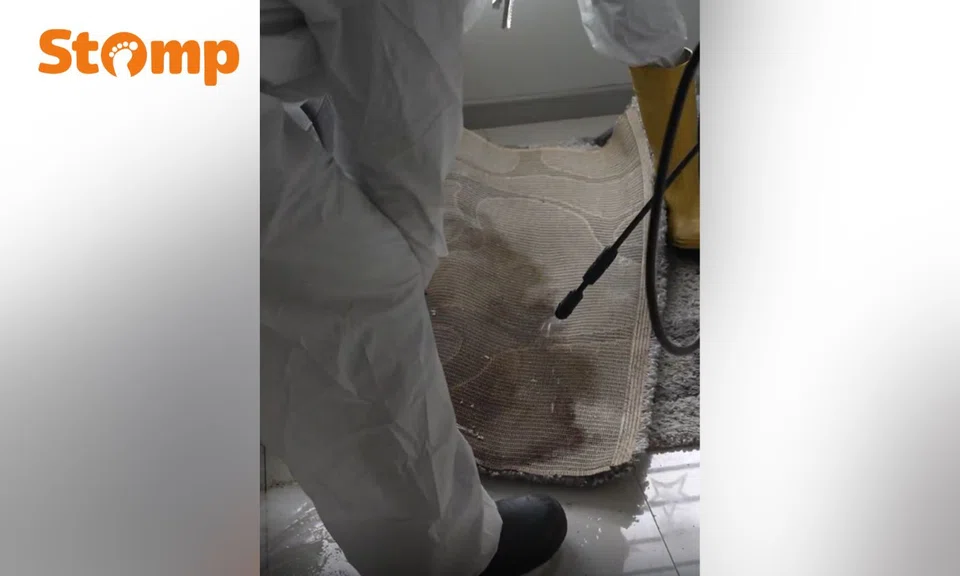
Darwisy said it took months for him to train himself to remain calm and think clearly during difficult cleaning jobs.
Hoarder homes, he said, are often among the toughest, recalling scenes where there was even “trash juice mixed with blood”.
The smells — which he likened to rotting cheese — combined with Singapore’s heat require a “strong mind” to handle while staying composed, he said.
One such hoarder unit took them three hours to clean, making it the longest and most physically demanding job he has handled so far. Most clean-ups take around an hour, with the shortest lasting only around 15 minutes.
One case that remains deeply ingrained in his memory involved a suicide.
Based on the state of the home and the handwritten notes about her daily life taped around the house — the handwriting faded and deteriorating — he said he could sense the emotional struggles the deceased had gone through in her final moments.
“That stayed with me,” he said quietly, adding that he nearly broke down while recounting the incident to his father later that night.
Talking to his parents helps him the most
Given the amount of trauma he has been exposed to at such a young age, Darwisy said his parents are highly protective of him.
Initially, he was only allowed to handle simpler tasks, such as carrying items and preparing materials. But as he grew older and gained experience, he was gradually entrusted with more responsibilities.
He added that his father always checks in on him after every job.
While he occasionally confides in his siblings or friends, Darwisy said talking to his parents helps him the most. “They understand, so I don’t have to keep it inside.”
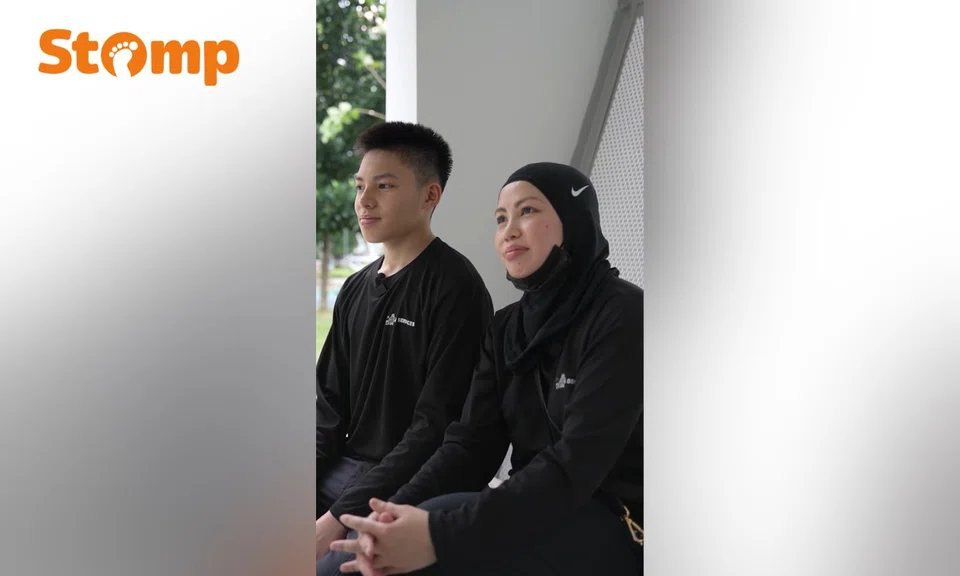
Speaking to Stomp, Darwisy’s mother, who wished to be known only as Sarina, said when her son first expressed interest in trauma cleaning, her immediate reaction was fear.
“He was still so young,” said the 41-year-old operations lead. She had hesitated as she did not want him to be exposed to such scenes too early in life. Yet, at the same time, she could sense in him a growing sense of responsibility and understanding.
She and her husband, who have six children aged between five and 22, eventually allowed their eldest son to join the cleaning sessions, starting him on simpler tasks while closely observing how he coped physically and emotionally to difficult situations.



Over time, she said they realised he was mentally stronger than many peers his age, and just as “capable” as his 22-year-old sister, who is also part of the family business.
“I wouldn’t say any parent ever feels their child is fully ready for this kind of work,” Sarina said.
She added that she often worries about the emotional toll it may take on him. Trauma cleaning, she said, is not just physically exhausting — certain scenes and smells can linger in the mind long after the job is done.
The scenes and smells, she noted, are among the most challenging parts of the job. The team often has to deal with decomposition, bodily fluids, blood, faeces, urine, hair, skin and nails.
“We don’t pretend everything is okay,” she said. “It’s not about avoiding difficult experiences, but about how you process them.”
Speaking to Stomp, a Punggol resident living beside one of the units cleaned by Darwisy and Sarina said it had been nearly a month since his neighbour died.
The man, who declined to be named, described the smell as unbearable.
“I cannot take it. The wind blows, it’s very smelly,” he said.
He added that he had complained to the town council, Housing and Development Board and his Member of Parliament, but claimed he received no response.
Sarina said it is not uncommon for the homes of the deceased to be left untouched for weeks, months, or even years, often due to family dynamics or complications.
Supernatural encounters ‘quite normal’
Given the nature of their work, both mother and son said supernatural encounters are “quite normal”, but added that they are usually minor disturbances.
Recounting the creepiest incident he has experienced so far, Darwisy said he suddenly felt as though something was watching him from behind during a cleaning session. He turned around but saw nothing, he said.
“Then suddenly, something touched my back,” he said. “I looked back again, and I saw this shadow coming towards me.”
Instead of panicking, he simply moved away and continued working.
Another incident Sarina recalled, involved a murder case that she said affected the entire team.
The unit had supposedly been vacant for years and had no electricity or water supply. Yet while the team was cleaning, the air-conditioner suddenly switched on by itself.
Later, during final checks around the house, Sarina said she spotted a shadowy female figure in one of the rooms. After alerting her husband, she said she suddenly heard a hissing sound while the others described hearing growling noises.
“We were quite lucky the ‘thing’ didn’t follow us back home,” she said.
In another session, boxes were seen thrown from the living room on their own.
Despite such experiences, Darwisy said he feels more annoyed than frightened when such incidents occur.
“We just want to get the job done,” he said, referring to the hot and stuffy PPE suits they wear for hours.
Sarina added that the team often performs Islamic recitations before and after entering homes when they sense something unusual.
At times, the team even verbal acknowledge their presence before starting work, saying things like: “We’re here to clean, we hope you understand.”
After such encounters, the team would usually go for a meal together before heading home — partly to decompress and avoid carrying the experience back with them.
‘This work has shaped how I see life’
When asked whether he had ever doubted his path or considered quitting, Darwisy immediately said “no”. He said he continues trauma cleaning because the work feels meaningful.
“We’re helping families at their lowest point,” he said.
Having been in the business for several years, Sarina said seeing death up close makes it “very real”, and changed her outlook on life.
“It has made me appreciate the small moments and simple things like having a meal together, hearing my children laugh, and even just sitting in silence with my family,” she reflected.
Darwisy said he is unsure whether trauma cleaning will remain his long-term career, as he still hopes to continue studying and explore other paths.
“But this work has shaped how I see life, and I won’t forget that,” he said, adding that his parents have taught him the importance of being content.
More importantly, Darwisy said trauma cleaning has taught him to treasure relationships with family and friends more deeply and to build stronger relationships.
“Because I never know what will happen to me tomorrow.”

Explore more on these topics
See something interesting? Contribute your story to us.
