Woman’s WhatsApp gets ‘taken over’, sends messages to friends asking for $1k loan — but she can’t see them

A woman’s WhatsApp account was allegedly hijacked after she opened a file sent by a familiar contact, resulting in more than 10 people receiving messages asking for a $1,000 loan.
Ms Chen (transliterated), 50, said she received a WhatsApp message from a supplier she knew at about 11am on Oct 27. The sender asked the accounts assistant to open a compressed file.
As the two had worked together before and often exchanged accounting documents, Chen did not suspect anything amiss and clicked on the file.
However, she could not see any content after opening it.
‘Didn’t think much of it’
“I was using my company computer. After clicking on it, I couldn’t see anything. I told the other party about it, but didn’t think much more of it,” she told Shin Min Daily News.
Chen recalled that strange text and programmes suddenly appeared on her computer screen, with processes seemingly running on their own. She did not realise at the time that her computer might have been compromised.
It was only that evening that she became suspicious after her boss asked whether she had borrowed money from anyone.
Chen then discovered that someone had apparently taken over her WhatsApp account and sent messages to her friends, relatives and colleagues, asking each of them to lend $1,000.
About 10 people received the messages, including her colleagues, relatives and friends. Even her younger sister, who was in Malaysia, received one.
Chen’s sister found it strange that she was asking to borrow Singapore dollars.

Chen could still access WhatsApp on her phone, but messages she sent were not reaching their intended recipients. She suspected that someone had tampered with her account through her work-issued computer and was deleting her outgoing messages.
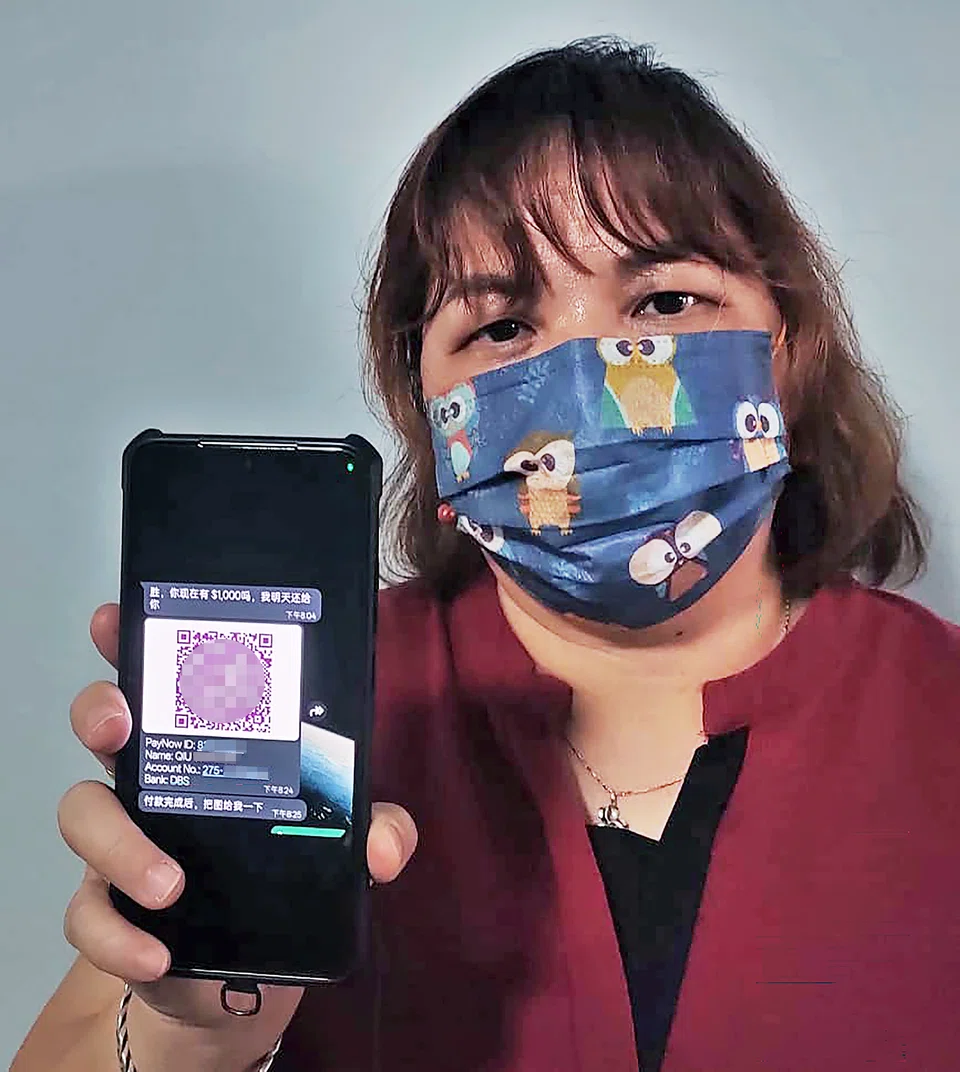
With her son’s help, she logged out of the WhatsApp account on the company computer and regained contact with her friends and relatives through her phone.
She made a police report that night and backed up the data on her computer before reformatting it the following day.
The police confirmed that a report had been lodged.
Chen said the incident had left her shaken. Moving forward, she will be more cautious about calls and messages, and no longer readily click on links or files, even if they came from someone she knew.
Colleague transfers money without question
One colleague who received the message believed it was genuine and transferred $1,000 to Chen.
Fortunately, he sent the money to Chen’s PayNow mobile number, so no one suffered any financial loss.
“He was too quick. The scammers hadn’t even had time to send him a QR code before he transferred the money,” she said.
Chen said that the colleague had transferred the money without even checking with her first.
“Put nicely, he was very loyal. Put bluntly, he was silly. I’m really relieved that nobody lost any money,” she joked.

Explore more on these topics
See something interesting? Contribute your story to us.
