Toa Payoh hawker vows to keep $1 nasi lemak despite rising costs

For almost four decades, a hawker stall in Toa Payoh has continued selling its signature nasi lemak for just $1 — despite rising rents and increasing ingredient costs.
Second-generation owner Mohamed Hajirin Mohd Tahir has remained committed to preserving the $1 price at Kedai Makan Muhajirin in Lorong 7 Toa Payoh, a tradition started by his parents.
“It’s not just a business decision,” he told Berita Minggu.
“The main motivation comes from my parents. While helping them at the stall, they taught me a lot about life and opened my eyes to the needs of the community in Toa Payoh.
“That’s where my passion to continue this effort came from.”
The stall sells between 500 and 600 packets of its $1 nasi lemak every day, except on Mondays when it is closed.
Each $1 serving comes with rice, egg, cucumber, sambal, ikan bilis and peanuts. For an additional $1.50, customers can add fried chicken to their meal.
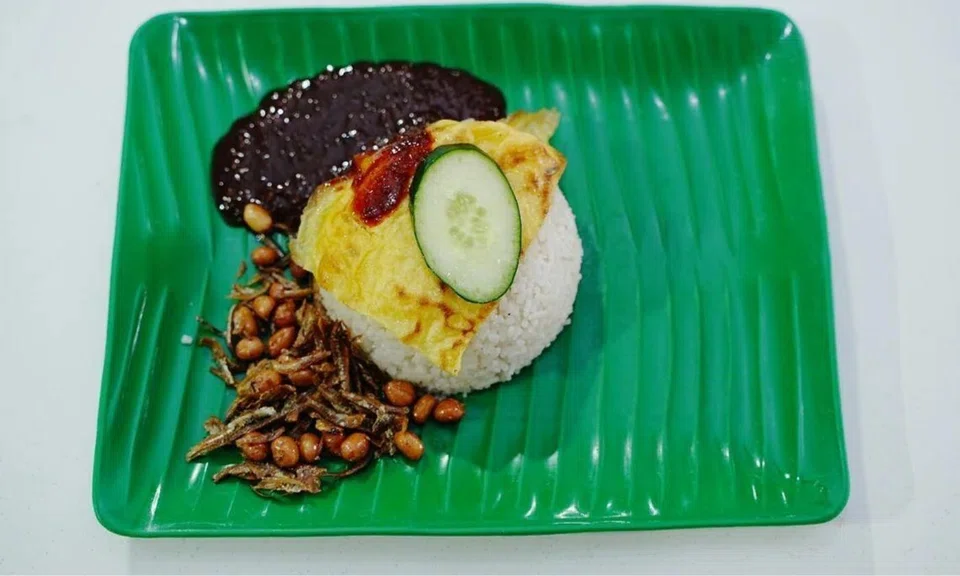
His wife and co-owner, Norazlina Md Yusoff, said customers from all over Singapore also place bulk orders to distribute the nasi lemak to seniors and those in need.
“It has become our trademark, and we want to continue this legacy while giving back to the community,” she said.
“As long as we can, we want to keep the nasi lemak at $1.”
Other dishes increased to offset rising costs
While the $1 nasi lemak remains untouched, the stall has increased prices for other menu items. Dishes such as mee siam, mee rebus and lontong now cost $4, up 50 cents from last year.
Mohamed Hajirin said the stall’s monthly rent has risen from $3,500 in 2024 to $4,000, while the cost of staple ingredients such as rice, flour and dried goods have increased by between 20 and 30 per cent.



The price of yellowstripe scad, one of the stall’s key ingredients, has also risen from about $4 per kilogram to around $7 per kilogram.
As a result, nasi lemak served with yellowstripe scad now costs $1.20.
Norazlina said that whenever costs increase, the couple chooses to adjust the prices of other dishes instead of raising the price of the basic $1 nasi lemak.
“If rent, ingredient prices or other costs increase, we don’t touch the $1 nasi lemak,” she said.
“Instead, we look at other dishes whose prices can be adjusted. That’s how we manage rising costs.”
The couple also regularly compares suppliers’ prices in a bid to keep costs down, although they remain loyal to existing suppliers if the price difference is minimal.
Mohamed Hajirin added that if the stall is forced to increase the price of the $1 nasi lemak, he would first consult his regular customers.
“I’ll ask if they can accept a price increase. If they’re okay with it, only then will we make a decision,” he said.
Still, he acknowledged there is a limit to how long the stall can absorb rising costs.
“If the rent reaches around $5,000 a month, it’ll be very difficult for us to continue selling it at the current price,” he said.
“Maybe then, the $1 nasi lemak will no longer exist.”

Explore more on these topics
See something interesting? Contribute your story to us.
