S’porean woman ‘uncomfortable’ with Somerset cafe that lists items in Chinese: ‘Is this China or is it S’pore?’


A Singaporean woman has spoken out after purportedly patronising a cafe in Somerset that lists dishes in Chinese, prompting her to ask: “Is this China or is it Singapore?”
TikTok user @andsoweeat shared her thoughts in an Aug 4 post, recounting that she felt she had been “disrespected in (her) own country”.
She adds that she was “starting to get a feeling” of how minority groups in Singapore feel.
The user recalls visiting a cafe in Somerset, a place she describes as a “touristy area”.
Despite expecting the menu to be in English, she says there were “so many Chinese words”.
Beside her was also a group she described as Chinese nationals, who were “discussing how to ‘work around’ the SG immigration and tax system”.
“The longer I sat there, the more uncomfortable I became,” she says, explaining that many items on the menu were listed in Chinese.
The TikTok user said that the experience reminded her of social media videos in which other Singaporeans described a loss of national identity in Singapore.
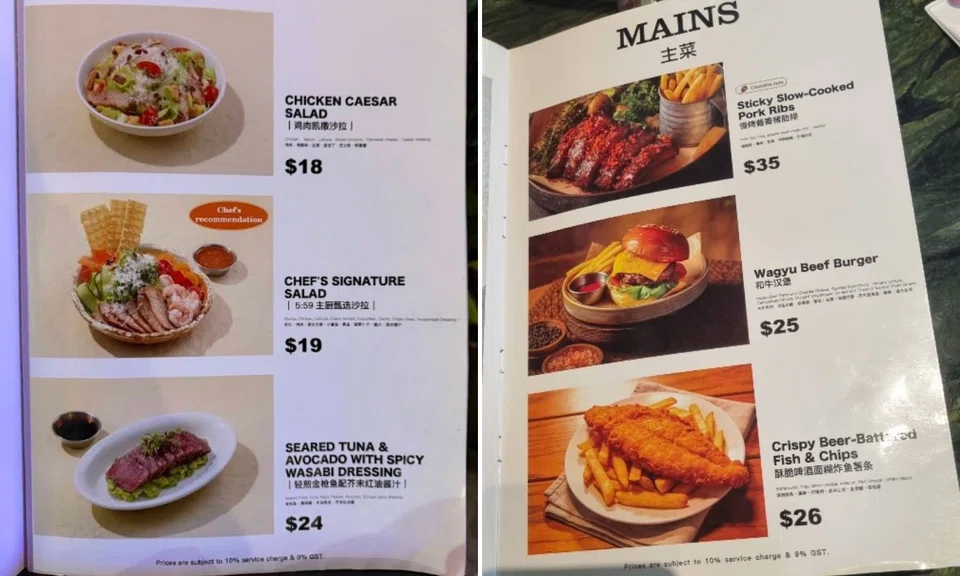
According to checks by Stomp, the China-based cafe's Foodpanda menu listed items in both English and Chinese. Photos of the cafe’s menu posted by customers in Google reviews also showed menu items in both languages.
‘I feel so awkward and strange’: TikToker raises concerns regarding Chinese-themed banners
While walking along Orchard Road, she also noticed multiple Chinese-themed banners and advertisements.
“Is this China or is it Singapore?” she asks, stressing that she has “nothing against China”.
She clarifies that she is “not saying this with a superiority complex” and is instead acknowledging the influences of other ethnicities on the Singaporean identity.
The TikToker also highlights the importance of racial harmony and mutual respect as well as how Singaporeans speak English or Singlish as a common language.



“So to see these Chinese-themed banners shouting at me, I don’t like it,” she adds. “I feel so uncomfortable as a Chinese. I feel so awkward and strange.”
She points out that international brands like Japanese supermarket Don Don Donki also include English translations in their promotional materials.
The location of the banners was another important factor, as she explains that advertisements in certain languages were to be expected in specific cultural enclaves.
However, she argues that Orchard Road is meant to be a shared public space for people regardless of ethnicity, urging authorities to address the issue.
Stomp has reached out to andsoweeat and the cafe for more information.
Language of advertisement outside of scope: ASAS
In response to Stomp’s queries, chairman of Advertising Standards Authority of Singapore (ASAS) Bryan Tan said that it has not received feedback on menus being published only in Chinese.
According to the Singapore Code of Advertising Practice (SCAP), advertisements should be legal, decent, honest, and truthful, Tan explained. The language that an advertisement is published in is outside this scope, and businesses are free to decide how best to communicate with their target audience.
However, the content of an advertisement has to comply with the SCAP.
Tan added that consumers can give feedback to businesses directly and patronise businesses whose practices they agree with.
Concerns over Chinese-only menus have recently sparked debate, with one netizen slamming a Jurong East eatery for offering a menu that apparently lacked English translations.
In June, another customer at a VivoCity restaurant received a Chinese-only receipt after being spoken to in Mandarin.
However, several Chinese restaurants have reportedly been adding English translations to their menus.

Explore more on these topics
See something interesting? Contribute your story to us.
