From Roblox to gore sites: How easily can youths stumble onto violent content online? Here’s what we found in under an hour

Numerous photos and videos of torture popped up on my screen after I clicked on a dubious-looking link — a severed finger here, a string of intestines there, amid sprawling comment sections filled with macabre comebacks and flippant jokes.
This was the kind of graphic material found on dark web sites that could send users down a rabbit hole of content glorifying violence, potentially desensitising them to violence and making some more vulnerable to extremist narratives.
And it did not take long to find.
With the number of youths dealt with under the Internal Security Act (ISA) rising sharply — almost quadrupling in the past five years — self-radicalisation among young people has become a growing concern.
According to the Internal Security Department’s (ISD’s) Singapore Terrorism Threat Assessment Report 2026, six of the eight Singaporeans detained or issued Restriction Orders (RO) under the ISA since July 2025 were youths below the age of 21.
So just how easily can young people stumble across violent or extremist material online — and what is being done to protect them?
Mass shooting simulations on Roblox
As I sat down for an afternoon of dark web sleuthing, I didn’t expect to find multiple graphic content sites within the first hour.
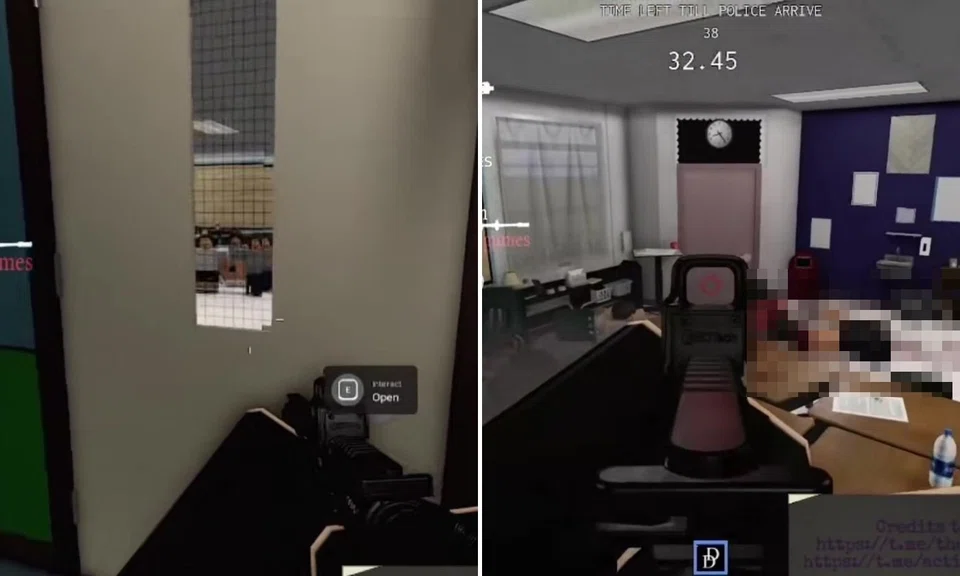
I began with a quick search on TikTok for videos of mass shooting simulations on Roblox, an online platform where users can create and play games in virtual environments.
Videos of first-person shooter games quickly filled the screen, with many modelled after real-life mass shooting incidents and advertising themselves as among the “most realistic” shooting games available.
Players would run around the custom maps armed with a weapon of their choice, finding helpless victims and killing them off indiscriminately.
Graphic content sites with little barrier to entry
Under TikTok’s suggested searches on one of the videos was a related search linked to an online community centred on violent crime, which led me down another rabbit hole.
The community is an internet subculture centred on an intense fascination with violent criminals and mass killers.
Within it is also a fascination with gore and an obsession with documenting violent and graphic content online.
Many of these sites, I learnt, started as Reddit forums and were subsequently banned — but this did little to deter users, who now operate independent sites with little to no barrier to entry.
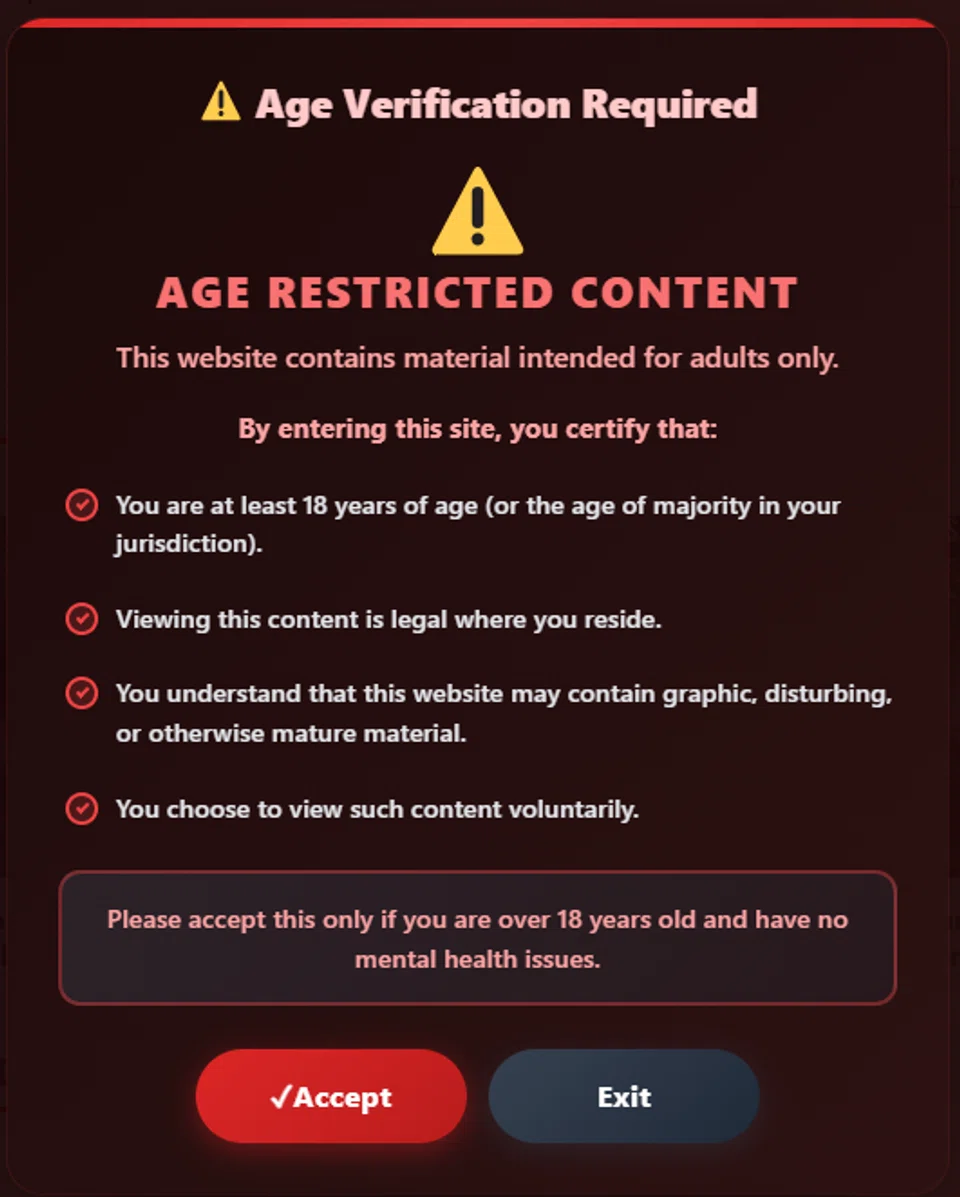
On one such website, which detailed graphic images of women’s deaths, a warning message popped up informing users that the website contained “material intended for adults only”.
All I had to click was click “Accept”, and I was in.
The sites were unabashed and unfiltered in a grotesque, almost voyeuristic way. They sensationalised violence, sharing and reposting images of bloodied bodies with an insensitivity and carelessness towards human life.
Another site was eerily modelled after the Reddit platform, where users could share graphic content, comment on it, and even “upvote” posts they found the most satisfying.
“Man hanged himself after seeing video of ex-girlfriend doing strip dance for group of men at rodeo,” one post read.
Another detailed: “Schizophrenic man stabs himself in the skull.”
Posts included reports of suicides, killings and severe self-harm.
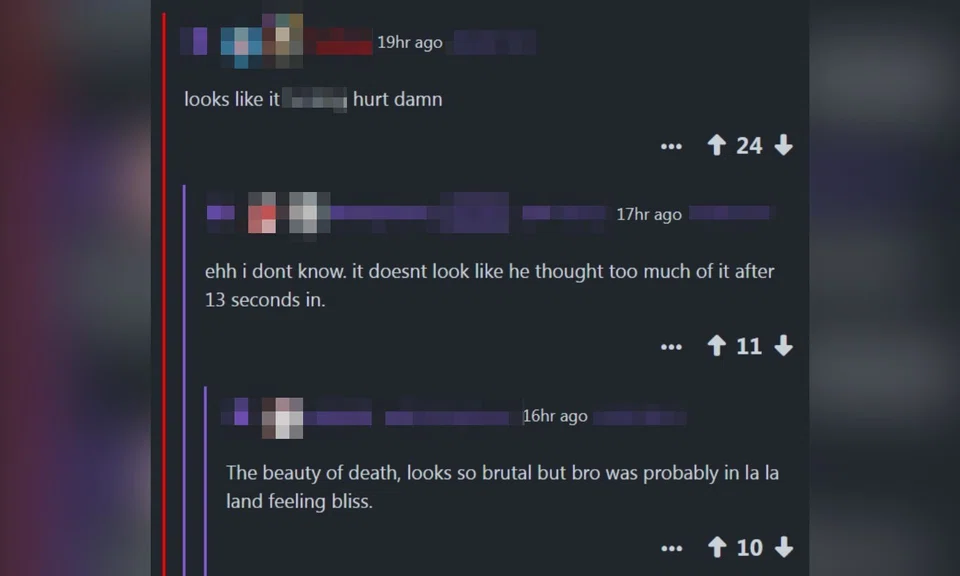
New posts were added within the hour.
One website even promoted a link that would lead users to “a growing collection of shocking, disturbing, and technically impressive AI-generated gore images”.
When fascination with gore overlaps with extremist thinking
Most posts originated from real-life incidents — one of which appeared to illustrate how fascination with graphic violence can overlap with fantasies of mass violence.


The entry, which was listed under the website’s “Famous Videos”, featured the livestreamed suicide of an American teenager.
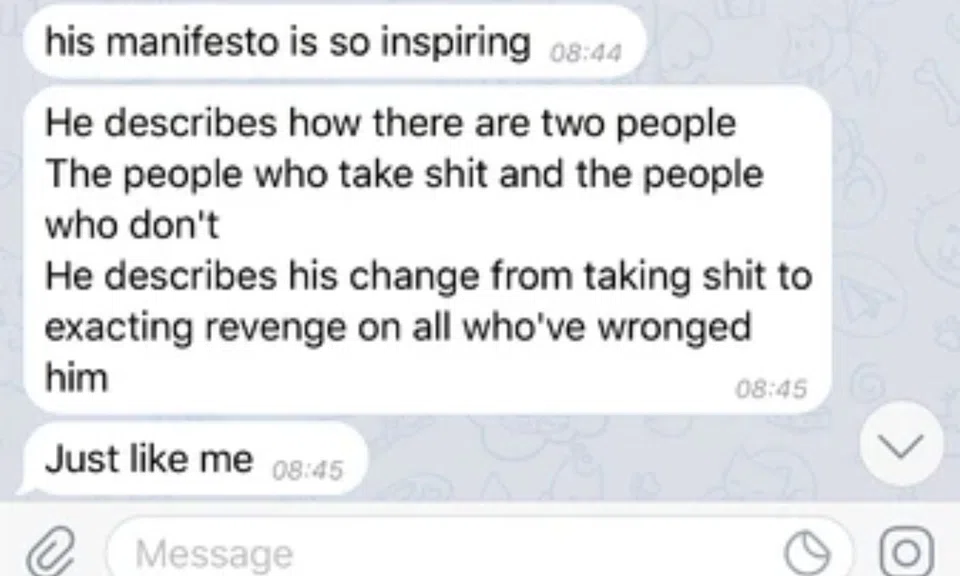
Alongside it were screenshots of a fan-fiction he had written, in which he had fantasised about carrying out mass killings at his school.
The suicide was captured in horrifying detail, complete with timestamps and links to multiple reposts of the livestream.
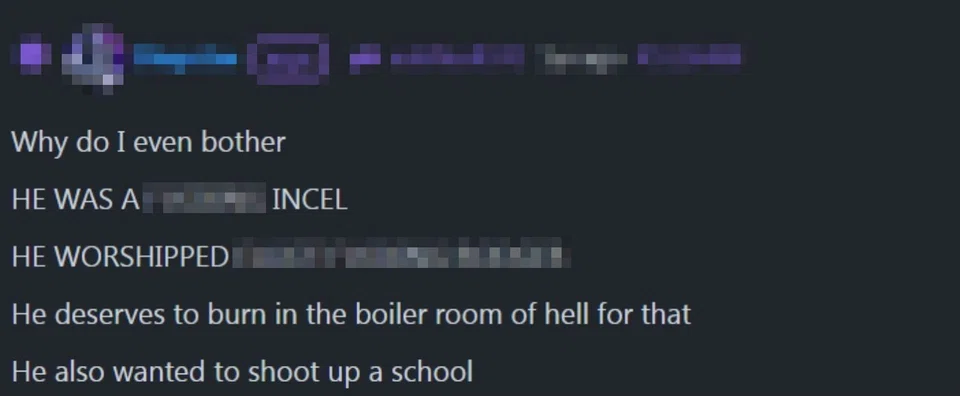
The disturbing ease with which such content could be accessed raised a larger question: what happens when repeated exposure to graphic violence begins to normalise it?
Viewing graphic content can normalise youths’ attitudes toward violence: ISD
Speaking to Stomp, Benjamin Mok, an associate research fellow in counter-terrorist trends and analysis at Nanyang Technological University, said young people often first encounter extremist material by accident.
This could be through algorithm-recommended videos, a stranger’s social media post, or material shared in a large group chat.
While initial messages may appear as humour, memes, coded slogans, or historical references, repetition and approval can make hostility seem normal and give a young person a sense of belonging.
In response to Stomp’s queries, an ISD spokesperson said some self-radicalised youths were part of online communities, such as chat groups and channels, which served as ideological echo chambers and led to further exposure to extremist narratives.
As for how graphic content can contribute to extremist ideology, the spokesperson explained that repeated exposure to graphic violence, or content that recreates and glorifies past terror attacks, can normalise youths’ attitudes toward violence.
This can reinforce fascination with violent perpetrators and “prime” vulnerable individuals toward radicalisation.
ISD’s Singapore Terrorism Threat Assessment Report 2026 also pointed out that youths can be exposed to a wide range of extremist content across different platforms, reflecting concerns about their susceptibility to Composite Violent Extremism (CoVE), commonly referred to as “salad bar” extremism.
This involves individuals drawing from a mix of different extremist beliefs rather than following a single ideology, effectively assembling their own patchwork ideology.
Over time, fantasies of violence rehearsed in virtual spaces may develop into intentions or plans to commit real-world violence, the ISD spokesperson added.
Mok agreed that graphic content can become a bridge to extremist discussion when users move from watching violence to celebrating perpetrators, discussing revenge and adopting ideologies that identify an enemy to blame.
“Repeated viewing within a group that praises violence can make it feel less shocking and more acceptable, but exposure alone is not a sufficient explanation: personal grievance, peer reinforcement and other circumstances also matter,” Mok added.
Laws are in place, but not everything can be blocked
So what protections are in place to prevent young people from encountering such material online?
A joint statement by the Ministry of Home Affairs (MHA) and the Ministry of Digital Development and Information (MDDI) listed several regulatory measures to ward against harmful content, such as:
- Online Criminal Harms Act (OCHA): directions can be issued to restrict young people’s access to extremist content
- Broadcasting Act: social media services can be directed to disable access by Singapore users to egregious content that advocates or instructs on violence or terrorism
- Codes of Practice for Online Safety: designated social media services are required to comply and put in place systems to minimise Singapore users’ exposure to harmful content
However, an MHA spokesperson said it was not possible to block all extremist content given the “vastness of the internet” and the speed at which new content can be created and reposted.
What parents and the public can look out for
Beyond regulation, ISD said parents, teachers and members of the public also play an important role in spotting signs of radicalisation.
Possible warning signs include:
- Displaying signs or symbols of extremist/terrorist groups (eg. displaying ISIS’s flag as one’s social media photo)
- Frequently surfing radical websites
- Demonstrating a fascination with extreme violence, gore and weapons
- Posting/sharing extremist views on social media platforms, such as expressing support/admiration for terrorists/terrorist groups as well as the use of violence
- Sharing extremist views with friends or relatives
- Making remarks that promote ill-will or hatred towards people of other races, religions, or communities
- Expressing intent to participate in acts of violence overseas or in Singapore
- Inciting others to participate in acts of violence
Parents and teachers should alert ISD if they suspect someone to be radicalised, or involved in terrorism-related activities. Members of the public who encounter content that glorifies or incites violence can contact ISD at 1800-2626-473 or isd@mha.gov.sg.
As for me, what struck me most was not just how graphic the material was, but how little effort it took to find.
What began with a few searches on mainstream platforms quickly became a slippery slope into darker corners of the internet — a reminder of how easily one could be drawn into harmful content online, and how vital communities are in spotting the signs.

Explore more on these topics
See something interesting? Contribute your story to us.
