‘I felt like I had nothing to live for’: Inside the mind of a suicide attempt — survivor and psychologist speak out

When Renae Cheng looked out the window of her family’s 27th storey home at the age of 14, she was not thinking about whether she would go through with ending her life.
Instead, she said in a TikTok video posted on World Suicide Prevention Day (Sep 10), that she was looking at the ground to see where she would land and where her body would be found.
“I felt super numb,” she said, describing her mental state.
It was “divine intervention” that her grandmother walked into the room just as Cheng felt ready to jump, and pulled her away.
She did not even hear her grandmother calling out to her at first.
After the incident, her family went straight into “intervention mode”.
Before the near-jump
Speaking to Stomp, the content creator and mother of one said that her feelings of depression had begun building up slowly, sometime in the second half of secondary one.
She would go through each day “just going through the motions”, and things that once brought her joy no longer made her happy.
The academic pressure she felt at the start of secondary two only made things worse, and she began to constantly think of ways she could end her life.
“It was hands down the worst year of my life. I couldn’t bear the psychological turmoil of living life,” she recalled.
She was referred to a school counsellor, who spoke to her parents. When her father asked her what was wrong, she wrote down what she felt on a post-it note as she found it hard to verbalise her suicidal thoughts.
Instead of getting the support she needed, Cheng was “totally shut down” and told to “sleep it off” by her father — a response she attributes to the stigma surrounding mental health in Asia.
Feeling even more hopeless after that, she recalled thinking: “Okay, back to the drawing board, let’s continue thinking of ways to die.”
Looking back on that moment almost two decades ago, the content creator believes that she ultimately wouldn’t have jumped.
Not because it was “scary”, but because she had nothing concrete to escape from. According to her, she just simply had not found anything to live for.
Not just ‘impulse'
Since September, Stomp has reported on six incidents where arrests under the Mental Health (Care and Treatment) Act (MHTCA) were involved, though not all these cases have been verified to be suicide attempts.
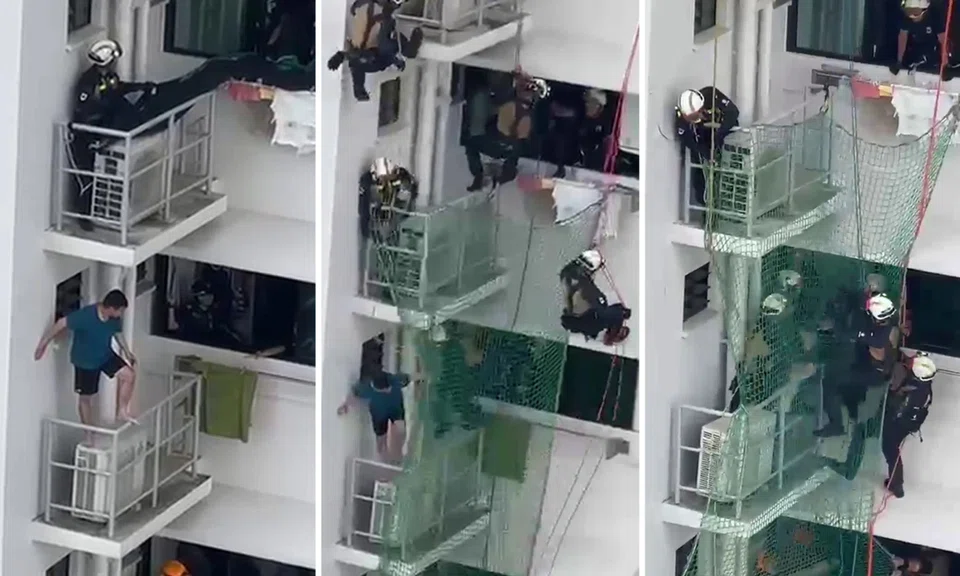
Five of these involve heights, including:
- An 18-year-old woman jumped off an HDB corridor ledge in Woodlands
- A 41-year-old woman found sitting on the 16th-floor ledge of a Sengkang HDB flat
- A man who jumped from the 15th floor of an Ang Mo Kio block after sitting on the ledge for three hours
- Two teenagers rescued from a carpark ledge in Toa Payoh late at night
- A man on the aircon ledge of a Bukit Panjang flat
The frequency of such incidents have led some to question the reasons for such attempts. So why do they do it?
Dr Annabelle Chow, clinical psychologist at Annabelle Psychlogy, said there is no fixed thought pattern in the moments leading up to a suicide attempt, and there is rarely a single cause.
Chow added: “It is not simply the circumstances themselves, but how an individual experiences them, alongside their psychological vulnerabilities, personal history and available support.”
When it comes specifically to jumping from heights, there exists a misconception that it is “impulsive”.
However, the clinical psychologist reiterated that suicidal behaviour arises from a complex interaction of psychological, social and situational factors.

Some suicidal attempts follow an extended period of distress, while others occur in an acute crisis.
In any case, Chow notes that the choice of method does not necessarily reveal someone’s psychological motivations.
Protecting those who do
In Singapore, the MHTCA enables authorities to detain people with — or suspected of having — mental health conditions, who may be a risk to themselves or others, in a designated psychiatric institution for assessment and treatment.
Depending on the person’s mental state, they could be detained initially for up to 72 hours. Upon further review, the person may be detained for a further period, up to a maximum of 12 months, if assessed to be necessary.
However, said the Ministry of Health (MOH) in 2021, the detention of patients is only exercised under very strict circumstances where there is a risk of harm to oneself or others.
While well-intentioned, not everyone agrees with this approach.
In a 2024 op-ed co-authored by former Nominated Member of Parliament Anthea Ong, psychotherapist Cassandra Chiu and assistant professor at the National University of Singapore Saw Swee Hock School of Public Health Dr Rayner Tan, the trio expressed reservations over the MHCTA.

They argued that the Act “perpetuates the notion that persons with mental health conditions are inherently a threat to public safety”, when these individuals should “be recognised as a person in need of support, not a danger to be subdued”.
Ong, Tan and Chiu advocated for investing in alternative approaches to support those facing mental health crises.
Spotting the signs
There’s plenty we can do in our individual capacity to be present for our loved ones in trying times — so long as we can recognise the signs.
According to clinical psychologist Dr Annabelle Chow, warning signs can be both explicit and subtle. These include:
- Expressions of hopelessness, social withdrawal, significant mood changes or talking about death
- Saying goodbye unexpectedly or giving away valued possessions
- Expressing suicidal intentions
- Losing interest in things they once cared about
- Remarks about being a burden
- Emotional flatness, as though unconcerned, in contrast with what they are usually like
However, Chow cautioned that not all signs are outwardly apparent, and some can continue going about fulfilling their usual responsibilities.
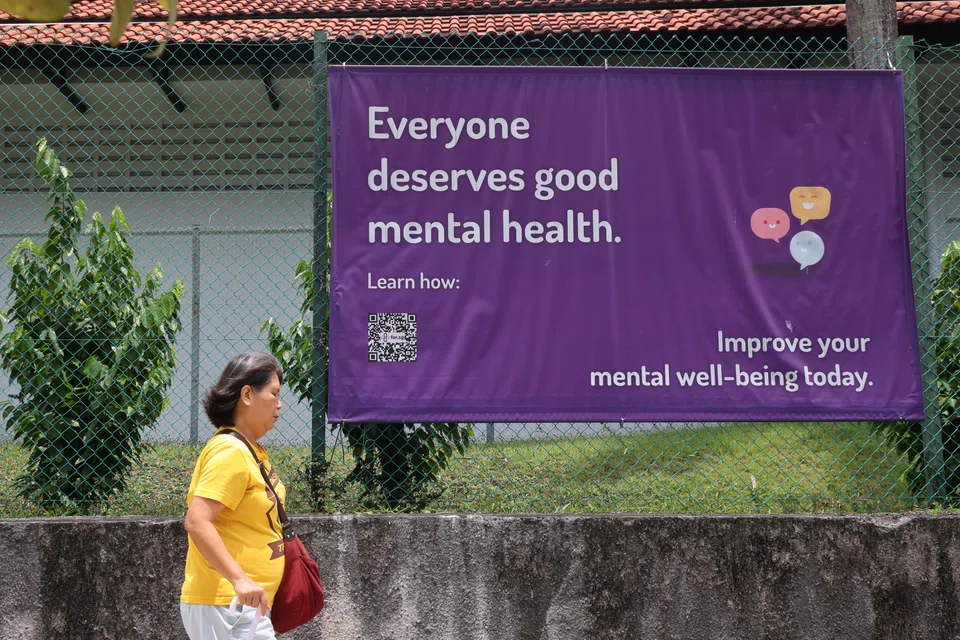
“The absence of visible warning signs also does not necessarily indicate that the risk has passed,” said Chow.
The clinical psychologist stressed that all signs of distress should be taken seriously.
“If we feel that a person is at risk, we can ask directly about their suicidal thoughts (e.g. listen attentively, show openness to hearing what your friend is thinking or feeling, and avoid passing any judgement). Let your friend know that you care,” she advised.
Urgent professional assistance should be sought when someone may be in immediate danger.
For Cheng — who has put her suicide attempt in the past and is now happily married — her message to those struggling is this: “There’s no magical solution to making problems disappear, but there is nothing that cannot be figured out.”
While she admits that it can sound cliched, Cheng feels strongly about this.
The darkest phase will pass, no matter how hopeless it seems.
HELPLINES
Mental well-being
- National helpline: 1771 (24 hours) / 6669-1771 (via WhatsApp)
- Samaritans of Singapore: 1-767 (24 hours) / 9151-1767 (24 hours CareText via WhatsApp)
- Singapore Association for Mental Health: 1800-283-7019
- Silver Ribbon Singapore: 6386-1928
- Chat, Centre of Excellence for Youth Mental Health: 6493-6500/1
- Women’s Helpline (Aware): 1800-777-5555 (weekdays, 10am to 6pm)
- The Seniors Helpline: 1800-555-5555 (weekdays, 9am to 5pm)
Counselling
- Touchline (Counselling): 1800-377-2252
- Touch Care Line (for caregivers): 6804-6555
- Counselling and Care Centre: 6536-6366
- We Care Community Services: 3165-8017
- Shan You Counselling Centre: 6741-9293
- Clarity Singapore: 6757-7990
Online resources
- mindline.sg/fsmh
- eC2.sg
- chat.mentalhealth.sg
- carey.carecorner.org.sg (for those aged 13 to 25)
- limitless.sg/talk (for those aged 12 to 25)

Explore more on these topics
See something interesting? Contribute your story to us.
