Fare hike: 13 cents doesn’t sound like much — until I tracked my rides and realised it will cost $100 more a year

On Sept 29, the Public Transport Council (PTC) announced that adult commuters would pay up to 13 cents more for bus and train rides from Dec 26, in what will be the highest fare hike so far.
Seniors, students, and those who use the Persons with Disabilities card will pay 5 cents more for each journey.
Armed with the knowledge of this early Christmas gift, I set out to investigate just how much more I would have to spend on my commute by tracking my weekly public transportation expenditure on the SimplyGo app.
The app shows public transport fares calculated based on the total distance traveled from the start to the end of the journey, regardless of the mode of transport used.
An additional $108.16 — or at least 24 cups of kopi — per year
From Monday, Sept 28 to Sunday, Oct 4, I spent a total of $27.43 on public transport, with the breakdown as shown below:
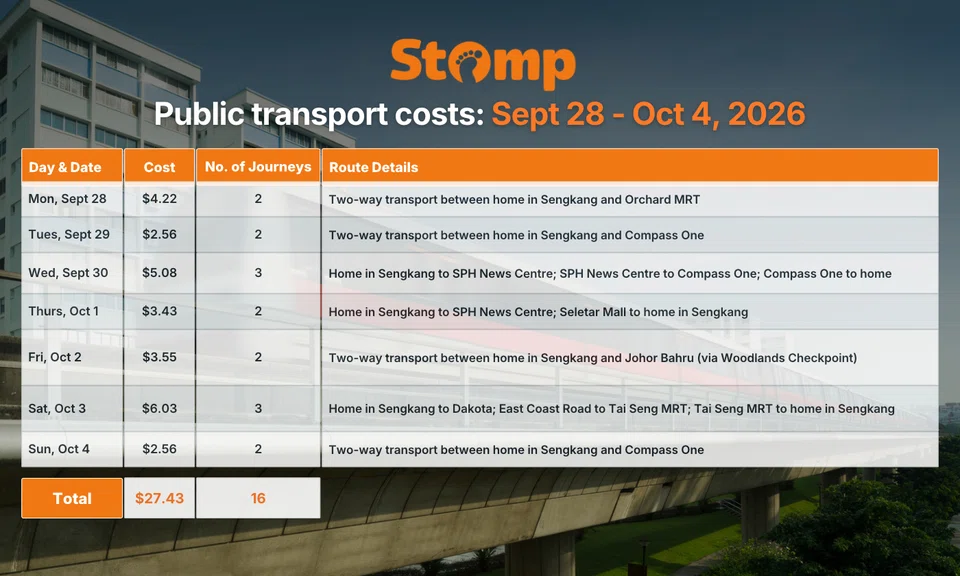
Apart from a two-way day trip to Johor Bahru by public transport — which surprisingly cost less than a trip to and from my office in Braddell — I did not deviate from my typical travel patterns.
Assuming I maintain an average of 16 public transport journeys a week in 2027, I’d need to pay up to $108.16 more in fares for 832 trips next year.
That is at least 24 cups of my usual $4.50 large kopi C kosong, or 21 packets of my favourite $5 chicken rice.
Stomp spoke to two commuters on the upcoming fare hike to understand if it would similarly affect their expenses.
Incidentally, both commuters are East side residents who need to take the bus from their homes to Pasir Ris MRT Station before taking the train to Kent Ridge MRT Station to work.
From $4.87 to $5.13 daily after fare increase
One of them, a communications professional in her 30s, who only wanted to be known as Zi Xian, said that her commute to and from work typically costs around $4.87 currently.
Due to the distance between her home and office, she sometimes begins her public transport journey before 7.45am, which allows her to benefit from the pre-peak rail savings of up to 50 cents.
An increase of 13 cents per journey would bring her total to $5.13 daily.
Subtracting the number of weekdays she would not be going to work — including annual leave days and the 11 gazetted public holidays in 2027 — Zi Xian will have to spend about $58.76 more on her weekday commutes after the fare increase takes effect.
And that is only accounting for her travels between her home and office.
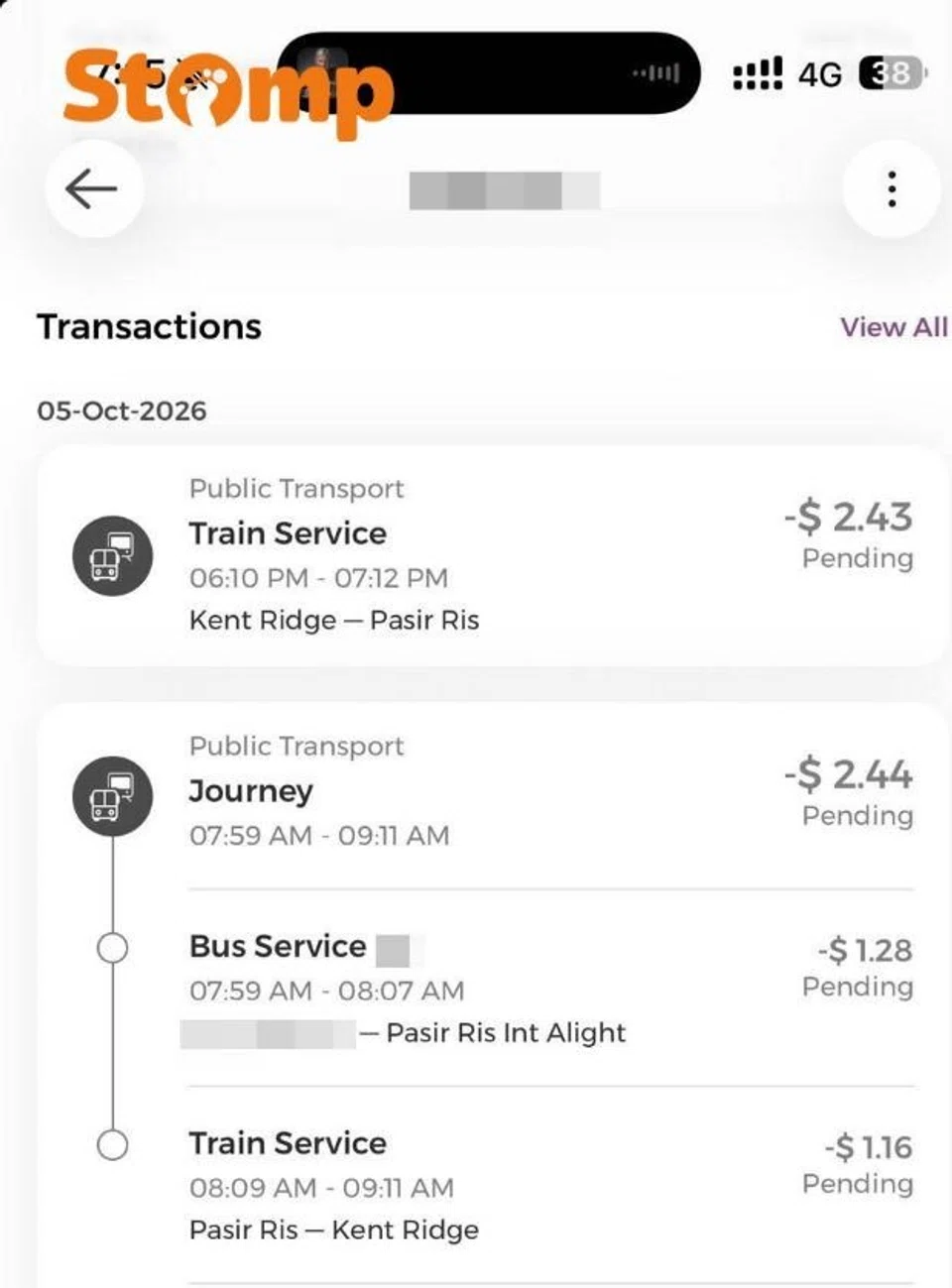
When asked why she has not tried a monthly travel pass, Zi Xian said that what she spends on public transport monthly does not cost more than the monthly pass.
The Adult Monthly Travel Pass, or monthly concession pass, allows unlimited travel on Singapore’s train and basic bus services within the pass validity period. It currently costs $122 and will not increase, despite the fare hike.


Zi Xian added that she stays in during the weekends, and if necessary, uses ride-hailing apps to get around.
“The concession won’t save much,” she concluded.
In any case, the communications professional said that she is “not too worried at this stage” as her company grants her a travel allowance on top of her base pay, plus the fares go towards earning rewards on her credit card.
“As long as I can rely on the expense to also take up credit card points, I feel like there’s some returns from (the increase in public transport fares),” she told Stomp.
The perks of concession
Another East-side resident Stomp spoke to, 31-year-old administrative assistant Amy Lee, relies heavily on public transport for her daily routine.
She rarely books private hire vehicles, and often goes out to town on weekends via public transport as well.
Unlike Zi Xian, Lee buys a monthly concession pass. Given how often and far she travels by public transport each month, paying the flat $122 saves her money overall.
Even so, she understands the frustrations of people who do not rely on a travel concession.
“The price increase is definitely irritating, every year it increases,” lamented Lee.
“The increase is because of the Middle East (crisis) right? But say the conflict settles down, will fares go back down?” she questioned.
Public transport fees once decreased, a decade ago
In October 2016, the PTC announced a total of 4.2 per cent reduction in fares — reductions of 1 to 27 cents for card fares — owing to lower energy prices in 2015.
Back then, it had also caveated that: “It is also unlikely for energy prices, which had fallen substantially in 2015, to remain at its current level indefinitely.”
Subsequently, after three consecutive years of fare reductions totalling 8.3 percent, card fares for adults increased by 6 cents.
Apart from 2020, when the PTC decided not to grant any fare adjustments, transport fares have seen an upward trend.
Evidently, every cent adds up.
At $108.16 more a year, my 2027 commute could cost me the equivalent of over 20 cups of my favourite kopi.
Perhaps it’s time to start walking a little more, leaving the house even earlier — or make a new year’s resolution to drink less coffee.

Explore more on these topics
See something interesting? Contribute your story to us.
