Could 10-cent BCRS scheme spawn a wave of ‘bin scavengers’? S’poreans debate what’s working and what’s not

Singapore’s Beverage Container Recycling Scheme (BCRS) is approaching full implementation on Oct 1, after a transition period that began on April 1.
The scheme is designed to increase recycling rates, reduce waste sent for disposal and create a cleaner stream of recyclables.
Ahead of the full rollout, debate over the scheme continues, with some people going to great lengths to collect large quantities of bottles and cans for the 10-cent refunds.
Others, meanwhile, have raised concerns over how easy — or difficult — it is to return them.
Stomp visited two Return Right reverse vending machines, one in Sengkang and another in Toa Payoh, in mid-August and returned more than 10 beverage containers without difficulty.
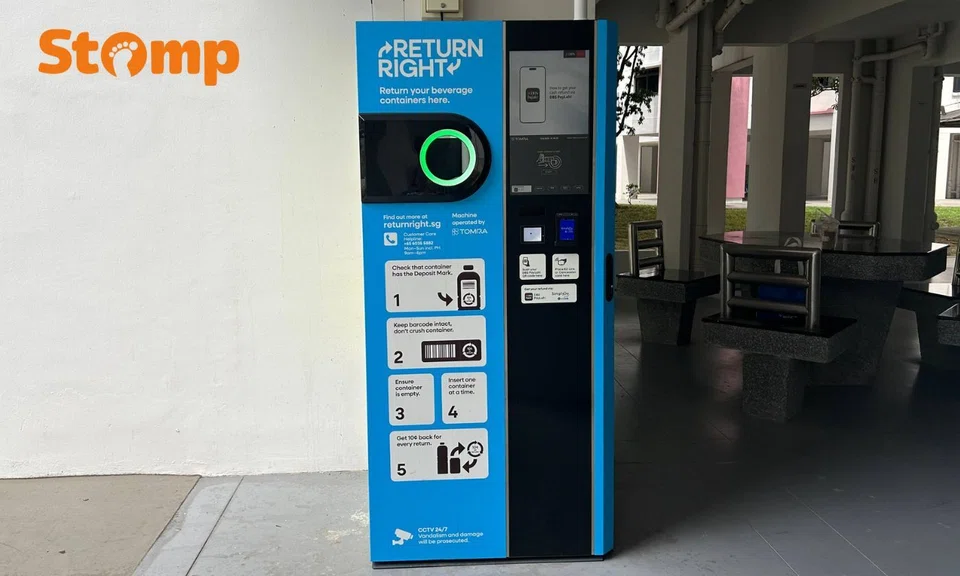
As long as the product barcode and Return Right logo were legible, the containers went through the conveyor and were accepted by the machine promptly.
The refunds were easily processed to the writer’s Paylah account after the machine scanned the writer’s Paylah QR code.
Attempts to return containers without the Return Right logo were unsuccessful.
Not everyone has had such a smooth experience.
Stomp reader Daniel Tan said he encountered difficulties when visiting five machines in the Chai Chee area.
He described some as “spoilt”, while others appeared to have limited operating hours, with ambassadors on duty for only four hours a week.
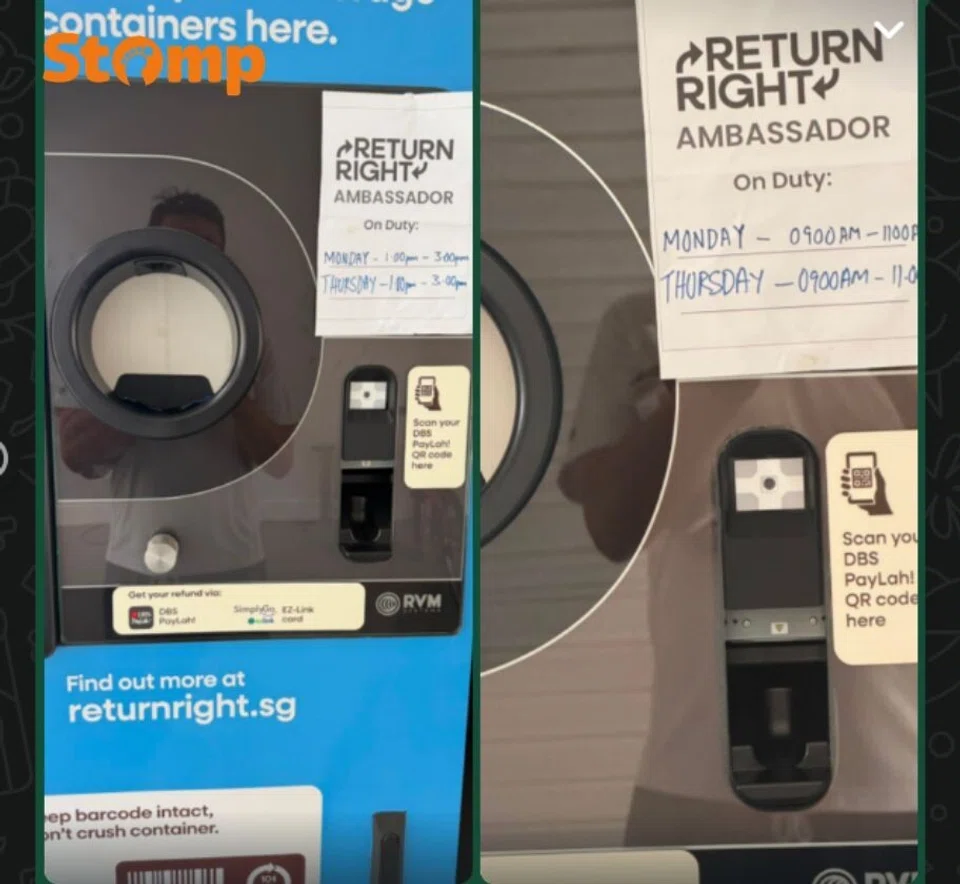
In an email seen by Stomp in August, he called for a review of the scheme’s operations.
“If (the authorities) are really serious in making BCRS (a success), there is a ready need to relook at the operation method,” he wrote.
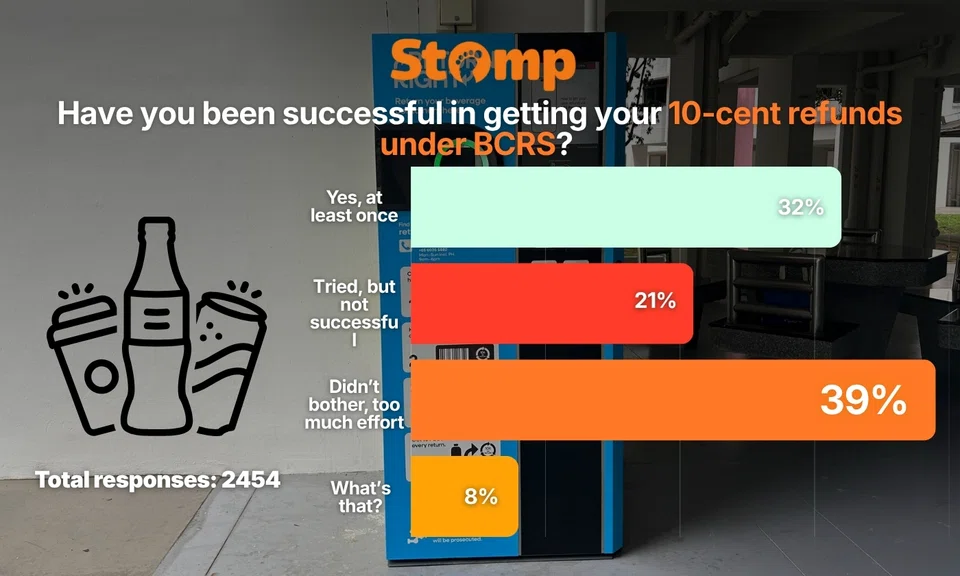
An online survey conducted by Stomp further revealed that 21 per cent of respondents indicated that they have tried but were not successful at obtaining their refunds.
Some 32 per cent said they had successfully received their refunds through BCRS.
At least 39 per cent however, said they did not bother returning their beverage containers at all.
What happens to containers with leftover drinks?
Apart from whether refunds are easy to obtain, another question that may arise is whether consumers need to rinse their bottles and cans before returning them.
NEA’s recycling guidelines for blue bins currently advise people to rinse and dry recyclables before placing them in the bins.
However, there appears to be no equivalent requirement for consumers returning beverage containers through Return Right machines.


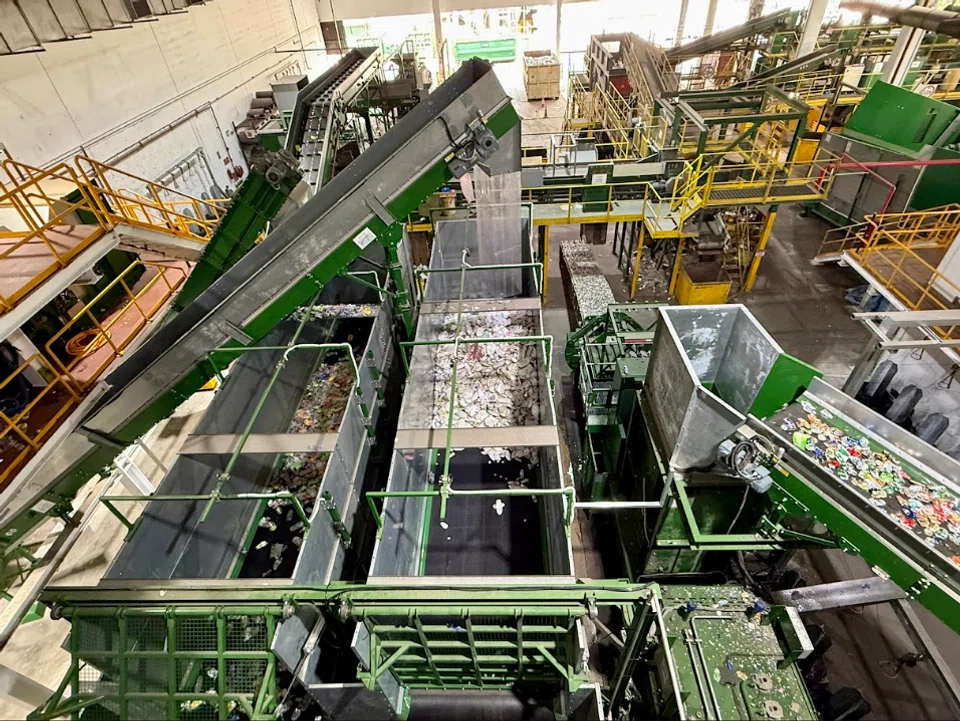
During a visit to BCRS’s solar-powered Counting and Sorting Facility on Sept 16, Stomp learnt that the facility has processes to handle residual liquid.
Containers are first dropped into a screw bunker, where leftover fluids are drained.
Steel cans are then extracted for recycling, while other containers go through pipes that remove loose labels and help keep them clean and odour-free.
The cans and bottles are subsequently compressed into bales and sold to off-takers — companies willing to buy the materials for recycling — before being turned into new products.
Some Singaporeans are already cashing in
BCRS Ltd has described the initial signs as “encouraging”, citing a growing volume of returned containers. The organisation is targeting a return rate of 60 per cent within the first year of implementation.
Stomp has previously reported on people collecting bottles and cans to earn refunds.
On Aug 31, Stomp reported on a 53-year-old man who collected empty beverage containers for two months and cashed in more than $1,000 at a BCRS machine.
He estimated that he collected about 100 bottles and cans on Aug 11, and said he usually earned between $10 and $20 a day in refunds, which were credited to his EZ-Link card.
In another case reported on Sept 10, a nine-year-old boy won praise after collecting 200 cans and bottles over two months, earning $20 in refunds.
‘Why should we feel paiseh?’
But the practice has also sparked debate online.
A Facebook post in the Complaint Singapore group described the sight of seniors and children searching through rubbish for refundable containers as a “step backward”.
The user urged authorities to take “real-life people’s hardships into account” when planning environmental policies.
While some agreed with his concern, others argued that collecting discarded bottles and cans for refunds was nothing to be ashamed of, and cautioned against stigmatising those who do it.
“If nobody (picks) the bottles, who is the one who earning the extra 10 cents? There (are) thousand of empty bottles thrown away every day,” one commenter wrote.
Another questioned: “Why should we be made to feel paiseh (embarrassed) if we have a bag of bottles and cans to redeem after a week’s consumption?”
One netizen pointed out: “People picking empty bottles and cardboard have been around for many years, as far as I know, from the 1960s. It’s not a new thing.”
A BCRS Ltd spokesperson told Stomp: “The informal sector has been part of Singapore’s recycling landscape for decades and we have no intention of disrupting their long-standing practice.”
“Our hope is that Return Right eventually becomes a natural part of our daily routine that we don’t even have to think about,” the spokesperson added.
“It’s about helping every Singaporean know that their small individual action is directly contributing to a much larger recycling goal for Singapore.”

Explore more on these topics
See something interesting? Contribute your story to us.
