No car, no durian? Stomper says public transport ban highlights ‘social divide’, had to walk 20 min home

Welcome to Stomping Ground — a space where Stompers share reflections, personal essays and social commentaries that spark conversation and insight.
The durian has always been a polarising fruit — you either love it or hate it.
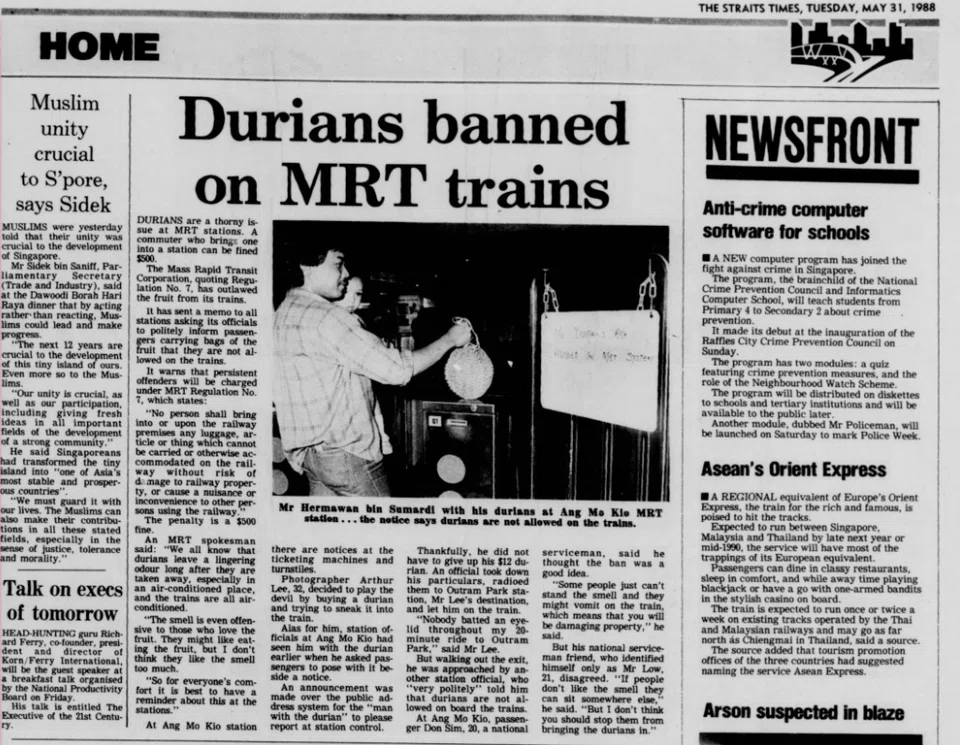
It is also famously prohibited on Singapore’s public transport because of its unmistakable smell. Those caught bringing prohibited items on board the MRT can be fined up to S$500.
But Stomper Anwar feels the familiar “No Durian” sign speaks to a larger issue — one involving public infrastructure, cultural identity and even social class.
“The inspiration to write this came while looking at the iconic ‘No Durian’ sign during a commute,” said the Stomper, who recalled his own personal experience of being denied boarding on a public bus.
Anwar claimed he was “refused boarding” because he had been carrying durians packed in Styrofoam boxes and ended up walking 20 minutes home instead.
That experience got him thinking: How do you bring the King of Fruits home if you don’t drive?
How the durian ban on buses highlights Singapore’s mobility divide
“The intersection of public infrastructure, culinary identity and social stratification offers a profound lens through which to examine Singaporean society,” Anwar said.
“At the centre of this tension is the durian — revered as the undisputed ‘King of Fruits’ and an undeniable cornerstone of local cultural pride.”
While restrictions on durians are primarily intended to maintain the comfort of passengers in enclosed, air-conditioned spaces, Anwar feels they can have wider implications.
“For a nation where the vast majority of the population relies daily on public transit, restricting how this prized fruit is transported does more than regulate smell,” he said.
“It subtly exposes and amplifies perceptions of socioeconomic disparity and class-based friction.”
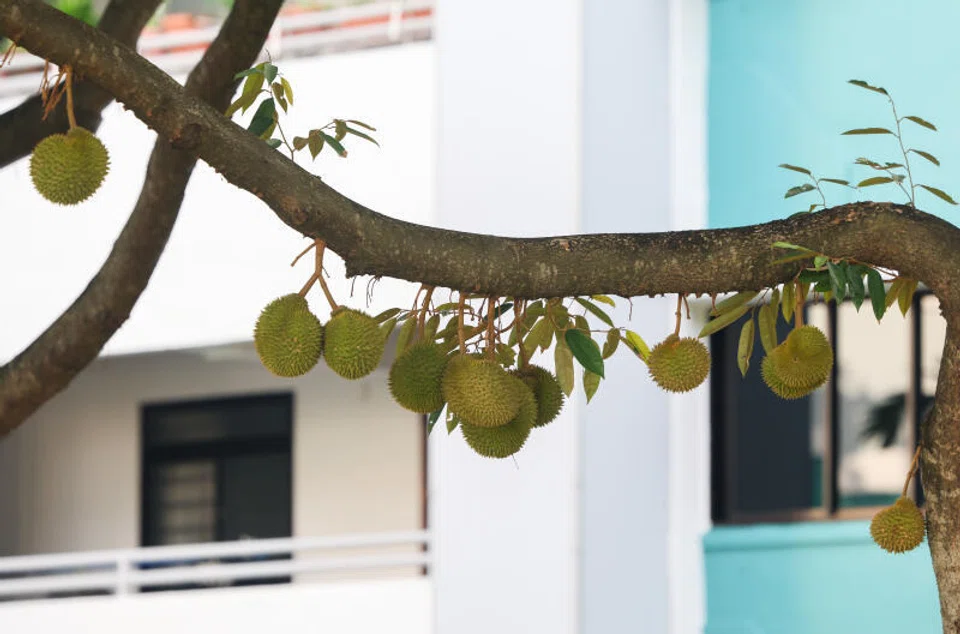
To Anwar, the durian is more than just something to eat.
He described it as a “social ritual”, with families and friends gathering around a table to crack open and share the fruit.
“Gathering around a table to crack open fresh husks is a multi-generational, communal experience that cuts across ethnic and linguistic lines,” he said.
“It represents a shared heritage and a distinct sensory identity.”
At the same time, he acknowledged Singapore’s need to carefully manage its shared public spaces.
“Singapore’s governance model is highly celebrated — and occasionally critiqued — for its meticulous management of public spaces,” he said.
The Stomper noted that the Land Transport Authority (LTA) and public transit operators enforce rigid codes of conduct to ensure public transit remains efficient and comfortable.
Because durian has a “uniquely potent, sulfurous and lingering aroma”, he said, it is understandable why the fruit "was designated as a disruptive element” on public transport.
The resulting “No Durian” sign — a red slash across the spiky fruit — has itself become an iconic sight at MRT stations and other transit facilities.
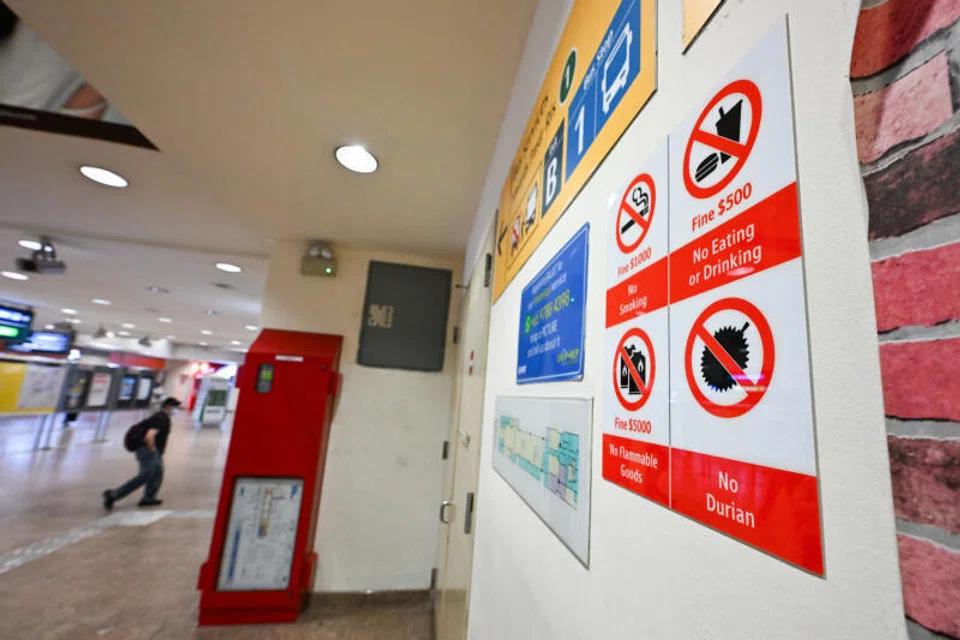
According to SMRT regulations, passengers are not allowed to carry durians that are not in vacuum-sealed packaging or are in any form that may hurt other passengers or soil public buses.
However, Anwar argued that truly airtight packaging can be difficult to guarantee at a typical fruit stall.
Costs of durians and transporting them inadvertently create a social divide
There is, of course, one straightforward way of avoiding the problem altogether: drive.
And that’s where Anwar feels the issue becomes more complicated.


“The socioeconomic discourse emerges when this environmental regulation collides with the realities of urban mobility and car ownership,” the Stomper said.
With private cars notoriously expensive in Singapore, Anwar pointed out that many people rely entirely on buses and trains.
“When a public policy dictates that an item cannot be transported via public transit, it implicitly dictates who can easily transport that item.
“A wealthy individual purchasing high-end durians can seamlessly place them in the trunk of their private car, keeping the odour confined to their personal property while driving directly home.
“Conversely, a lower-income commuter who relies on public buses faces a steep logistical barrier. They cannot board a bus with a fresh basket of durians, forcing them into tough compromises.”
The Stomper explained these compromises:
- Financial strain: They must absorb the additional cost of a point-to-point private hire car or taxi, assuming the driver consents to the smell.
- Loss of community: They must limit their consumption exclusively to on-site dining at roadside stalls, stripping them of the ability to bring the fruit home to share with family.
- Exclusion: They must forgo buying the fruit altogether.
“This dynamic introduces the concept of spatial justice, raising the question of whether public infrastructure inadvertently privileges the lifestyle of car owners while restricting the cultural habits of ordinary citizens,” Anwar added.
He believes this risks widening the perception of a social divide.
“Food is traditionally a powerful equaliser. The love of durian is supposed to transcend wealth. Rich and poor alike share the same palate for the fruit,” he said.
“However, when the physical act of bringing that shared love into the domestic sphere becomes contingent on one’s mode of transport, the fruit itself becomes a marker of class stratification.”
According to Anwar, this “subtle, systemic suggestion that certain cultural indulgences are less accessible to those who cannot afford private transport” can leave some people feeling marginalised.
He also pointed out that the issue has become more pronounced as premium durian varieties have grown increasingly expensive over the years, transforming what was once an abundant fruit into something of a “luxury commodity”.
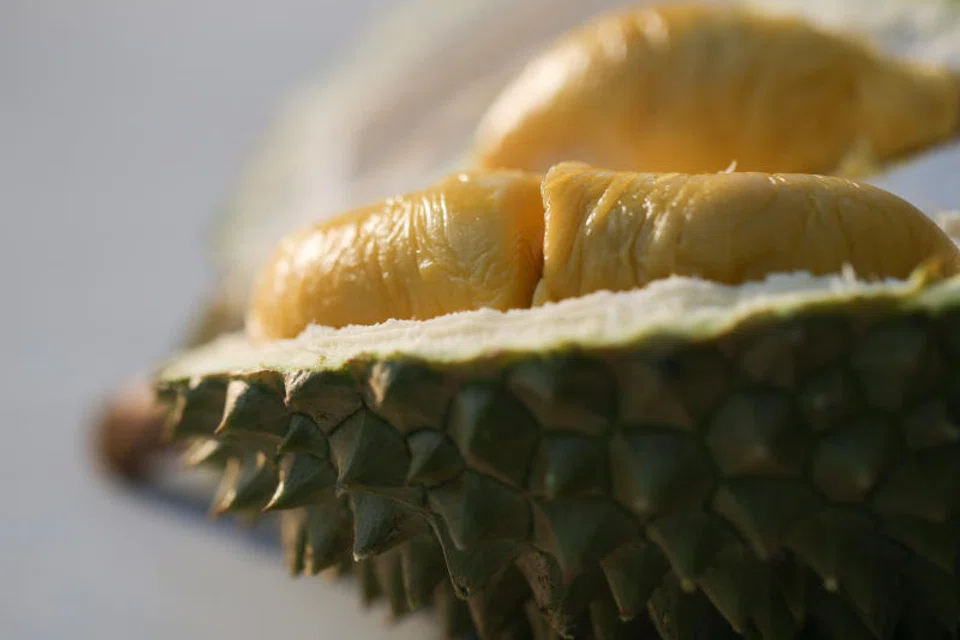
For those without private transport, he described it as a “double blow”.
“The working-class citizen is confronted with a fruit that is increasingly expensive to buy, and systematically difficult to bring home.”
Balancing public good and cultural inclusivity
Still, Anwar isn’t suggesting that everyone should simply be allowed to board a packed bus carrying a pungent bag of durians.
He acknowledged that there is a legitimate reason for the restriction.
“Protecting hundreds of thousands of daily commuters from an intense, polarising smell in a confined space is a legitimate public good,” he said.
“Yet, the socioeconomic discourse it sparks is a vital reminder that administrative policies do not exist in a vacuum.
“In a society hyper-aware of living costs and class distinctions, even the simple act of transporting a fruit can become a flashpoint for deeper conversations about privilege, equity and the right to the city.”
Anwar suggested finding ways to make it easier for people to transport durians without inconveniencing fellow commuters.
One possibility, he said, would be encouraging vendors to provide standardised, “institutional-grade” vacuum-packing facilities at markets.
“This ensures that the King of Fruits remains accessible to all Singaporeans, regardless of how they travel.”
Ultimately, Anwar said he hopes his experience and observations will prompt a broader conversation about the “subtle friction” surrounding one of Singapore’s favourite — and most controversial — fruits.
“For me, it is a fascinating lens for examining spatial justice, class privilege and what it truly means to maintain inclusivity within our shared public spaces,” he concluded.
Have your say on Stomping Ground! Write to us at stomp@sph.com.sg or WhatsApp 9384 3761.

Explore more on these topics
See something interesting? Contribute your story to us.
