‘I always thought my character was a flaw’: Woman, 32, says recent ADHD diagnosis finally explained years of workplace struggles

Welcome to Stomping Ground — a space where Stompers share reflections, personal essays and social commentaries that spark conversation and insight.
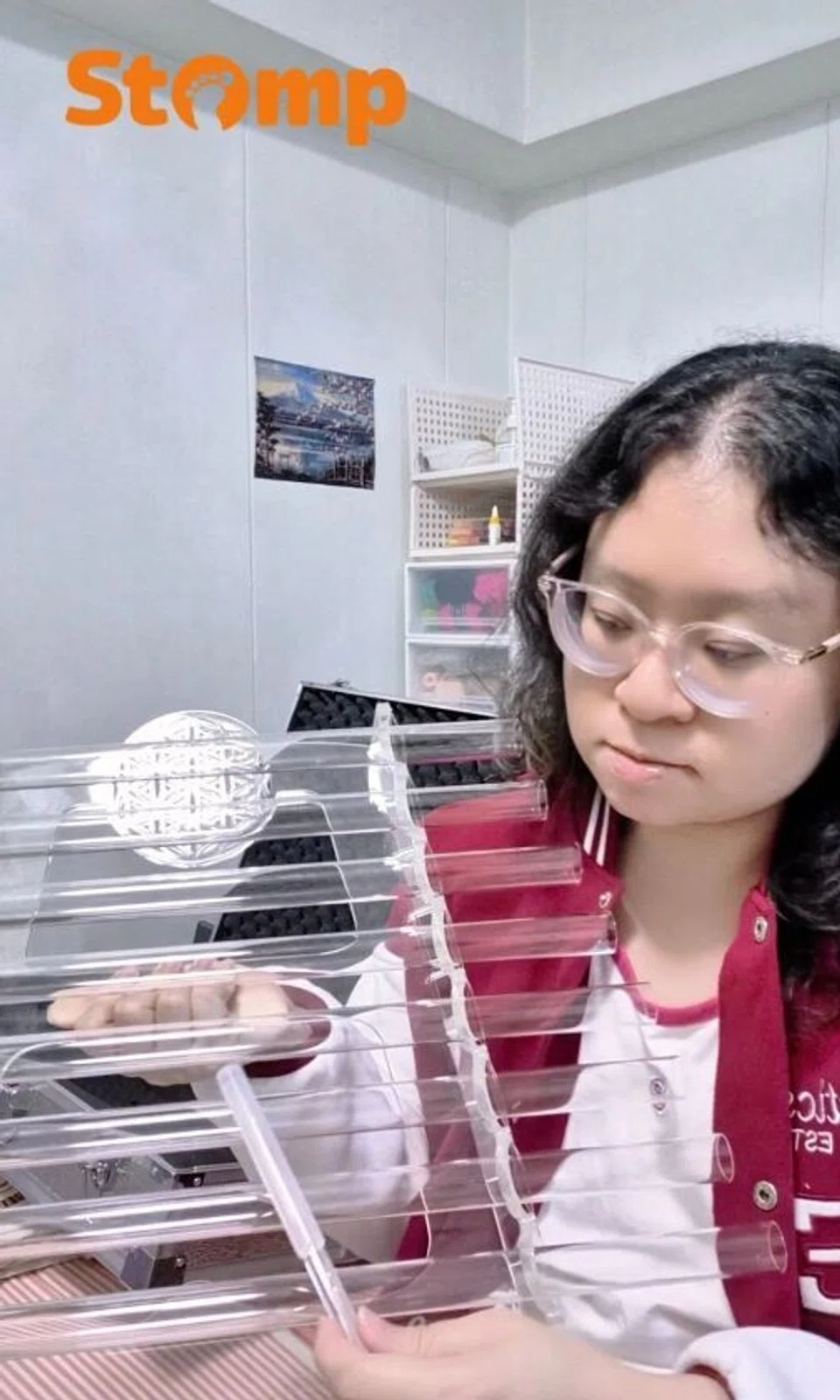
For 32-year-old Amelia Emery Chen, years of struggling at work had left her wondering whether there was simply something wrong with her.
Despite preparing for work, she often found herself missing small details, forgetting things she had learnt and struggling to communicate with colleagues.
She was also repeatedly told by bosses that she was an “imposter” and needed to stop trying to fit in when she was not competent enough.
“Colleagues saw someone inconsistent. I saw myself failing,” she said.
It was only in September 2026 that Chen — who has a double degree in human resource management and management — sought help from a psychiatrist and was diagnosed with Attention-Deficit/Hyperactivity Disorder (ADHD), with a predominantly inattentive presentation.
Armed with her diagnosis, she began looking back at years of experiences differently.
“Suddenly, every flaw had a name,” she said.
“The forgetfulness wasn’t laziness — it was working memory overloaded. The inconsistency wasn’t unreliability — it was a brain starved of steady focus.”
Chen, who has worked in training departments across different companies, said one of the most frustrating parts of her experience was communicating with colleagues in group settings.
She often struggled to follow conversations and felt unable to be in sync with those around her, making it difficult for her to connect with colleagues or feel part of workplace cliques.
She recalled situations where a colleague would ask her a question, only for her brain to interpret it very differently.
“For example: Can you pass me the chilli? My brain interpreted it as my colleague asking me if I wanted chilli.”
She later realised that she may have been missing part of what the other person had said because of executive dysfunction — a symptom that results in problems with how someone’s brain interprets thoughts, feelings and actions.
“Each time a colleague asked a question, I often asked them to repeat it. My brain would misinterpret the message, and I would reply in the wrong manner,” she said.
This has also led to unkind remarks from superiors, who Chen said have told her she should stop attempting to fit in as she was “not competent”.
Years of changing jobs
Another factor that eventually prompted Chen to seek a diagnosis was her difficulty in staying in a job for a long period.



She said she often found herself looking for new opportunities after relatively short tenures, attributing this to what she described as her brain instinctively searching for dopamine.
Receiving her ADHD diagnosis was not immediately a relief. Instead, Chen said she experienced “lots of grief”.
“I always thought my character was a flaw,” she said.
She also reflected on the amount of effort she had spent trying to appear as though everything was fine.
“I did all that while carrying a weight no one saw,” she said, referring to her educational and professional achievements, adding that she had spent years trying to blend in by masking her troubles.
Now that she has received an ADHD diagnosis and started medication, she describes the change as gradual but significant.
“I feel my life is a lot easier now without constant masking and trying to act like everything is okay,” she said.
With medication for her ADHD, she said she can now hold onto a thought, finish a sentence and see a task through without feeling as though her attention was constantly drifting away.
Not careless, but unseen
For Chen, getting diagnosed with ADHD has also changed how she relates to other people.
She hopes that with a better understanding of herself, she can connect with people more easily and understand their perspectives, which she believes will help her communicate better.
Looking back, she said the experience has made her think about how easily people can be misunderstood when their struggles are not visible.
“For decades, textbooks and society have pictured ADHD as a loud, disruptive little boy — not a quiet, polite, hardworking woman who masks every struggle just to blend in,” she said.
Chen hopes sharing her story with ADHD will encourage others who may have spent years believing they were simply careless, inconsistent or inadequate.
“We are not careless. We are unseen. And being seen changes everything,” she said.
“To those still searching: it is not too late. You are not imagining it. And the version of you that finally gets help? That is not a stranger — that is who you always were, waiting for the fog to lift.”
She encouraged those who suspect they may have ADHD to speak to a qualified mental health professional or visit the Institute of Mental Health for assessment and support.
Have your say on Stomping Ground! Write to us at stomp@sph.com.sg or WhatsApp 9384 3761.

Explore more on these topics
See something interesting? Contribute your story to us.
