‘My colleague died cleaning a dead body. Then I had to bury him’: Death a ‘norm’ for 34-year-old Muslim undertaker

Think Singapore is just a nation of people working typical corporate jobs? Introducing Stomp’s new original series, Don’t Try This At Work, where we spotlight individuals with risky, exciting, unconventional and even downright terrifying jobs.
From cleaning up after death to handling bees by hand, the series offers a behind-the-scenes look at occupations most people would never dare to try — and the people who do them every single day.
Muhammad Amir, 34, has a serious, almost clinical set-up in front of him: a foldable metal bed, an assortment of small items, and white shrouds, as if preparing for a burial.
The mood in his Woodlands flat, however, is warm. Amir, his wife, and nephew, usher Stomp journalists in for an interview and an educational demonstration of what he does daily as a Muslim undertaker, better known among the Malay community as ‘pengurus jenazah’.
“Alamak, nervous,” he remarks sheepishly at various points in his interview — though it’s clear he has no reason to be.
Once the demonstration begins, he confidently explains the purpose of each item laid out on the metal bed: sheets of white cloth, kain batik lepas (a batik cloth), camphor, cotton, perfume and sandalwood powder.
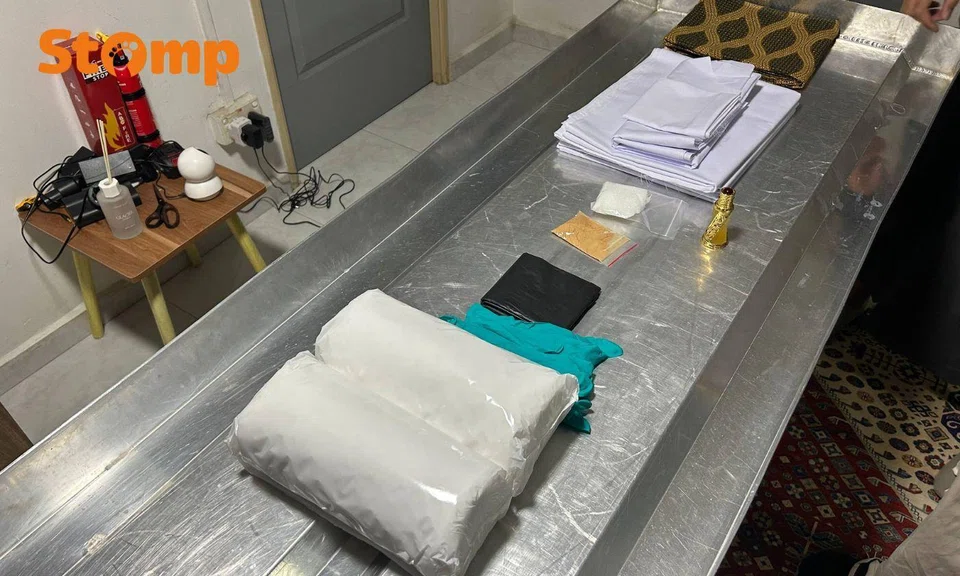
With his nephew Saiful Amir standing in for a dead body — which led to some good-humoured chuckling between our party of six — Amir explains, step-by-step, the process of bathing the body and preparing it for burial with dignity.
He does this methodically, with tremendous calm, that it’s almost hard to believe he’s only six years into this role.
A fateful introduction to his calling
His interest in the job was piqued almost a decade ago, when his grandmother died in 2017.
Then 23 years of age, he observed the imam leading family members in the prayers and burial process with awe — and felt a calling.
“I was like, ‘wow, (being a Muslim undertaker) is an interesting job’,” he recalls.
His interest was further cemented when he began researching more about the job, soon encountering a post from the owner of a local burial service company, who was looking to hire a full-time imam to assist him on the job.
He responded with his interest and soon bathed and prepared his first dead body in 2020. He did so under the guidance of his boss, after taking three years to fully transition into his new role as an imam.
“I wanted to serve the Malay Muslim community and help families during difficult times,” the 34-year-old says, stressing how much giving back really means to him.
Toughest part of the job
“Many are afraid of death but to me, it’s a responsibility,” Amir says solemnly.
Even as he remains calm in the face of death, there are still days when the job feels much more challenging and sad for him.



“Attending to babies or stillborn cases is always the hardest for me emotionally,” Amir tells Stomp.
Beyond how heartbreaking it is for him to bury a life that has ended too soon, there is also a much more personal reason that stillborn and baby deaths affect him so much.
“Me and my wife had a baby before, but he passed on at five months old (in 2018),” he explains, a wistful note to his voice.
Another particularly challenging day for Amir was when his older colleague died from a heart attack while working alone on a late-night undertaking job in December 2025.
“The ambulance came, (paramedics) tried to do CPR but sadly, he didn’t survive,” Amir shares.
Amir had to pick up where his colleague had left off until a freelance employee could relieve him. Following that, Amir embarked on the heavy task of preparing his colleague’s body for burial later that morning.
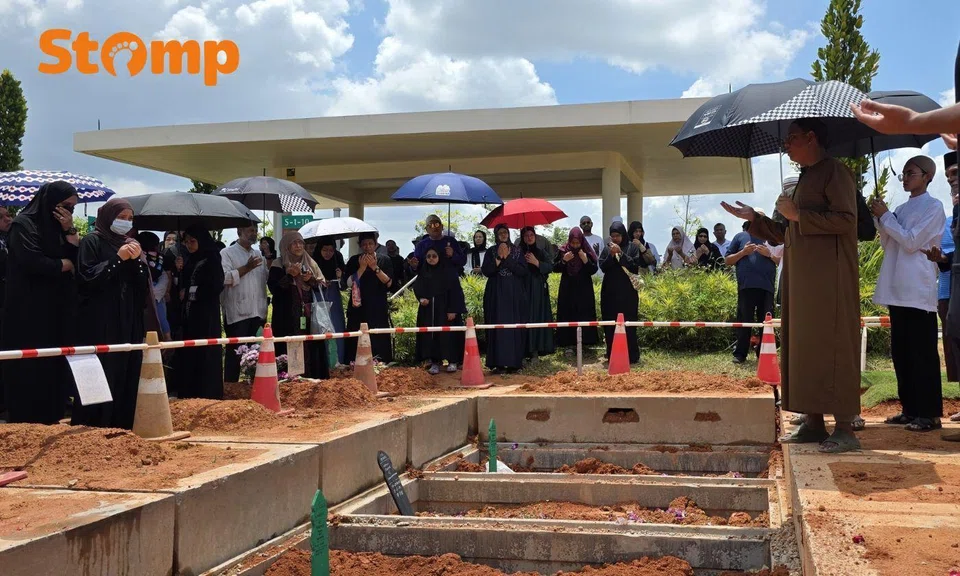
When asked how he had felt about his colleague’s death, Amir appears to struggle to find the right words before saying: “It was sad, super sad.”
Despite the emotionally overwhelming and sleep-deprived day, thinking of his deceased colleague — an undertaker of more than 30 years — pushed him to get through the next 24 hours.
In a way, Amir views it as a way of honouring one of his mentors, who taught him much of what he knows today.
Death is a ‘norm’, not something to fear
The unpredictable nature of life and death means that on most days, Amir is on standby 24 hours a day, seven days a week.
He tells Stomp he gets one or two days off a week — rarely fixed days, unless he has personal errands to run.
When asked how his job as a Muslim undertaker has shaped his perceptions of death, Amir replies candidly: “Sorry to say, but it’s normal for me.”
As someone who has attended a Muslim burial almost every day for the past six years, he does not fear death.
“At the end of the day, we’ll be heading to the same place some day.”

Explore more on these topics
See something interesting? Contribute your story to us.
