‘He was in so deep’: Sisters who feed 4,000 migrant workers free meals daily never expected to save a man from taking his own life

Feeling at the end of his rope after waiting months for his work permit, a migrant worker in his 20s had made suicide plans — but was saved after opening up to a soup kitchen staff member.
63-year-old Chandralatika, one of three sisters who founded Krsna’s Free Meals, had welcomed him in after noticing he looked distraught.
“It’s the end of the world if I don’t get it,” he had told her. “I already planned. If I don’t get it, I’m going to take my life.”
“He was in so deep. He seemed to have some sort of depression,” Chandralatika’s sister, 56-year-old Latha Govindasamy, recalled.
But Chandralatika didn’t give up on him, encouraging him to give himself a day or two. “You never know, the letter might just come,” she told him.
He received his work permit the next day, and got a job shortly after.
For the three sisters behind Krsna’s Free Meals, a soup kitchen offering free meals for migrant workers, moments like this are a reminder that what they offer goes beyond a plate of food.
“These conversations make me see their suffering more. Not everyone shares their story, of course. But we are hoping that the food will cheer them up,” Latha added.
Over the years, the kitchen has become a place steeped in close-knit relationships — with meals served alongside a genuine concern for the people who come through its doors.
How the soup kitchen began
Chandralatika, Latha, and their 60-year-old sister, Ghandini co-founded Krsna’s Free Meals in 2018, which now feeds 4,000 migrant workers a day.
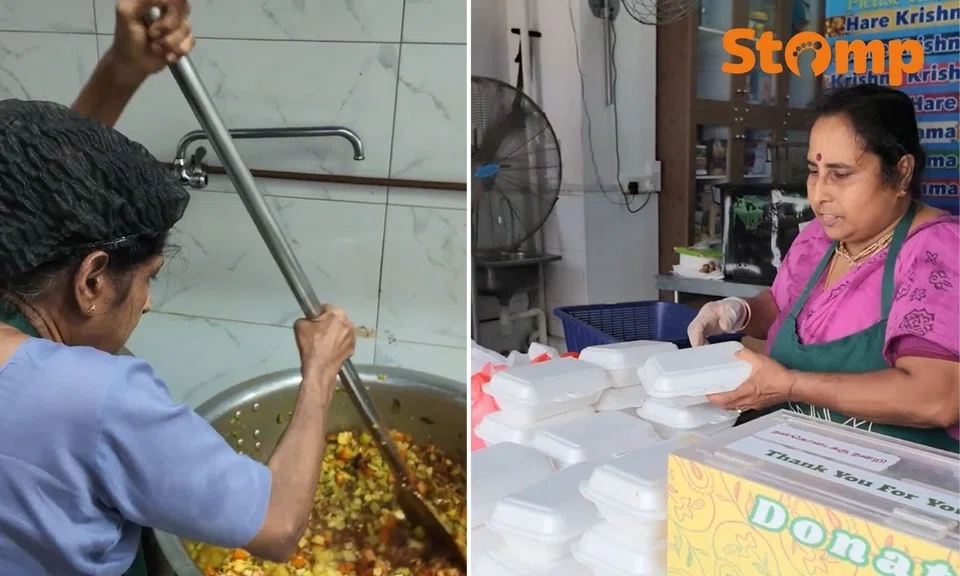
When Stomp visited the soup kitchen in Little India on a rainy Monday morning, the steamy air was thick with aromas of Indian cooking as huge vats of food bubbled away on stove tops.
A handful of volunteers were stationed outside the kitchen in a factory-style arrangement, funnelling the food into rectangular parchment-paper packets to be handed out to migrant workers.
Outside, a small crowd had formed, with many migrant workers standing without an umbrella despite the slight drizzle. They received the food with grateful smiles, dropping coins into the donation box in front of them.
Seated in a makeshift room tucked away within the shop, the three sisters told Stomp that the idea for the soup kitchen stemmed from their upbringing — one where their parents had instilled in them the spirit of giving.
Latha recalled coming home on several occasions to find a stranger sitting at the dining table with her parents, being served a hearty meal. They would often be door-to-door salespeople, she explained, and their parents would welcome them in with warm hospitality.
Our mother would say, ‘Oh I can’t buy, my children will scold, but you can come in and eat.’
That spirit of hospitality stayed with the sisters.
In 2018, the former educator said she and her two sisters — who were working as chefs at a temple for over a decade — decided to set up the soup kitchen after noticing that migrant workers were getting “sub-par food”.
Recalling the first time they handed out plates of free food, Ghandini said: “They were shocked. They didn’t believe it, that we were giving them food for free. Everybody was looking around, they were so scared.”
Today, the soup kitchen continues to provide meals for workers on a donation basis, surviving on contributions from companies and the public through open calls on their Instagram account.
When asked why they kept going even when money was tight, Latha explained: “We’re not striving to be rich. For us, that’s not important, because it’s not permanent. But doing good will not let you down.”
‘I kept losing all my friends’: Sacrifices of the job
But their work doesn’t come without its sacrifices.
The sisters explained that their working hours stretch from 4am to about 4pm, and they would stagger their work days to ensure that someone is always available to manage the kitchen.
“We have not celebrated Diwali together as a family for the last seven years,” Latha said. “I think that was the biggest shift.”



Chandralatika agreed, recalling that she has not travelled with her family in five years, because either she or her husband had to stay behind.
For Latha, these sacrifices have also affected her friendships.
“I was very angry because I kept losing all my friends,” Latha shared, explaining that they would even spend public holidays and weekends at the soup kitchen.
She recalled that her friend of 30 years has “given up” on meeting her, because she is “heavily tied up” at the kitchen.
I feel sad because we have been through thick and thin. She said, ‘we are not getting any younger’. So, that makes you feel guilty.
Yet, she remains committed to the work.
“I just hope that they will understand. You can’t forgo halfway and say, oh, I have got better things to do.”
Building a community for migrant workers
For all the sacrifices, the sisters say the kitchen has given them something in return: a community.
Every year, they celebrate Deepavali with about 8,000 workers, by organising a half-day event with free food, snacks, and provisions donated by others.
“When you see that they are so happy with the little pleasure we have given them, it makes me realise it doesn’t take much to bring happiness to others,” Latha said.
“It’s all worth it.”
She also recalled how workers would visit the kitchen to bid farewell to the sisters when they prepared to return to their home countries.
On one occasion, two workers even “fell at their feet” in gratitude.
“We weren’t expecting it,” she explained. “Usually, they won’t say thank you, but you know they appreciate it. I was very struck by that.”
Giving volunteers a sense of purpose
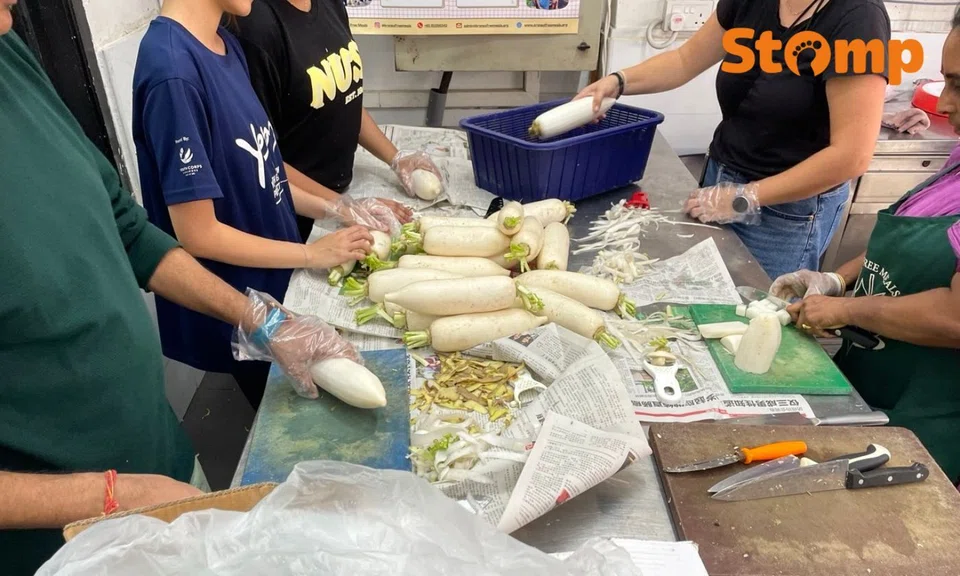
Volunteers Stomp spoke to also felt their work there was meaningful.
Kang Lu Ping, a 37-year-old beautician, who volunteers for the 6am to 8am shift before going to work for the past six months, said witnessing fellow volunteers’ acts of kindness was deeply moving.
“I feel that I’m not just a volunteer, but also part of this warm and caring family. Being able to continue contributing to this community is the most meaningful thing I can do,” she said.
43-year-old IT engineer, Vivan, who has been taking on the 6am shift for the past year and a half, said he felt it was important to start his morning with a sense of purpose and a spirit of service, despite the tiredness that might set in later in the day.
“When I hand over a meal to a migrant worker and we both smile, it is a simple gesture, but a powerful reminder of why we do what we do.”
Passing on the legacy
Now, the sisters are looking to pass on the spirit of giving to the next generation. Ghandini and Chandralatika, who have two children each, said they are training their children to take over operations.
“I think (our parents) left us with a very important legacy, where we all took after them. Now, we want to leave a very important legacy for (our) children, so they will continue the good work,” Latha said.
“Even if we are not around, it will still carry on,” Chandralatika added.
“It must.”

Explore more on these topics
See something interesting? Contribute your story to us.
