Filipino uni grad, 26, works as domestic helper in S’pore earning double her previous salary: ‘It’s not about job title’


At first, Clergg Lee Sarancial was excited about her future when she graduated from university in the Philippines. Little did she know that the meager salary of 15,000PHP (S$300) from her first office job would barely be enough to get by.
“It’s not enough for everyday needs, like food,” the 26-year-old told Stomp.
While the role was relatively stress-free, Sarancial eventually realised that she needed to find a better paying job to support her family.
Despite her family’s reservations, she packed her bags, flew to Singapore in October 2024 to work as a domestic helper, and hasn’t looked back since.
‘I didn’t have money to buy food’
Born in Oroquieta City in the Philippines, Sarancial graduated with a Bachelor of Science in Hospitality from Jose Rizal Memorial State University before taking on an office job at a large retail establishment.
Working from 8.30am to 6pm, her responsibilities included managing inventory, keeping track of incoming stock and handling cash.
“It’s an okay job, not really stressful, but the salary was not enough,” she said.
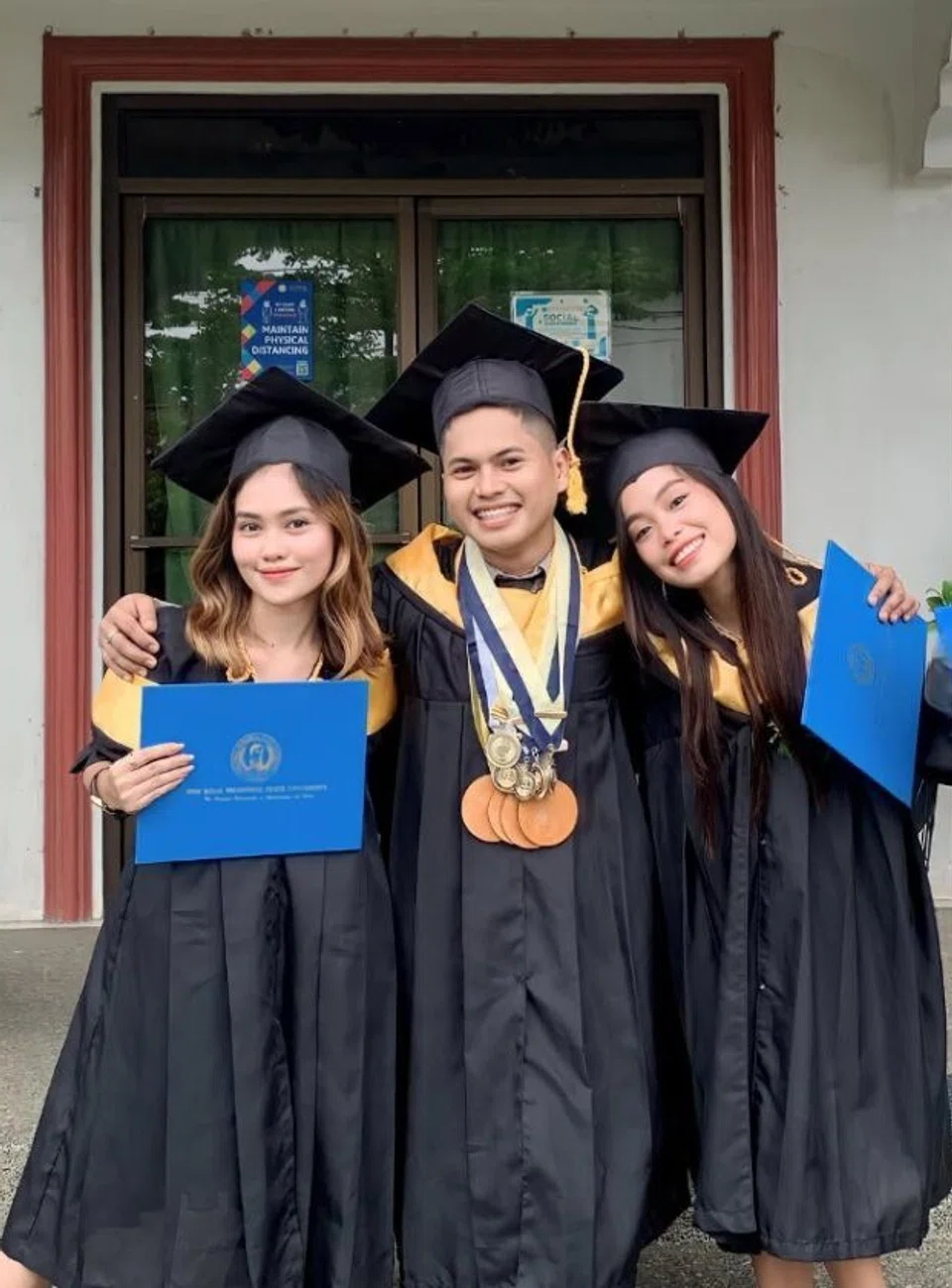
Growing up in a broken family, Sarancial felt the pressure to provide for her family right after graduation. Her younger half-siblings — a 17-year-old sister and 13-year-old brother — still relied on her for their day-to-day needs.
She quickly realised that she needed to find a job that paid more than her monthly salary of S$300 to make ends meet.
She eventually resigned from her office job and moved to a bigger city in search of better opportunities, but was unsuccessful in finding employment.
“I tried to apply for jobs but many companies rejected me. I was very sad, I needed a job and I was very shy to ask for money,” she recalled.
“I didn’t have money to buy food.”
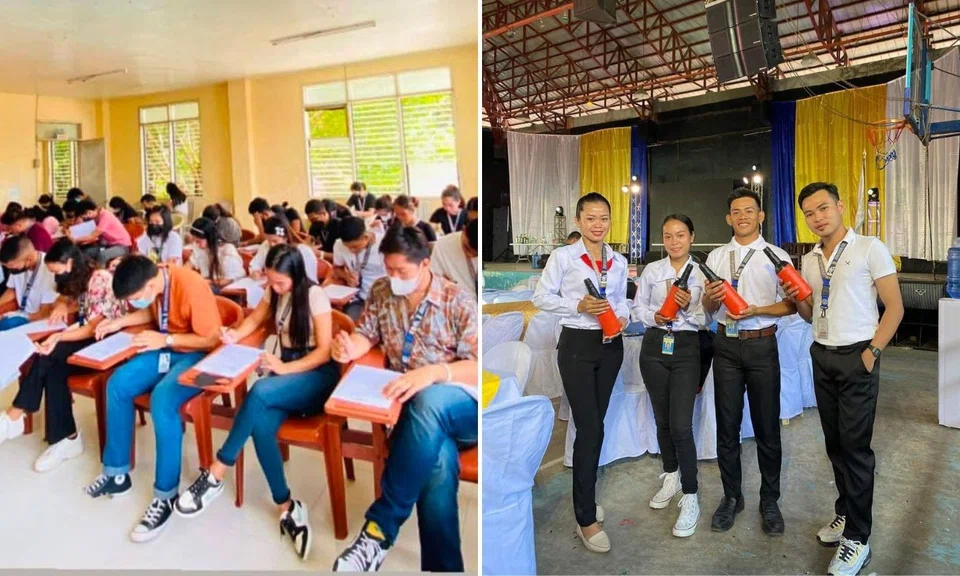
Taking a chance on being a helper in Singapore
Knowing that her stepmother’s sister — whom she addressed as her aunt — was working as a domestic helper in Singapore, Sarancial reached out to ask if she could do the same.
After contacting the agency that had recruited her aunt, she returned to her hometown to tell her family about her plans to work overseas.
Her family was initially worried, having heard about cases of domestic helpers being bullied or abused, but eventually gave her their support.
Sarancial applied for the job in July 2024 and attended an interview the following month. She then flew to Manila for a month of training before arriving in Singapore in October that year.
However, adjusting to life in Singapore was not easy for her at first, particularly when it came to the food and culture.
“When I first came here, I couldn’t eat. I was not used to the food,” she recalled.
She also found the physical demands of domestic work exhausting, especially as she was not used to the routine after previously working in an office.
Her days start at 6.30am, preparing breakfast for her employers and their child. Her duties also include caring for the child and doing household chores.
If she manages to finish her tasks early, she can turn in at around 8pm.
“At night when I call my family, I just want to sleep,” Sarancial said, describing how her body was still adjusting to the demands of the job in the beginning.
Over time, however, she has grown accustomed to life in Singapore and even developed a liking for local food, with char kway teow being her favourite.
Her cooking has also evolved since moving here. While she used to prepare adobo, a Filipino pork dish, she now puts a local spin on it, cooking it in what she described as “Chinese style”.

‘Your degree is a waste’
While she is settling well in her role as a helper in Singapore, Sarancial acknowledged the stigma surrounding domestic work, particularly for women who hold university degrees.
“If you’re working as a helper, they would say that your degree is a waste,” she said.
She added that it is common for family members to question one’s decision to become a helper and even risk being “talked about behind their back”.
When she first arrived in the Republic, she kept a low profile, refraining from sharing anything about her work as a domestic helper on social media.
Only her closest friend and family members knew about her new job.

After some time, she started posting photos of her experiences here in Singapore on Instagram. To her surprise, her university classmates reached out to tell her that they were inspired by her journey.
“I thought they would judge me, like, ‘Why is this girl working as a helper when she has a degree?’” she said.
Despite occasionally receiving negative comments online, including remarks suggesting that she came to Singapore to find a husband, Sarancial said she appreciated those who have shown her support.
She was also encouraged by Singaporeans who have approached her to say they were inspired by her story.
Singaporean employers ‘nice’ and ‘very open’
Two years on, Sarancial is enjoying her time in Singapore, earning more than double the salary she once earned back home.
While she makes an effort to save money, she is happy to spend some of her earnings on experiences she could not afford before.
Grateful for the chance to try new things here, she is especially thrilled to attend events such as the Formula One Singapore Grand Prix and pop concerts.
Sarancial described her Singaporean employers as “nice” and “very open”, giving her the freedom to pursue her hobbies and interests. They even helped to pay for her concert tickets upfront in the past, allowing her to repay them when she had saved enough money.
“They would say don’t worry, you can pay me back when you have the money,” said Sarancial with a smile.

Singapore a ‘stepping stone’ to her dreams
After working as a domestic helper in Singapore for two years, Sarancial said she has come to realise that looking down on people in her line of work is the “wrong mindset”.
“Singapore is like a stepping stone,” she said, explaining that working here gives her the opportunity to work towards building her future.
She is now able to send money home whenever her family needs additional support, while setting aside enough savings and using some of her earnings to create lasting memories in Singapore.
Addressing comments back home that her degree has gone to waste, she said: “It’s not a waste because life is not a race.”
Sarancial hopes to one day look back on this chapter of her life and feel proud of how hard she worked to achieve her dreams.

One of those dreams is to start her own coffee and matcha business back in the Philippines, which she estimates will take another five to six years to materialise.
“It’s motivation for me to work hard,” she said, smiling.
While Sarancial acknowledged that becoming a domestic helper is a personal decision, she encouraged those who have the opportunity to take it.
“It’s not about the job title,” she said.
“It’s about how you will achieve your dreams, save money to help yourself and your family, and make yourself better.”

Explore more on these topics
See something interesting? Contribute your story to us.
