‘Death always intrigued me’: S’pore embalmer on embalming his own grandparents and preparing for final goodbyes
Think Singapore is just a nation of people working typical corporate jobs? Introducing Stomp’s new original series, Don’t Try This At Work, where we spotlight individuals with risky, exciting, unconventional and even downright terrifying jobs.
From cleaning up after death to handling bees by hand, the series offers a behind-the-scenes look at occupations most people would never dare to try — and the people who do them every single day.
As a child, Shane Edwards had dreamed of becoming a pilot — just like his father.
Though he completed a diploma in aerospace avionics, it was apparent that life had other plans for the 37-year-old, who is now a senior embalmer and operations manager at Woodlands Memorial.
“Flying school was way too expensive,” Edwards said sheepishly.
He tried his hand at different industries, including shipping, banking and food and beverage, though none of these “were right” for him.
It was when he landed a role in the human resources department of a funeral company that he found his calling: embalming.
“I developed an interest in embalming as well as helping people get through the most difficult parts of their lives,” he recalled.
There was no eureka moment for Edwards, who described himself as being interested in the macabre since young.
“Death always intrigued me, in terms of what happens after death, and the kind of emotions it brings out when someone you love passes away,” he explained.
When the job gets personal
Edwards was 25 years of age when he first started embalming. When he first began, his family was worried — not for superstitious reasons, though.
“My parents were a bit hesitant because (they thought) I’d be exposing myself to a lot of pathogens and diseases, but I explained to them that it’s very clinical… and that we wear a lot of protective equipment,” the embalmer said.
His family would soon come around when, early on in his embalming career, Edwards had to embalm his first relative in 2017: his paternal grandmother.
Having someone in the funeral services industry meant that his family need not panic, as Edwards was familiar with funeral arrangements.
Then, the amiable 37-year-old felt he had not been fully “equipped with handling grief” so the experience took a toll on him.
Even so, he felt that he had handled it “a lot better than most people would”, thanks to the mental focus that his job requires.
“When it comes to embalming — be it a child, someone you know, or a relative — you have to leave all your emotions outside, so you can give the best care you can for the person that’s laying (on the table),” Edwards explained.
In other words, compartmentalisation is crucial in protecting one’s mental and emotional health.
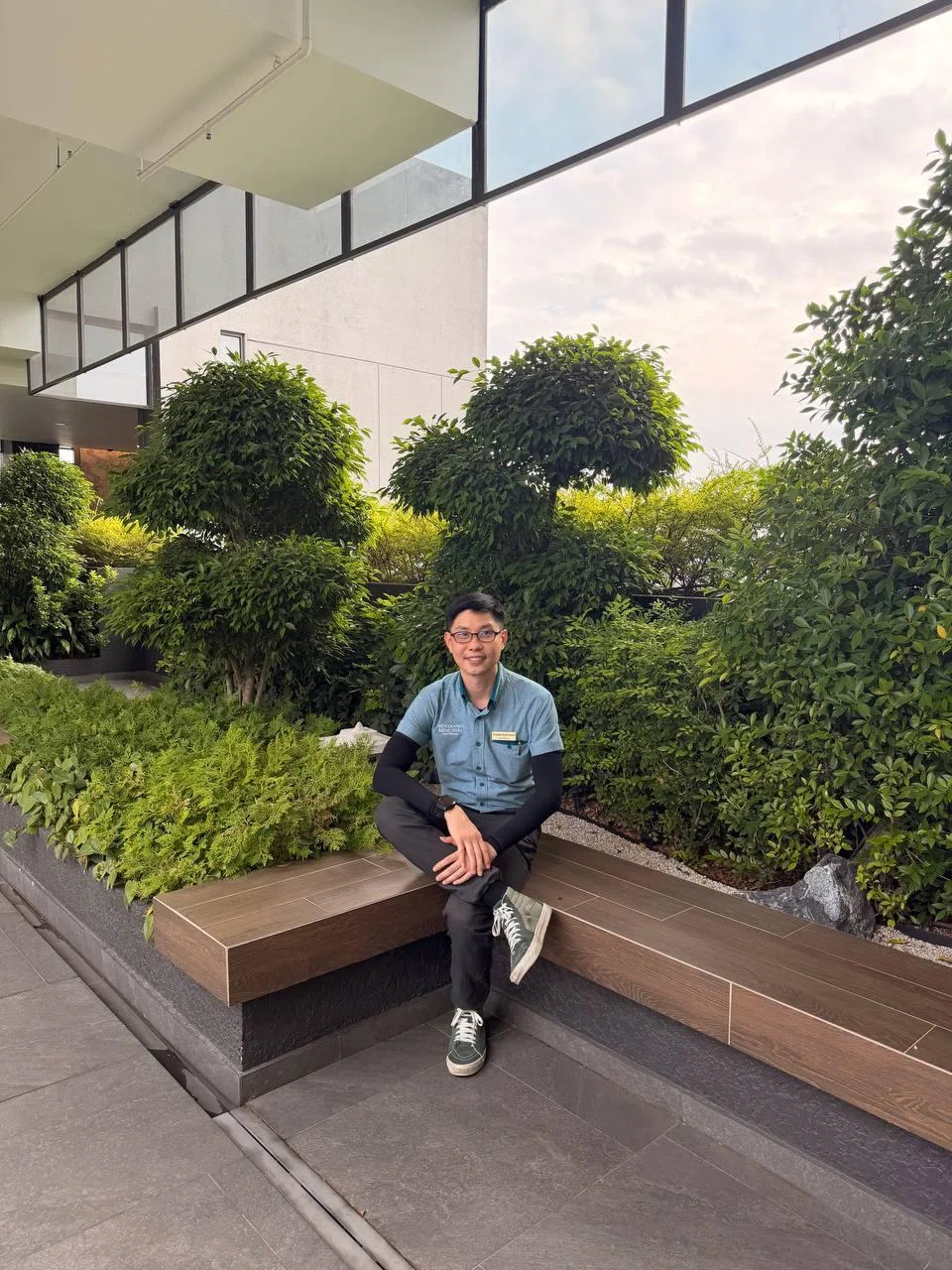
Edwards remembered being “surprised” when, in 2024, he did not cry when he had to repeat the process for his maternal grandparents – both of whom he was much closer to.
“I would like to think that it’s because I’ve come to terms with death, (which has) helped me manage my own grief a lot better,” he opined.


Edwards said he was “very sad” when the time came to cremate his loved ones, but said that death is a natural process. Experiencing physical pain in their mortal bodies “isn’t quality of life”.
“So I choose to be happy that they’re free from that,” he reflected.
Unexplainable incidents just an ‘overactive imagination’
When it comes to his work, Edwards approaches things in a very “scientific manner”.
This means that when seemingly unexplainable things happen – a light switch flickering, a tap running, unknown sounds — he usually finds an explanation for it.
“It could just be an overactive imagination, for example. There’s a lot of possibilities,” he said.
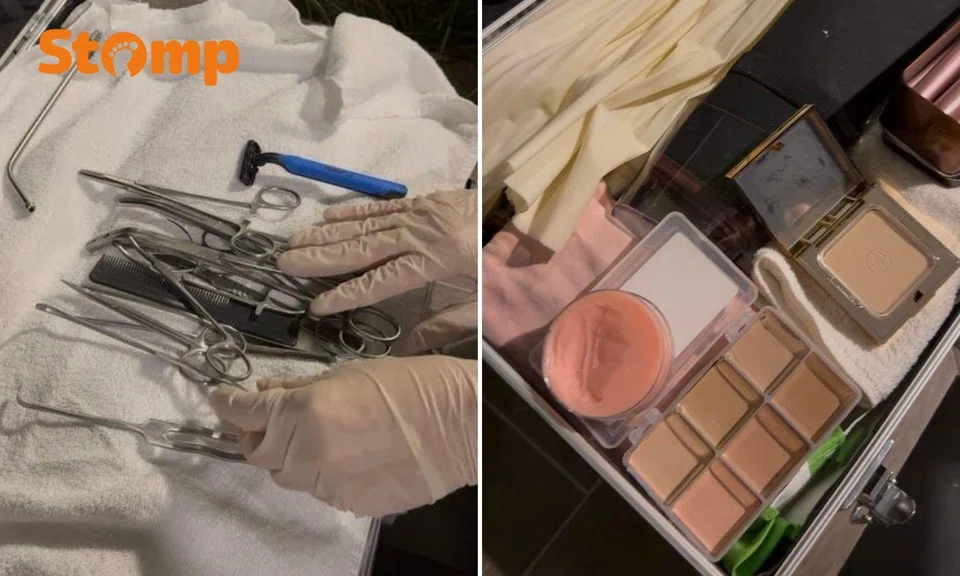
He’s also eager to educate others on embalming and dispel the common myths about it, such as the myth that embalmers remove all the organs before stuffing the body with newspapers.
“We don’t do that — we leave everything in a person,” the embalmer stated matter-of-factly.
He explained that embalmers use chemicals to temporarily preserve a dead body, while pushing blood out of the body. All organs are left intact in this process, and bodily fluids are drained to prevent further decomposition.
Apart from the actual embalming, embalmers also have to bathe and cleanse the body, break rigor mortis, dress the body and apply make-up to the face of the deceased.
“Sometimes we’ll do the hair, trim the nails, apply nail polish,” Edwards added.
After embalming, the family will usually make their way to the crematorium for the cremation. If the cremation takes place in the morning, the family of the deceased can retrieve the ashes in the afternoon of the same day.
Edwards shared that if the family plans for inland ash scattering, the cremains will need to be pulverised. Conversely, the cremains will be in fragments to be placed in the urn if the family wishes to place them in the columbarium.
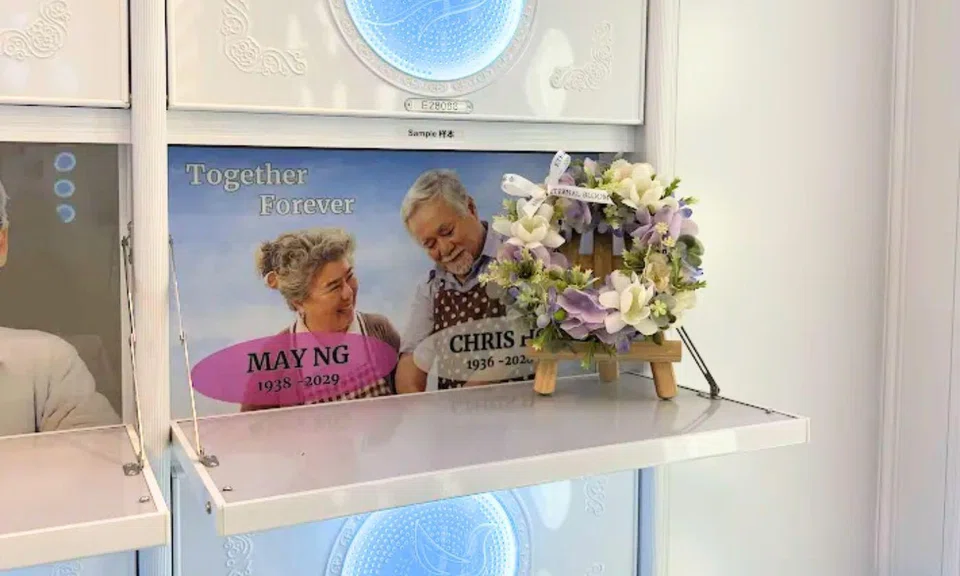
In Woodlands Memorial, there are separate columbariums for different faiths. Each columbarium is brightly lit and air-conditioned, with niches available for either one or two urns that loved ones can decorate to personalise the space for the deceased.
Though he has obtained certificates in embalming and facial restoration from the United Kingdom, Edwards believes that much of the training is hands-on and requires one to “tap into the creative side of your brain” to solve problems.
“If a person wants their loved one to look a certain way, you see what you can do with the tools that you have and try to make that happen,” he said.
He shared that he has spent up to 12 hours on one body — most of the time taken up by facial restoration — and has worked for up to 16 hours in one day.
All on a job that requires him to be on his feet, focused, and constantly moving around the metal bed to work on the deceased.
Despite the physical intensity of his work, Edwards intends to persist as an embalmer for as long as possible.
“As long as I can stand, I’ll be embalming.”

Explore more on these topics
See something interesting? Contribute your story to us.
