My daughter is 6. Why does it already feel like we’re preparing for PSLE and the rest of her life?
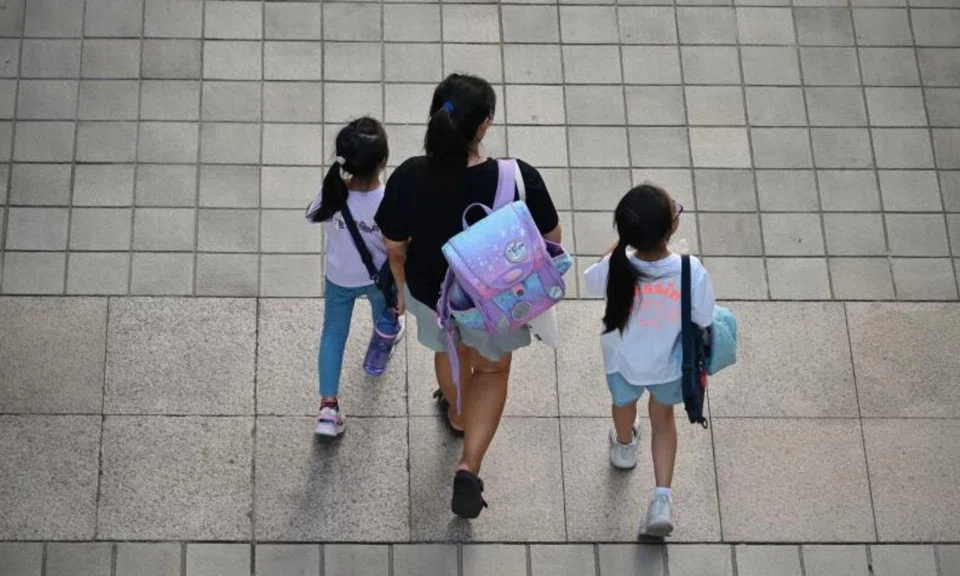
My daughter starts Primary 1 next year, but since June, we have been preparing her by telling time, counting money, doing addition, subtraction, reading, grammar, spelling and punctuation.
My mother, a primary school teacher for over four decades who is still an adjunct teacher today, insisted on this.
“It’s not about getting a head start, it’s being prepared!” she once said.
“I see children now coming to school not being able to read and they struggle so badly!”
“You won’t forgive yourself if you do nothing, and she’s unable to catch up in future,” she added.
All great points, albeit guilt and anxiety inducing. Yet I already feel overwhelmed. What must this feel like for my six-year-old?
Should the onus be on parents?
Friends tell me to ease off. Teaching, they argue, is the school’s job. The role of the parent is to provide the emotional support and encouragement to get through school. To assure them that they are more than their grades and they’ll be loved no matter the outcome.
She will be loved regardless of grades, but will she be proud of the person she is?
My mother sees it differently: teachers need parents to reinforce learning at home.
She sees it all the time — children arriving without foundational skills, struggling to keep up and being placed in hours upon hours of tuition. All affecting their overall confidence.
Two things can be true. Where does that leave working parents who reach home at 7.30pm?
Between dinner and bedtime, I want to hear about my daughter’s day, and send her to sleep feeling secure. I dread evenings dominated by homework, raised voices and tears. Basically, my childhood.
A caveat here would be necessary: I am the younger of two girls. My sister had very different evenings than I did. She would often be in her room, with the radio on in the background blazing through her homework without assistance.
Meanwhile, I would be in the living room with my over-tired mother, half marking worksheets from her class and half checking my work with a hanger placed next to her for intimidation purposes.
Ironically, despite being a less-than-average student, I very much value academic benchmarks. Preparing for exams can offer opportunities to practise time management, prioritisation, self-autonomy and emotional regulation.
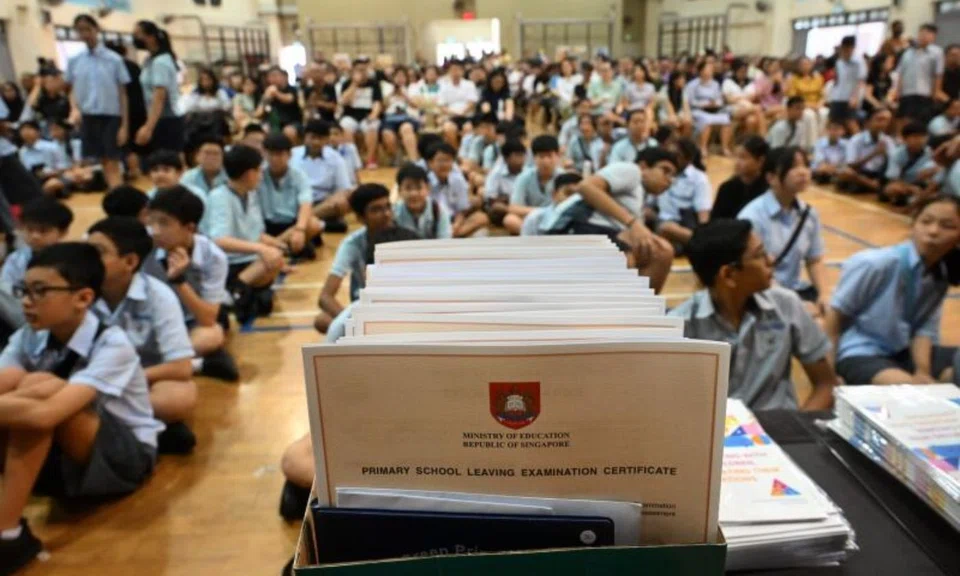
But should one examination at 12 years old carry so much weight in deciding a child’s next educational step?
What ever happened to ambition?
Direct School Admission already recognises talents beyond academics, although pupils must still sit for the Primary School Leaving Examination (PSLE) and meet admission requirements. Could we broaden that principle?
Alongside results, schools could consider sustained classroom work, creative projects and age-appropriate conversations about children’s interests.


A weakness in mathematics or mother tongue should prompt support, not indicate an overall drop in school aggregate. It still leaves room to recognise strengths elsewhere.
My sister knew at age 12 that she wanted to be a lawyer and worked toward that goal with much confidence, support and success.
I, at 36, still couldn’t tell you what I want to be. I’m more of a, “take what comes and figure it out along the way” type. A very valuable skill in itself.
My six-year-old started off wanting to be a teacher, but has since consistently said she wants to be a vet! My younger three-year-old is still deciding between being a butterfly or a baby elephant when she grows up.
I don’t expect most children at 12 to realistically know with such conviction what they want to be and what track to take. But conversations should be had because without it, it makes taking a big exam somewhat pointless.
If the objective is merely to get a good grade, it’s doing nothing for character development.
In kindergarten, schools bring in policemen, and some parents volunteer to come in and talk to the class about what they do, why doesn’t that extend beyond preschool?
Exposing young children constantly to a variety of jobs beyond “content creator” keeps it top of mind and inspirational.
Growing up, I watched Sesame Street where in addition to letters and numbers, the show would also feature occupations. What is the alternative to that these days?
If one has no idea what they want to be, they won’t know the point of trying. The PSLE becomes just another thing to get through — too bad if you don’t like it.
Results shouldn’t define you
I want my daughter to learn responsibility and perseverance. I also want her to know that an exam can assess her performance without defining her potential. I also want her to know school is not where you, “peak”.
Only in Singapore do we hold on to our L1R5 results even in adulthood.
I’m guilty of saying, “Yes, I’m in the media, but I actually studied engineering in poly” as if that were some kind of, “flex” to punctuate that I’m smarter.
An exam doesn’t have the power to define the rest of your life — this we have learnt and accepted. It is, however, something that needs to be done in order to progress to the next level.
I argue that with early exposure to careers it makes the direction a child might want to go clearer, thus putting purpose behind the exam. With purpose, this potentially might lead to better results.
My priority is to raise a child who has direction and knows she has options. A child who can cope with having to do things by the book as some processes require, but also know that should the traditional way fail, there are different routes to the same goal.
Oh yes, and I also want her to be happy.
Jillian Lim is an ex-radio DJ and current embroiderer, trying it all till something sticks.

See something interesting? Contribute your story to us.
