Woman who tried selling $15 keychain on Carousell loses $1k after falling for phishing scam

Claudia Tan
The Straits Times
April 10, 2026
When she received a message from a potential “buyer” for her $15 keychain on Carousell, Jane Lim (not her real name) got excited.
She clicked on a link sent to her e-mail address by the “buyer” to receive payment, but ended up losing $1,000 instead.
Ms Lim, who is in her 50s, recounted her experience during an interview at Police Cantonment Complex on April 6.
The police wanted to remind the public about red flags in phishing scams, which cost victims almost $40 million in losses in 2025.
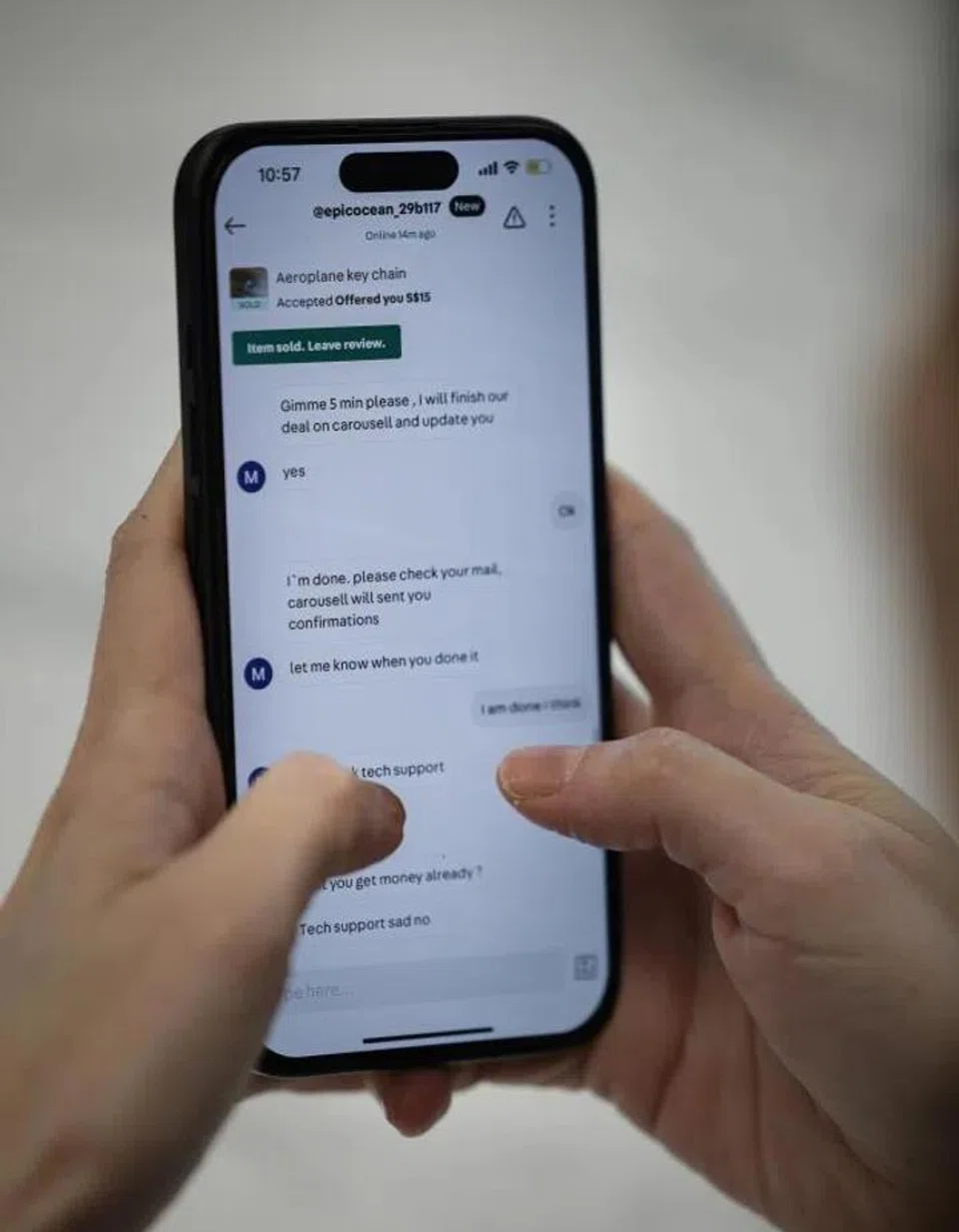
Ms Lim listed a keychain for sale at $15 in February, and received a message from the prospective buyer on the app about 10 minutes later.
As it was her first time selling on Carousell, she trusted the buyer, who said he would guide her through the transaction.
She said: “He told me (over text) he would initiate the (transaction) and I would receive an e-mail.”
The e-mail stated that the buyer had paid for the item, and the money was deposited into Carousell’s payment system. To receive the money, Ms Lim clicked on a link in the e-mail, which led to a website that resembled Carousell’s.
She did not verify its authenticity as she was excited about selling the keychain.
Ms Lim could not remember if she keyed in her banking details on the fake website.
She received a notification from her bank app asking her to approve a transaction, which she did.
Minutes later, she received another notification asking if she wanted to increase her bank transfer limit. She ignored this notification.



She then received a message from her bank informing her that $1,000 had been deducted from her account.
She realised she had been scammed. The potential “buyer” also ghosted her.
Ms Lim made a police report that day, but was unable to recover the money.
She said: “I’ve read reports about others being scammed, but I never thought I would be a victim. But life goes on; I’ll treat this as a lesson learnt.”
She said she will stick to using PayNow or cash from now on.

In their annual scam statistics released on Feb 25, the police said phishing scams were the second-most common type of scams in 2025, with 6,264 reported cases resulting in $39.9 million in losses.
From January to March 2026, there were at least 616 fake-buyer phishing scam cases reported, with losses totalling at least $2.2 million, said the police.
Assistant Superintendent Nur Farhanah Ismail from the police’s Anti-Scam Command said: “Do not disclose your e-mail address to potential buyers as fraudsters frequently use this to send convincing phishing e-mails designed to steal your personal information such as your banking credentials and card details.
“Be extremely wary of any links provided by buyers claiming to facilitate payment. Never provide your banking details, card details or any other confidential information to persons whom you do not know.”
She also urged members of the public to arrange to meet buyers at safe, public locations to complete their sales.
Anyone who has fallen for a scam should immediately make a police report and inform their relevant financial institutions.
If in doubt, call the 24/7 ScamShield helpline on 1799.

See something interesting? Contribute your story to us.
