New community space at Rail Corridor might showcase heritage, history

Beneath the intersection of Queensway and Portsdown Avenue is a mound of earth and some uninviting slopes, but the area underneath this busy viaduct will soon become a gathering space for the community.
The space beneath the Queensway viaduct is one of the upcoming “community nodes” that are being developed at the Rail Corridor.
The Queensway node will be completed in 2027, and could include a heritage gallery and a garden that pays tribute to the area’s plantation history, said Second Minister for National Development Indranee Rajah on Jan 17.
Speaking at the launch of an exhibition on the Rail Corridor at The URA Centre, Ms Indranee also said a community node will be developed around 2035 at Stagmont Ring, near to Yew Tee and an upcoming MRT station on the Downtown Line that was announced on Jan 6.
The exhibition, called From Rail to Trail, commemorates 14 years of partnership between nature and heritage advocates and various Government agencies that helped turn the former Keretapi Tanah Melayu (KTM) railway line into a public green space.
The 24km-long line that stretches from Tanjong Pagar to Kranji was decommissioned in 2011 after about eight decades of service.
Each community node along the corridor is a space for the public to gather and participate in activities. Four have opened so far – in Kranji, underneath a Pan-Island Expressway viaduct, at the former Bukit Timah Railway Station and in Buona Vista.
A fifth is slated to open in 2025 at the former Bukit Timah Fire Station, after LHN Facilities Management won a tender to operate the state property in April 2024.
The Queensway node will be designed by a team led by Samuel Lee of architectural firm Designshop, after the team beat 19 other entries in a design competition for the node that was organised by the Urban Redevelopment Authority (URA) and the Singapore Institute of Architects.
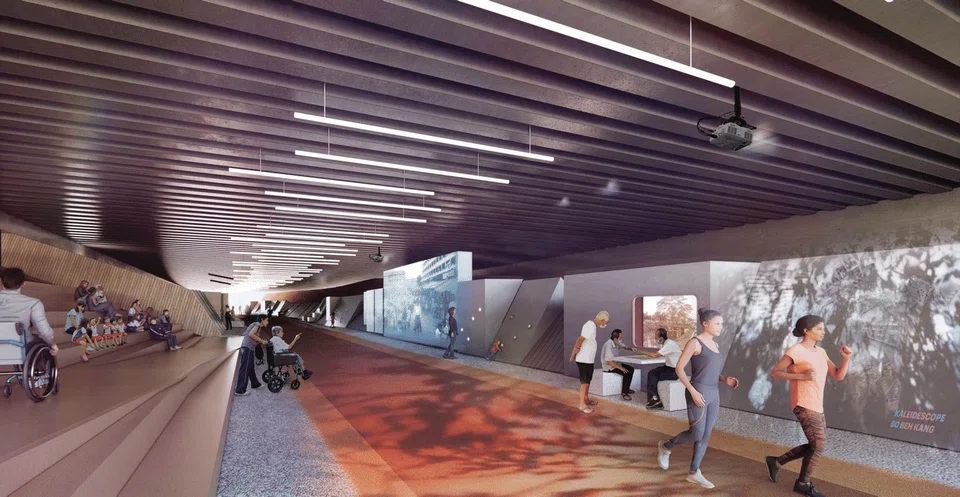
The team’s submission, titled Kaleidoscope Boh Beh Kang, imagined the 1.31ha Queensway node as a “kaleidoscopic tunnel” that would bring visitor’s back to days when the railway was still in operation.
Boh Beh Kang was the name of a village within present-day Queenstown that was named “no-tail-river” in Hokkien after a river that ran through the village – it was believed that no one knew the source of the river.
Based on the design, the section of the Rail Corridor that runs underneath the viaduct will be lined with heritage exhibits, projections, artefacts and photographs that trace the transformation of Boh Beh Kang to Queenstown.
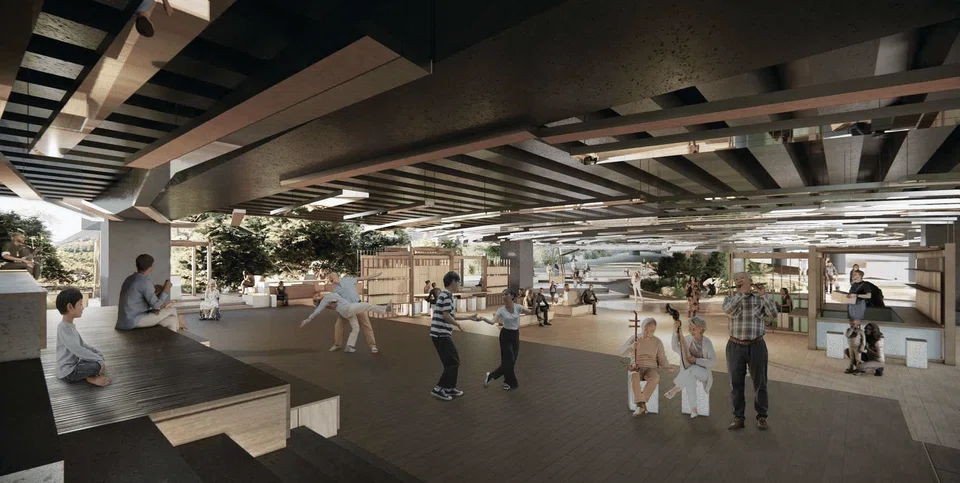
Ms Indranee invited the public to provide feedback on the team’s proposal, and said the authorities will work with the team to refine their plans before they are implemented.
The URA is also seeking public feedback on the Stagmont Ring node, which will be developed around 2035 in tandem with the upcoming MRT station, and a future node at the former Tanjong Pagar Railway Station, to be developed after ongoing restoration works on the station are completed in 2028.
In September 2024, it was announced that local architectural assistant Kenneth Chiang had won an ideas competition for the former railway station, and Ms Indranee said on Jan 17 that ideas gathered from the competition will be studied for future incorporation.
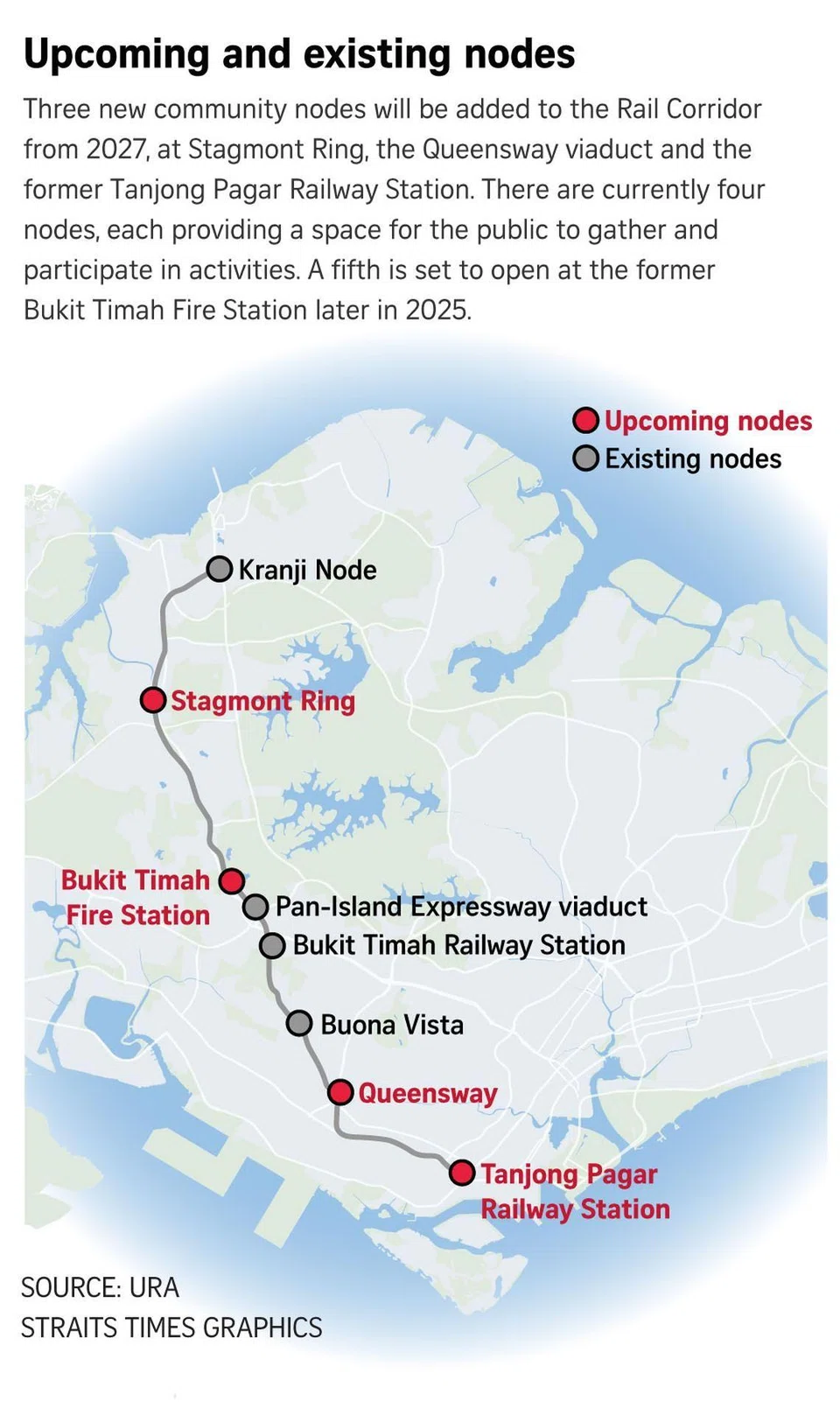
Feedback on the three upcoming community nodes at Queensway, Stagmont Ring and Tanjong Pagar Railway Station can be submitted at go.gov.sg/RailToTrail.
The From Rail To Trail exhibition runs from Jan 17 to Feb 28. It is open from Mondays to Saturdays from 8.30am to 5.30pm at The URA Centre.

See something interesting? Contribute your story to us.
Explore more on these topics
