Mandatory caning for scammers from Dec 30, increased penalties for speedsters from Jan 1
Zaihan Mohamed Yusof
The Straits Times
Dec 18, 2025
Scammers, and members and recruiters of scam syndicates, will face mandatory caning of at least six strokes from Dec 30.
This can go up to 24 strokes depending on the severity of the offence.
The enhanced penalties were introduced amid reports that showed people in Singapore have lost more than $3.4 billion to scams since 2019.
The Ministry of Home Affairs (MHA) on Dec 19 said that the number of scam cases and scam losses remain concerning.
Besides syndicate members, scam mules who enable scammers by laundering scam proceeds, providing SIM cards and providing Singpass credentials will face discretionary caning of up to 12 strokes.
Offenders who commit non-scam, cheating cases will also be liable for discretionary caning of up to 24 strokes.
“This recognises that there are egregious traditional cheating cases that could also warrant caning as a sentencing option,” said the ministry.
Mandatory caning was introduced for certain scam and cheating offences after amendments to the Criminal Law (Miscellaneous Amendments) Act were passed in November.
Speeding and demerit points
From Jan 1, 2026, motorists who speed and lorry owners who have not installed speed limiters on their vehicles will face more demerit points and higher fines, said MHA in a separate press statement on Dec 19.
A light-vehicle motorist who exceeds the speed limit by 20kmh will now get six demerit points and a $200 fine, up from four demerit points and a $150 fine.
Those who hit between 40kmh and 50kmh beyond the speed limit will be given 18 demerit points and face prosecution. Previously, an offender would have received 12 demerit points and prosecution in court.
First announced in May, the increased penalties come in the wake of a spike in the number of speeding violations.



In the first half of 2025, nearly 120,000 speeding violations were recorded – an increase of about 45 per cent compared with the same period in 2024.
Tougher penalties will also be imposed for road traffic offences committed within Friendly Streets, School and Silver zones, and roads with higher pedestrian presence.
Those who commit traffic offences within these zones will incur an additional two demerit points on top of the enhanced speeding penalties, said MHA.
They will receive an additional $100 in composition sums for offences committed within Friendly Streets, which are stretches of roads with high pedestrian and cyclist flows near markets, hawker centres and MRT stations.
The Traffic Police (TP) have urged lorry owners to install speed limiters on their vehicles immediately. They are required to do so before the statutory deadline of Jan 1, 2026.
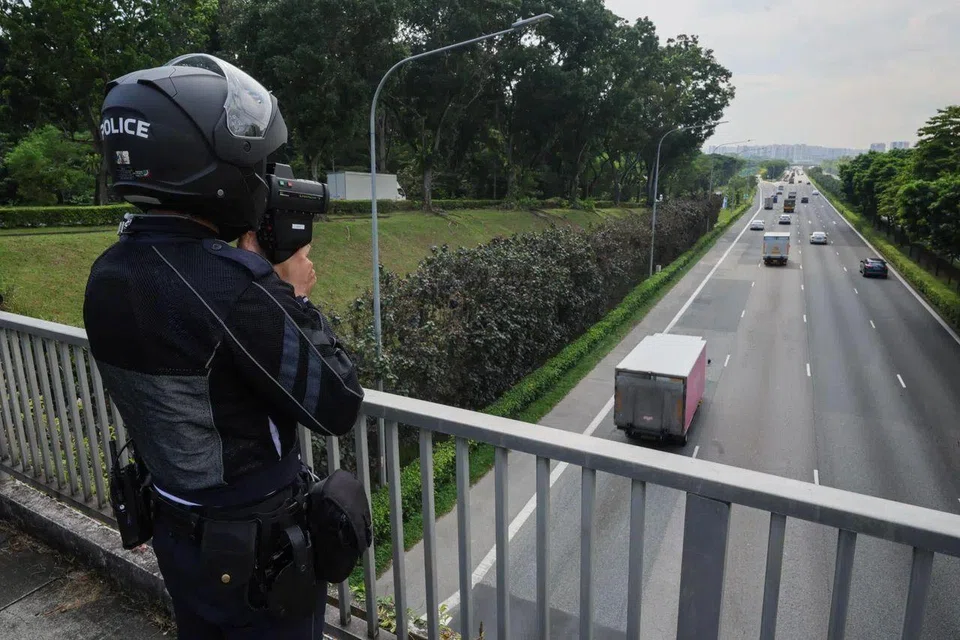
As at Dec 11, 2025, 495 out of 2,485 lorries – roughly 20 per cent – have yet to install speed limiters.
Non-compliant lorries will not have their road tax renewed and their usage will be prohibited.
Owners of non-compliant lorries will face increased penalties for offences involving speed limiters. The MHA will table legislative amendments in 2026 to raise the maximum penalty from $1,000 to $10,000 for non-compliance with statutory deadlines to install speed limiters, or for tampering with speed limiters.
From Jan 1, 2026, company drivers caught speeding in lorries will be issued a Remedial Order (RO) under the Workplace Safety and Health Act for committing an unsafe act at work.
The RO issued by TP will require the company to install speed limiters across all its remaining lorries ahead of the statutory deadlines. Failure to comply will result in fines of up to $50,000.
From Jan 1, 2026, the speed limiter requirement will also be incorporated into the Workplace Safety and Health Council’s risk management audit as part of the bizSAFE certification and renewal process.
Companies operating lorries without speed limiters will be flagged during the audits and may be unable to obtain or renew their bizSAFE certification.


Explore more on these topics
See something interesting? Contribute your story to us.
