‘I can’t stop watching’: More seniors hooked on AI microdramas, sparking concern over isolation

Some seniors in Singapore have become so engrossed in AI-generated microdramas that they sacrifice sleep to catch up on the latest episodes.
With free access, fast-paced plots and cliffhanger endings, the bite-sized videos offer an easy way to pass the time. But experts warn that excessive viewing could also point to a deeper issue: loneliness and social isolation.
A Shin Min Daily News report on Nov 28 found that older people can often be seen engrossed in their phones while walking along the streets or taking public transport.
Asked why they enjoy the dramas, some cited their fast-paced updates and gripping plots, while others said the episodes were so short that they could easily finish watching them.
Some even said: “I can’t stop watching once I start.”
Convenient and addictive
Housewife Chen Liming (transliterated), 59, said she reaches for her phone to watch AI microdramas whenever she has free time.
She particularly enjoys stories about conflicts between mothers-in-law and daughters-in-law, as well as palace intrigue.
She admitted that she used to watch so much that she would stay up late, leaving her tired the following day and straining her eyes.
She has since learnt to exercise more restraint, trying not to spend more than three hours a day watching dramas.

Another microdrama fan, a 65-year-old retiree surnamed Huang (transliterated), said these short-form clips were convenient because he could start watching as soon as they appeared on his feed.
He is particularly drawn to exaggerated storylines, such as those depicting the end of the world, which he said would be difficult to recreate in real life.
Many older viewers also appreciate that AI dramas on the Chinese microdrama streaming platform Hongguo are generally free to watch, making them an affordable way to pass the time.
Some seniors watch short videos for hours
Lee Weng Foo, head of community care at Tzu Chi Foundation Singapore, told Shin Min that its senior members had not shown obvious signs of becoming addicted to AI microdramas.
However, the organisation is concerned about the potential digital risks that older people face.
He noted that many seniors rely heavily on digital tools for information but may struggle to distinguish credible sources from false or misleading content.
The foundation is currently working with the National University of Singapore on a joint study examining how older people can use the internet and AI to obtain health information responsibly.
Meanwhile, Karen Wee, executive director of Lions Befrienders, said more than half of the seniors under its care own smartphones. About half of them spend one to two hours watching short videos, including AI-generated dramas, daily.
She said some seniors might not simply be absorbed by the content, but could also be turning to their phones because they lack people to talk to.
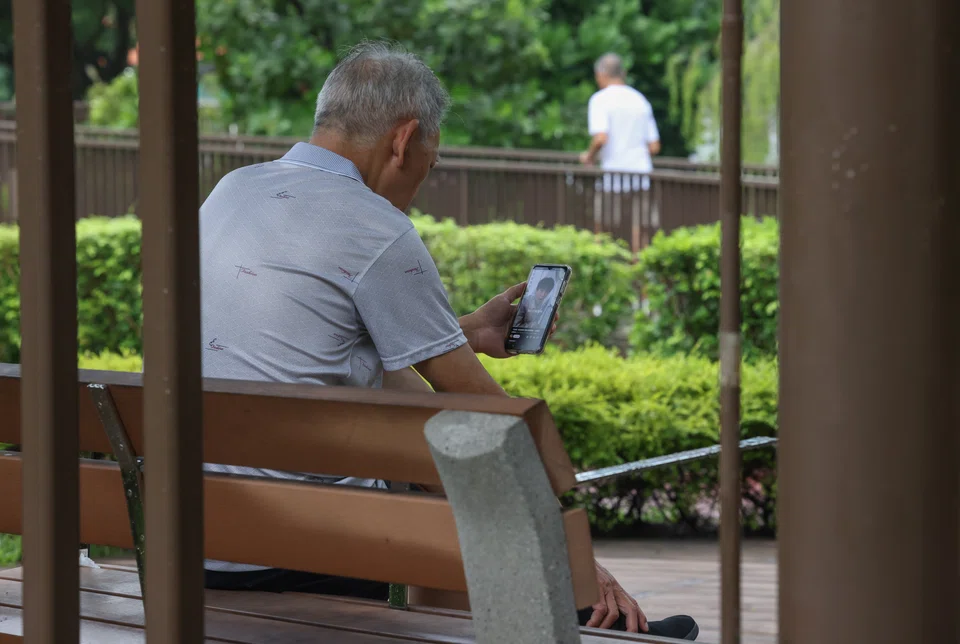
When the elderly have no one to accompany them, their phones become a substitute for relieving loneliness, she said.
She added that the issue behind excessive AI microdrama viewing could therefore be one of emotional well-being and social isolation.

Free access and fast-paced plots
The appeal of AI short dramas lies partly in their free access and tightly packed storylines.
Ian Tan, a lecturer at Nanyang Technological University’s Wee Kim Wee School of Communication and Information, said he had been providing generative AI training to local companies and government agencies for several years.
While traditional long-form dramas generally offer better production quality and a stronger human touch, he said there had always been demand for lighter forms of entertainment.
He compared the shift to how music videos from earlier decades have given way to short-form videos on platforms such as TikTok and Instagram.
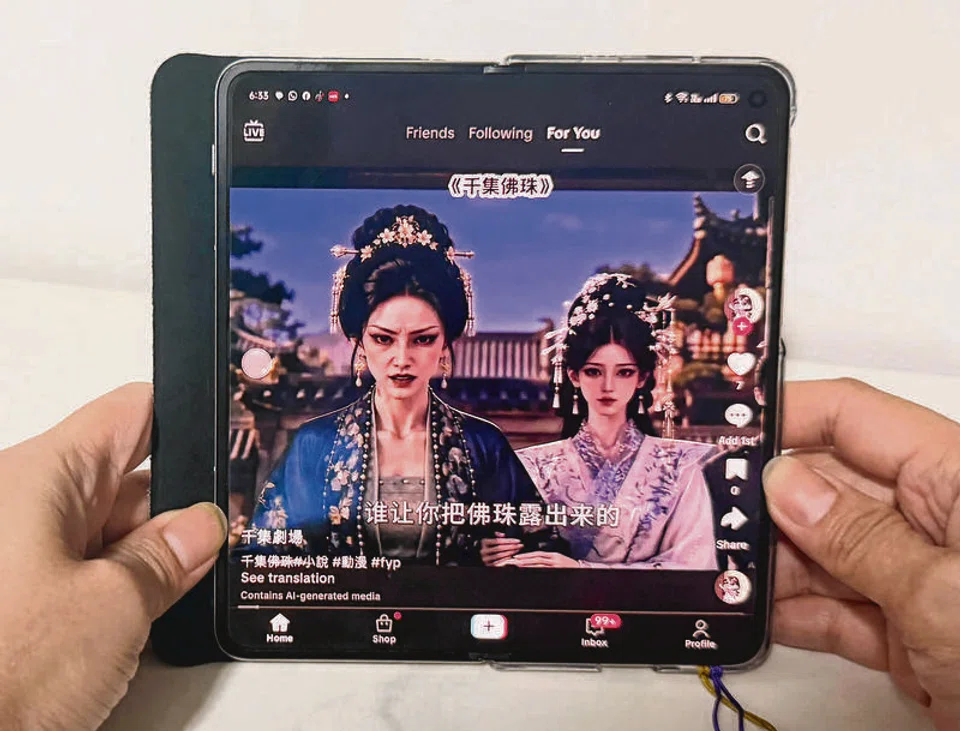
AI microdramas attract viewers not only because they are free, but also because they are presented in a vertical format and retain the dramatic structure of traditional television serials.
Their interconnected storylines, escalating conflicts and cliffhangers keep viewers coming back for more.
He added that many viewers, particularly older ones, might not be overly concerned about production details.
For them, the dramas offer easy entertainment that can help pass the time during commutes or simply provide background noise at home.
The social and physical costs
Dr Wayne Freeman Chong, executive director of GeroPsych Consultants, said the key question is what seniors are giving up in order to watch short dramas.
If they were simply switching from watching television to watching short videos, there might not necessarily be cause for concern.
However, it could become a problem if they were sacrificing regular walks, gatherings with friends or sufficient sleep to keep watching.

He also cautioned that staying up late to watch dramas might sometimes be a symptom of existing difficulties, such as chronic insomnia or emotional distress.
Some seniors might turn to short dramas to distract themselves or seek emotional comfort, and simply telling them to spend less time watching videos might not address the underlying issue.
Chong suggested that family members have a deeper conversation with their elderly relatives about what they enjoy about the dramas and any possible negative effects.
They could then work out adjustments together, such as switching off the autoplay function, while ensuring that important daily routines are not disrupted.
In Parliament this month, Senior Minister of State for Digital Development and Information and Health Tan Kiat How said more seniors were becoming engrossed in their smartphones, with many regularly watching AI-generated micro-dramas.
He was responding to a question from Tanjong Pagar GRC MP Joan Pereira.
The Government would continue monitoring seniors’ screen time and assess whether further studies into their usage habits were necessary.

Explore more on these topics
See something interesting? Contribute your story to us.
