Five minutes later to hospital, Jurong traffic accident victim might not have survived

Claudia Tan
The Straits Times
May 3, 2026
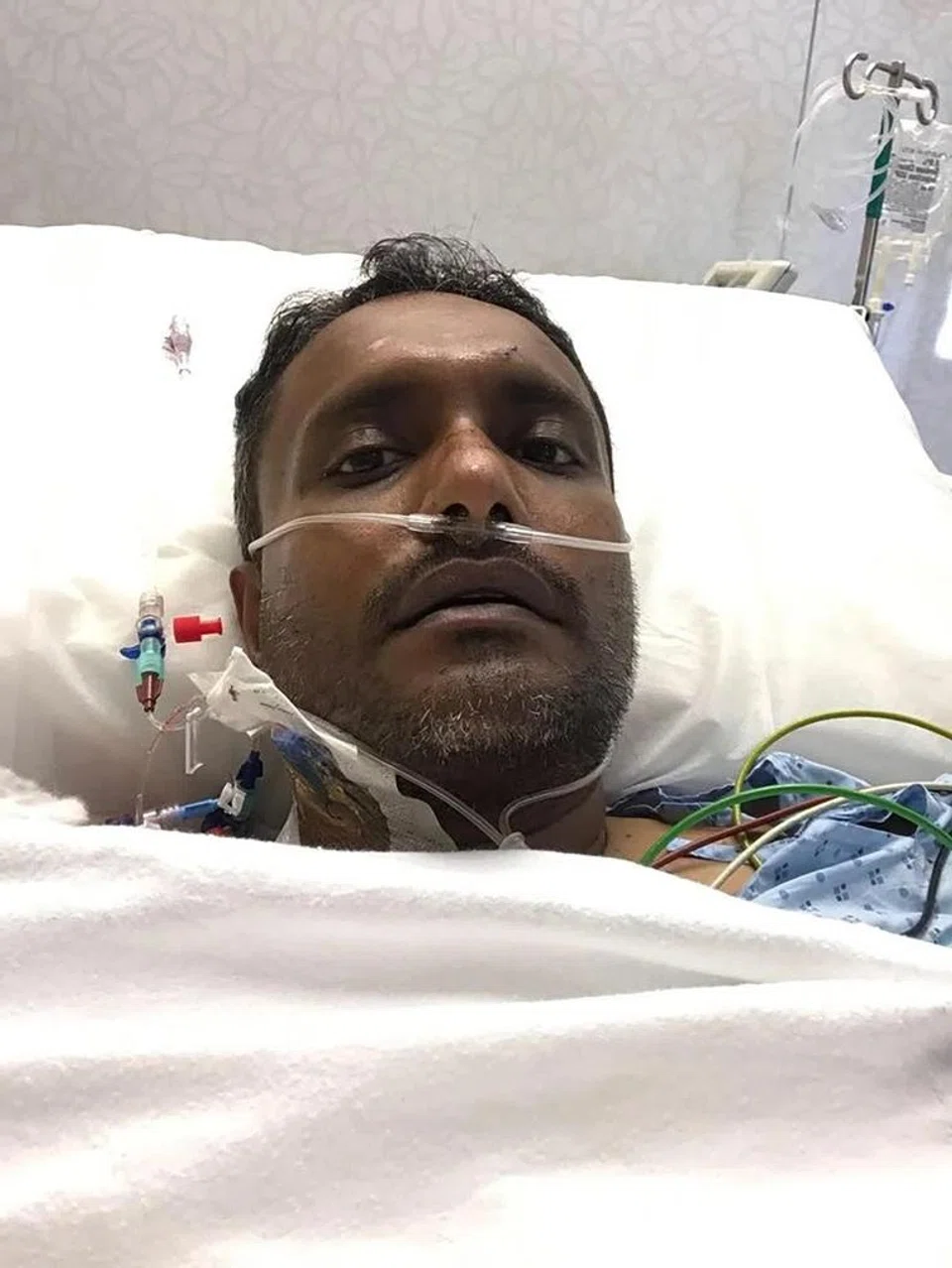
Mr Patrick Pereira remembers beeping monitors in National University Hospital’s (NUH) intensive care unit (ICU), where he stayed for 10 days after a road accident.
He was riding his motorbike home from a family dinner when he was involved in a collision with a lorry along Jurong East Avenue 1 on Sept 10, 2017.
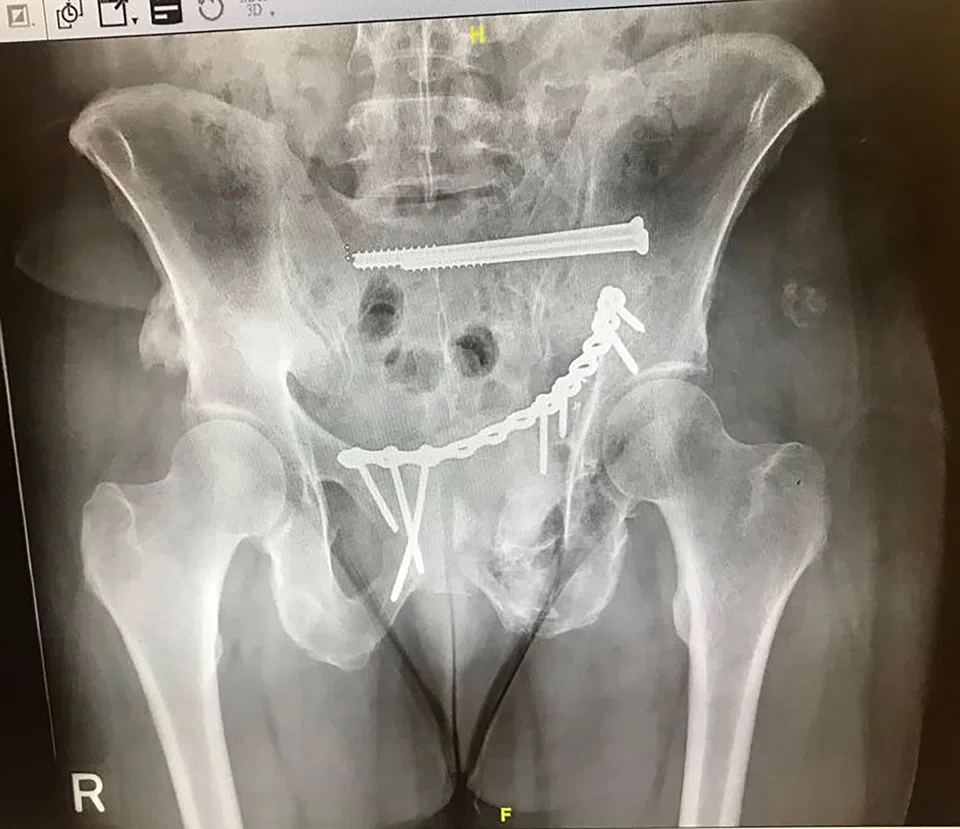
He broke both arms and suffered an open book pelvic fracture, where the pubic bones at the front of the pelvis separate, causing the two halves of the pelvis to splay outward like the pages of a book.
Traffic deaths hit a 10-year high in 2025, with 149 killed, compared with 141 in 2016. There were 142 deaths in 2024. The number of injured people also increased, from 9,342 in 2024 to 9,955 in 2025.
Given the dire situation on our roads, The Straits Times has been running a series of stories to call on all road users to be more careful.
In their annual statistics for 2025, released in February 2026, the Traffic Police said motorcycles made up about 15 per cent of Singapore’s total vehicle population in 2025.
Yet, motorcyclists and pillion riders were involved in 54.8 per cent of all traffic accidents and accounted for 53 per cent of deaths.
The number of accidents involving motorcyclists jumped from 3,973 cases in 2024 to 4,227 cases in 2025. The number of motorcyclist and pillion rider casualties increased from 4,510 in 2024 to 4,844 in 2025.
Mr Pereira, now 55, who works in IT, underwent several operations to stop the bleeding in his abdomen, and had titanium rods inserted into his arms and pelvis. Doctors removed his damaged spleen and gallbladder.
A contused nerve in his left arm was replaced with a nerve from his left leg.
He did not suffer serious head injuries as he was wearing a helmet.
He said: “In the ICU, all (I could hear) was the heart monitor beeping. In the middle of the night, I sometimes heard the sound of (other patients flatlining), and their family members crying.
“I wondered when it would be my turn.”
On the accident, Mr Pereira said his head hit the lorry’s windshield and he fell onto the road.
Thinking it was a minor accident, he tried to stand up to pick up his motorbike so he could ride off.
But passers-by told him not to move, as a bone was sticking out of his left arm.
Slowly, the pain from his injuries crept in as he was lifted onto a stretcher and into an ambulance.
The last thing Mr Pereira remembered was seeing the doors of the accident and emergency unit at NUH.
When he awoke the next day, doctors told him that had he arrived five minutes later, he might not have survived, as he had lost a lot of blood.


Mr Pereira said: “I was scared I would not be normal again. I never expected (my injuries) to be so serious.”
As he could not move, nurses had to wipe him down and shower him.
He said: “It made me feel very helpless, but I told myself it was temporary.”
Screams of pain
Once he was out of the ICU, Mr Pereira had to learn to sit upright.
He had to be hoisted from his bed into a chair, as he could not put any weight on his pelvis.
He said: “When they hoisted me, I was screaming and crying in pain. After sitting in the chair for one minute, I begged the nurse to put me back in bed.
“Whenever I heard the squeaking wheels (of the hoist) coming down the corridor, I thought to myself, ‘They’re coming to torture me again’.”
Once he could sit for about 20 minutes, his physiotherapist put him in a wheelchair so he could try moving around. Since both his arms were broken, he used his feet to propel himself along the corridor.
Despite the painful physiotherapy sessions, Mr Pereira was determined to get well so as to return home.
He spent more than two months in the hospital before being discharged in November 2017. He weighed 74kg before the accident, but shed 15kg during the hospital stay and weighed about 59kg when he was discharged.
At home, his family helped him shower and change clothes.
He said: “They were very supportive of my recovery. There were many things I couldn’t do, but every day I saw improvements, so I kept pushing myself.”
Mr Pereira still has difficulty squatting, and walks with a limp.
Lingering trauma
Although he has recovered physically, Mr Pereira suffers from post-traumatic stress disorder.
When in private-hire cars, he tells the drivers that he had been in an accident and asks them to slow down and maintain a safe distance from the vehicle in front.
Most drivers accede to his request.
Seeing brake lights causes his leg to move involuntarily, as if he is stepping on the brakes to reduce the vehicle’s speed.
He said: “The worst thing is seeing the accident site near my home. Going past it makes my heart skip a beat, because that’s where I almost lost my life.”
Since the accident, Mr Pereira said he has become a more grateful person.
He said: “Because I was in the hospital for so long, I realised that little things, like walking around and using my hands to scratch my face, are so important. I appreciate these things much more now.”

Explore more on these topics
See something interesting? Contribute your story to us.
