If passenger doesn't wear seat belt, PHV driver should be allowed to cancel trip without penalty: Stomper

Welcome to Stomping Ground — a space where Stompers share reflections, personal essays and social commentaries that spark conversation and insight.
What should a private-hire vehicle (PHV) driver do when a passenger doesn't buckle up?
Recently, a court found a PHV passenger 20 per cent liable for his accident injuries as he did not wear a seat belt as required by law.
However, he appealed against the ruling.
Mr Baek Jongwoo was hurt after the PHV ran a red light and collided with another vehicle at the junction of Anson Road and Maxwell Road on May 12, 2021.
He claimed he bore no responsibility for his injuries because the driver did not give him an opportunity to fasten his seat belt before driving off. Mr Baek said he was about to buckle up when the collision occurred.
But the judge rejected the argument.
She said: "That argument is a non-starter simply because Mr Baek had a seat belt physically accessible to him, knew that he was obliged by law to fasten it, and yet did not do so."
The judge also said Mr Baek could not rely on the driver's failure to ensure that the passenger fastened his seat belt as a basis for reducing his own share of responsibility.
She concluded: "In the circumstances, I found that Mr Baek was partly to blame for the injuries he sustained in the collision, and I apportioned responsibility to him in the amount of 20 per cent."
Reacting to the December 2025 court case, Stomper Rashid wants to examine the wider implications for road safety and liability.
"What happens if passengers routinely play the victim despite failing to wear seat belts properly, wearing them behind their backs instead of across their chests, or unfastening them prematurely before reaching their destinations?" asked the PHV driver.
"In such cases, should liability not be reversed?"
Rashid said that many PHV drivers have stopped reminding passengers to buckle up, not out of negligence, but because the star-rating system penalises them for enforcing safety rules.
"Ratings directly affect income, incentives, and access to premium tiers. As long as this system continues to enslave drivers, holding them solely responsible for passenger non-compliance is unrealistic and unfair," explained the Stomper.


"Responsibility must shift clearly to passengers who knowingly ignore safety requirements."
He said that ride-hailing services now dominate point-to-point transport, but enforcement frameworks have not evolved accordingly.
"Drivers are expected to focus on traffic conditions, pedestrians, junctions, traffic signals, whether passengers have fastened their seat belts, and whether there are handphone zombies on the road," said the Stomper.
"At the same time, they are burdened with passengers smoking, vaping, eating, drinking, demanding abrupt diversions, questioning rules, or acting as backseat drivers."
Rashid claimed: "Safety reminders invite retaliation. As a result, enforcement inside the vehicle collapses.
"Times have changed, but accountability has not shifted accordingly. It is no longer reasonable to penalise drivers for passenger behaviour they cannot realistically enforce without risking their livelihoods."
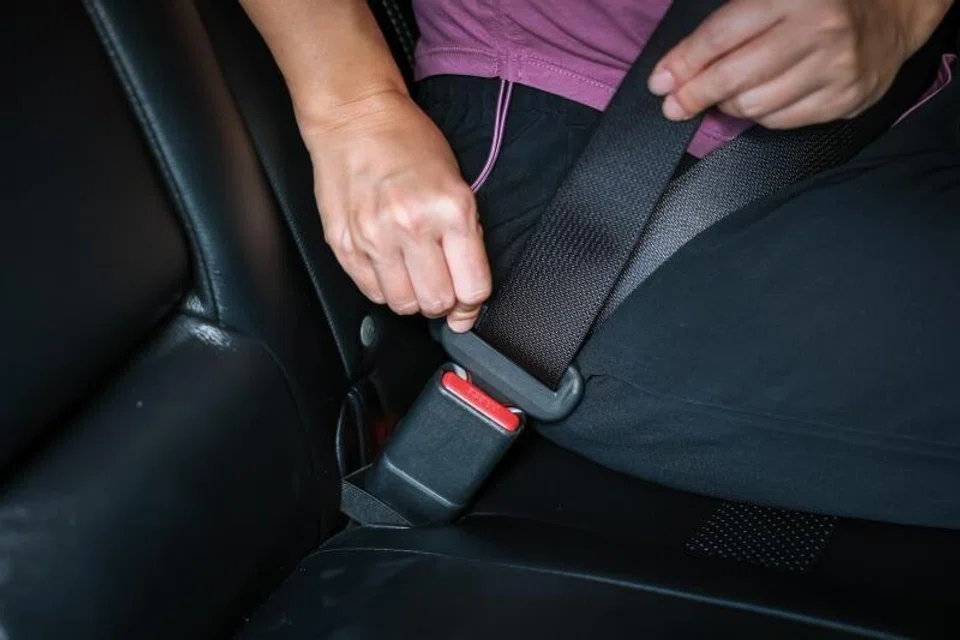
The Stomper said: "If passengers are unwilling to comply with seat belt rules, drivers must be empowered to terminate trips without penalty.
"Enforcement must target those who refuse to comply, not those trapped in systems that punish enforcement."
Rashid shared his thoughts with multiple government agencies, including the Land Transport Authority (LTA).
He received a reply from LTA on Dec 5.
It said that under the Road Traffic (Motor Vehicles, Wearing of Seat Belts) Rules, drivers and passengers must wear seat belts unless they have a valid medical exemption.
"We recognise that asking passengers to comply with these requirements can be difficult when passengers are uncooperative," said LTA.
"If passengers refuse to wear their seat belts or unfasten their seat belts mid-trip despite reminders, you can refuse to convey them and terminate the trip.
"You will not be penalised for terminating such trips, provided it is done safely, for example, by stopping at a location that is safe for the passenger to alight."
Have your say on Stomping Ground! Write to us at stomp@sph.com.sg or WhatsApp 9384 3761.

See something interesting? Contribute your story to us.
