Rescued by my rescue: The dog rescuer who was once scared of dogs

In a new series, Stomp speaks to furparents who adopted rescue pets — and found that they were the ones who were rescued instead.
It was at a shipyard back in 2018 that Lim Jia Bei finally overcame her childhood fear of dogs, a phobia rooted in growing up with little exposure to them.
Then a 26-year-old planning engineer, Ms Lim had found a Singapore Special puppy wandering about the premises alone while on her lunch break. Instinctively concerned about its safety, she picked up the puppy in her hands.
“I was scared, and the puppy looked scared, and I let go,” recalled Ms Lim, who spoke to Stomp at her home in Sengkang.
The puppy ran away after that encounter and disappeared for two months. When he was finally found again, he had been crippled by older dogs who attacked him repeatedly. Eventually, a friend climbed into a restricted area of the shipyard to rescue the puppy.
It was the start of a journey that eventually saw Ms Sim working with other rescuers and animal welfare group Save Our Street Dogs to trap, neuter, and rehome the strays in the shipyard.
A rescuer’s journey beyond the Causeway
Ms Lim, now 34 years old, has been working as a tattoo artist for the past six to seven years. She told Stomp that the shipyard now has fewer than 10 dogs, and she still occasionally helps to trap and neuter the 80 cats living there.
Her efforts have now extended beyond the Causeway. The flexible nature of Ms Lim’s work allows her enough time to volunteer at the Companion Animal Rescue Effort Society in Johor Bahru (Cares JB) at least once a week.
The genial tattoo artist shares updates about Cares JB shelter dogs, her adopted nine-year-old husky Simba and the dogs she fosters on the Instagram account @fluffyfatsimba. Before volunteering for Cares JB, Ms Lim had focused her independent rescue efforts locally until the death of one of her fosters, Julio, last Feb.
The day Julio died
Julio was an energetic two-year-old Singapore Special that Ms Lim had been trying to rehome for one-and-a-half years. He had been under her care for so long that friends thought she had formally adopted him.
Last Feb, while playing at a rooftop garden only a few storeys high, Julio inexplicably ran and jumped off the roof to his death.
More than a year after his death, Ms Lim is still distraught and perplexed. She had been walking Julio at the garden for over a year, and there were no problems at all until that fateful day.
“I lost myself. It was a confusing time for me,” confessed Ms Lim.
She quickly turned to volunteering at Cares JB as a distraction from her grief. When asked if this work was therapeutic, she demurred. “It’s emotionally draining to go to the JB shelter.”
Volunteers sometimes have to cope with the loss of animals — before the interview, she had heard that one of the shelter dogs had died, though she did not know the reason.
Asked how she deals with the emotional strain of her work, Ms Lim said she prefers to focus on the many tasks she needs to perform at the shelter.



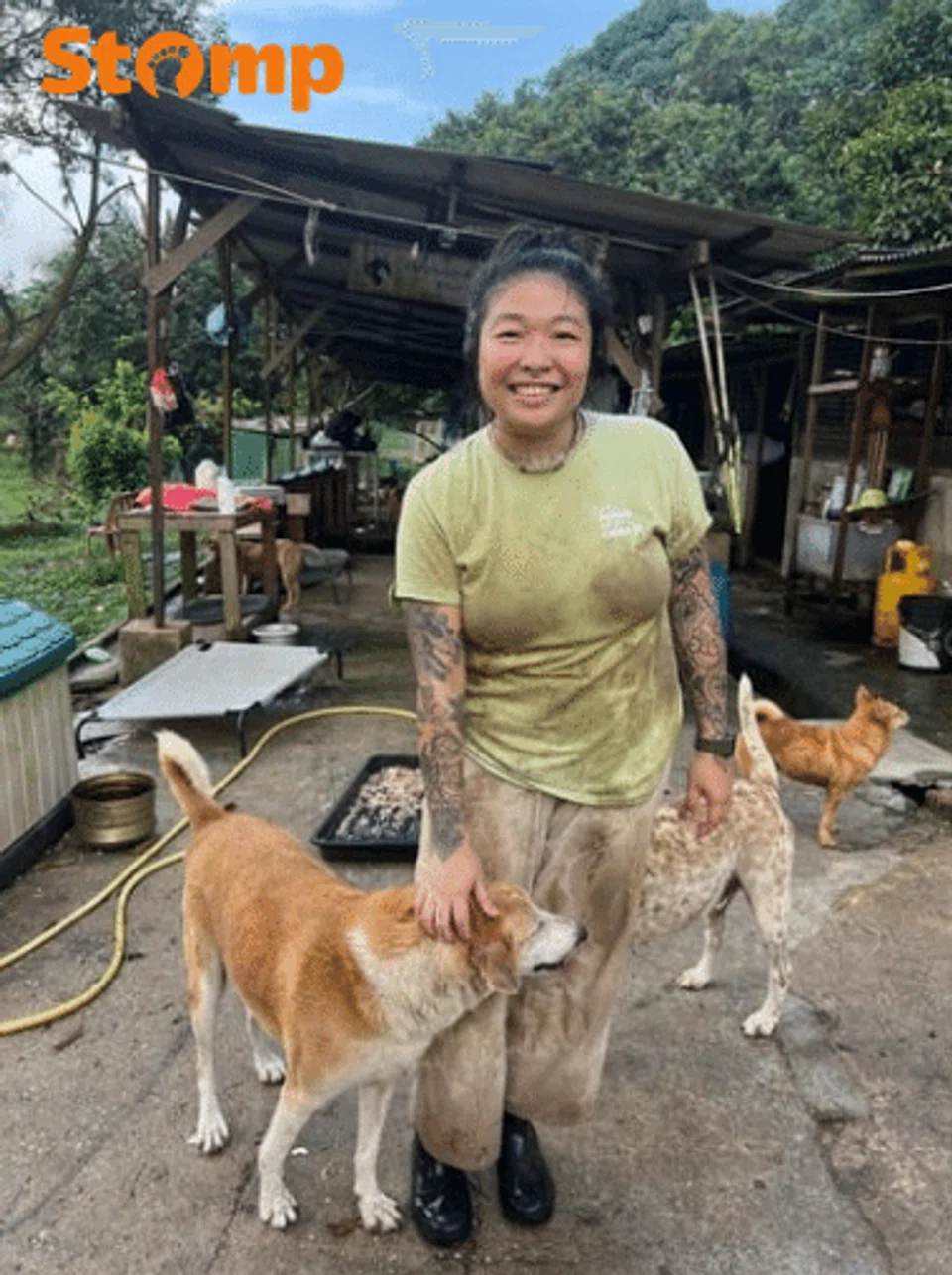
Cares JB shelters care for about 200 to 300 dogs, and another 100 or so cats. Perpetual resource constraints and insufficient funding mean that conditions at the shelter are far from ideal.
Ms Lim noted that dogs do not have individual kennels and can get into fights that lead to deaths. The overcrowding also leads to illness spreading rapidly, such as a recent strep zoo infection — a highly contagious bacteria — that led to the deaths of 15 dogs.
She estimated that some 20 Singapore residents volunteer at Cares JB: walking the dogs, showering them, and taking them to the vet. They have been criticised by those who think Ms Lim and fellow volunteers should help animal rescue efforts in Singapore.
But for Ms Lim, street dogs are street dogs, no matter which country they hail from.
She helps bring in kibble from the Republic, takes Cares JB’s dogs to the vet for sterilisation, and assists with cross-border adoptions where Singapore residents adopt the shelter’s dogs in Johor Bahru and bring them back to Singapore.
One such dog is Blossom, a sweet creature with a friendly disposition whom Ms Lim is fostering. The one-year-old Malaysia Special was due to be adopted in a few weeks.
As thunder roared in the background, Ms Lim shifted her gaze to her bedroom, where Blossom was splayed on the ground. “You see, she’s scared,” Ms Lim noted, though she did not comfort the dog immediately.
This was a deliberate decision to allow Blossom the chance to manage her anxiety independently.
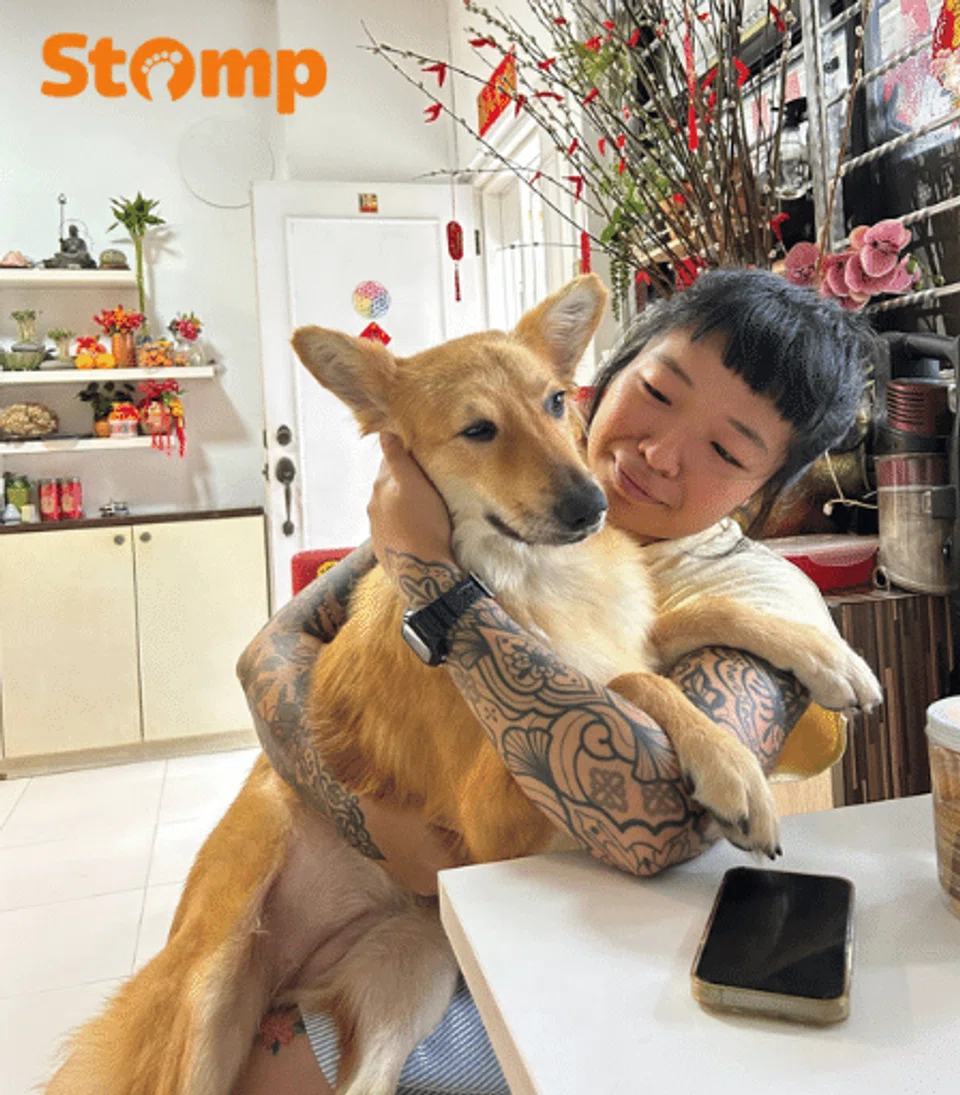
Eventually, when Blossom crawled out of the room, Ms Lim carefully scooped the dog up and sat it on her lap. “Oh dear, oh dear, are you scared? It’s okay.”
The husky that stuck through it all
Simba, a husky with a fluffy light brown and white coat, also lazed on the floor under the living room table throughout the interview. “He’s very neutral about the fosters and doesn’t get territorial,” Ms Lim remarked.
She had risked falling out with her parents to bring Simba home, after breaking up with her ex-boyfriend, whom she adopted and co-parented Simba with. As her parents did not want dogs in the house, she eventually moved out.
“My mum realised I was determined to keep Simba, and told me to move back in.”
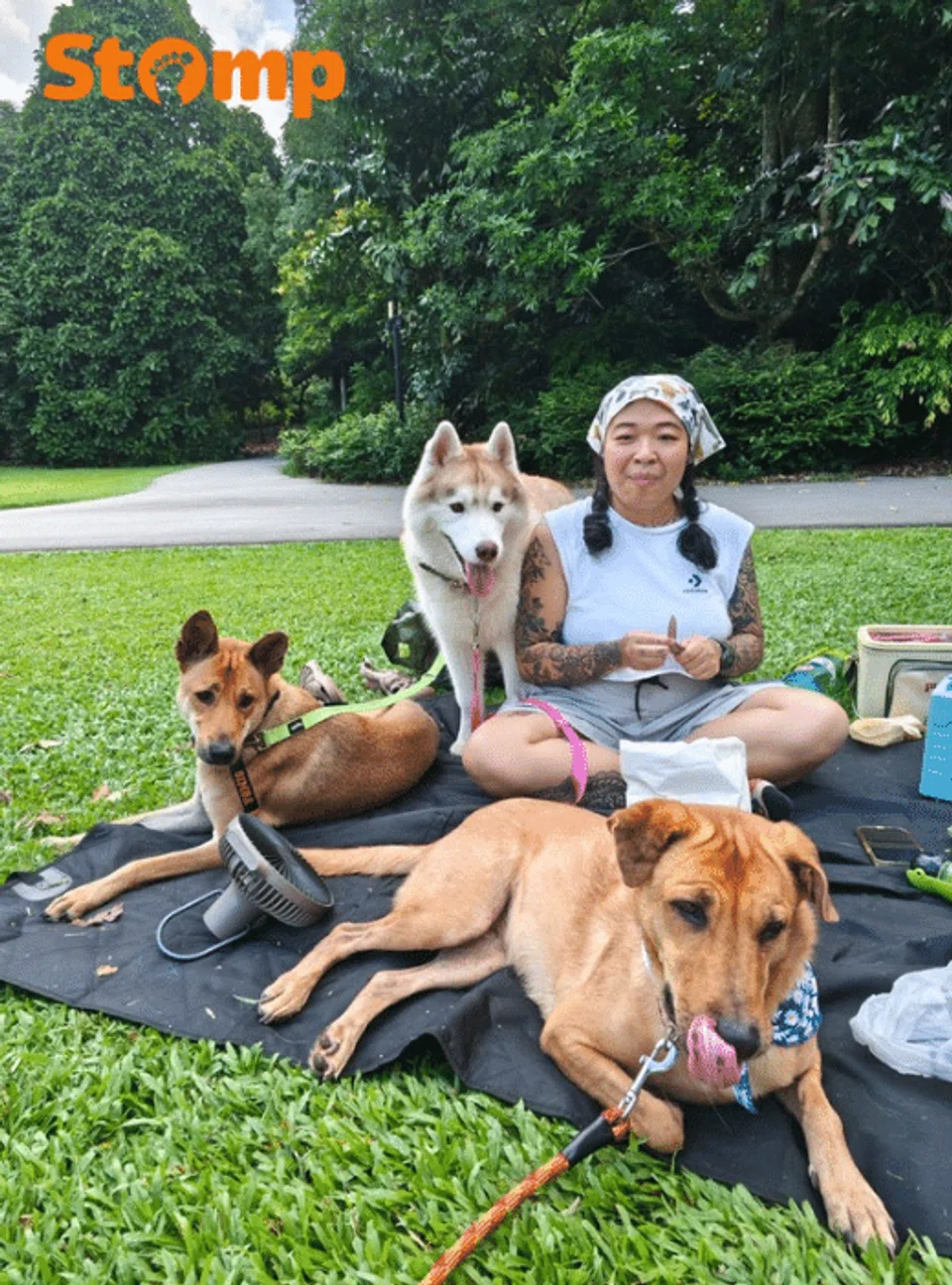
It took her parents more than a year, including the circuit breaker period in 2020, to warm up to Simba and her fosters. Now, Ms Lim’s parents love Simba as much as she does, and take care of him when she is in Johor Bahru.
Julio, Ms Lim’s late foster, also loved Simba, said Ms Lim as she gazed wistfully into the distance. She wrote in an Instagram post after Julio’s death last Feb, “If I could, I’ll take Simba and leave to find him wherever he is, just the three of us.”
With Simba, the feeling is the same. “When he dies, I will die.”
Editor’s note: This article has been amended to correct Ms Lim’s surname, which was previously reported as Sim.

Explore more on these topics
See something interesting? Contribute your story to us.
