‘I hoped he would make it’: Mum, 26, loses 8-month-old son to rare disease, later learns second baby has it too

Having already lost her first son to a rare genetic condition, Siti Nurhumaira hoped that her second child would be spared the same fate.
But four months into her second pregnancy, the 26-year-old policy officer at the Ministry of Law received devastating news: her unborn baby had the same condition — spinal muscular atrophy (SMA).
Humaira and her husband then had to make an incredibly difficult decision, just months after their firstborn’s death.
Today, as one of two recipients of the Berita Harian-Maybank Perkasa Award 2026 — which recognises Singaporeans who have overcome extraordinary life challenges — Humaira says she is “very thankful” for the short time she spent with her children, and chooses to show up for herself every day despite the grief.
A routine check that changed everything
What was supposed to be a routine medical check for her six-week-old son Zafir Omar Mohamed Fadhil turned out to be the beginning of a heartbreaking journey for the first-time mum.
Speaking to Stomp at her home, Humaira said a nurse had described her son as “flimsy”, a remark that initially made her defensive and angry.
However, during a subsequent hospital check-up two weeks later, a doctor raised similar concerns, noting that Zafir was not moving his limbs as actively as other babies his age.

After spending nearly a week in hospital undergoing various tests, Zafir was transferred to the paediatric unit, where Humaira and her husband were first informed that he might have spinal muscular atrophy.
SMA is a genetic disorder that causes progressive muscle weakness due to the loss of motor neurons in the spinal cord. Zafir was later officially diagnosed with SMA type 1, a severe form of the condition which typically presents within the first six months of life. Without treatment and supportive care, affected children often do not survive beyond the age of two.
The diagnosis came as a “bomb” to Humaira, who said she had experienced a normal pregnancy with no abnormalities flagged during her routine check-ups.
“I was just shocked because the past few weeks had been really fun. I was playing with him,” Humaira recalled, adding that the first few weeks of her son’s life felt otherwise normal.
She later learnt that SMA can sometimes be detected during pregnancy, although symptoms may also only become apparent after a baby is born.
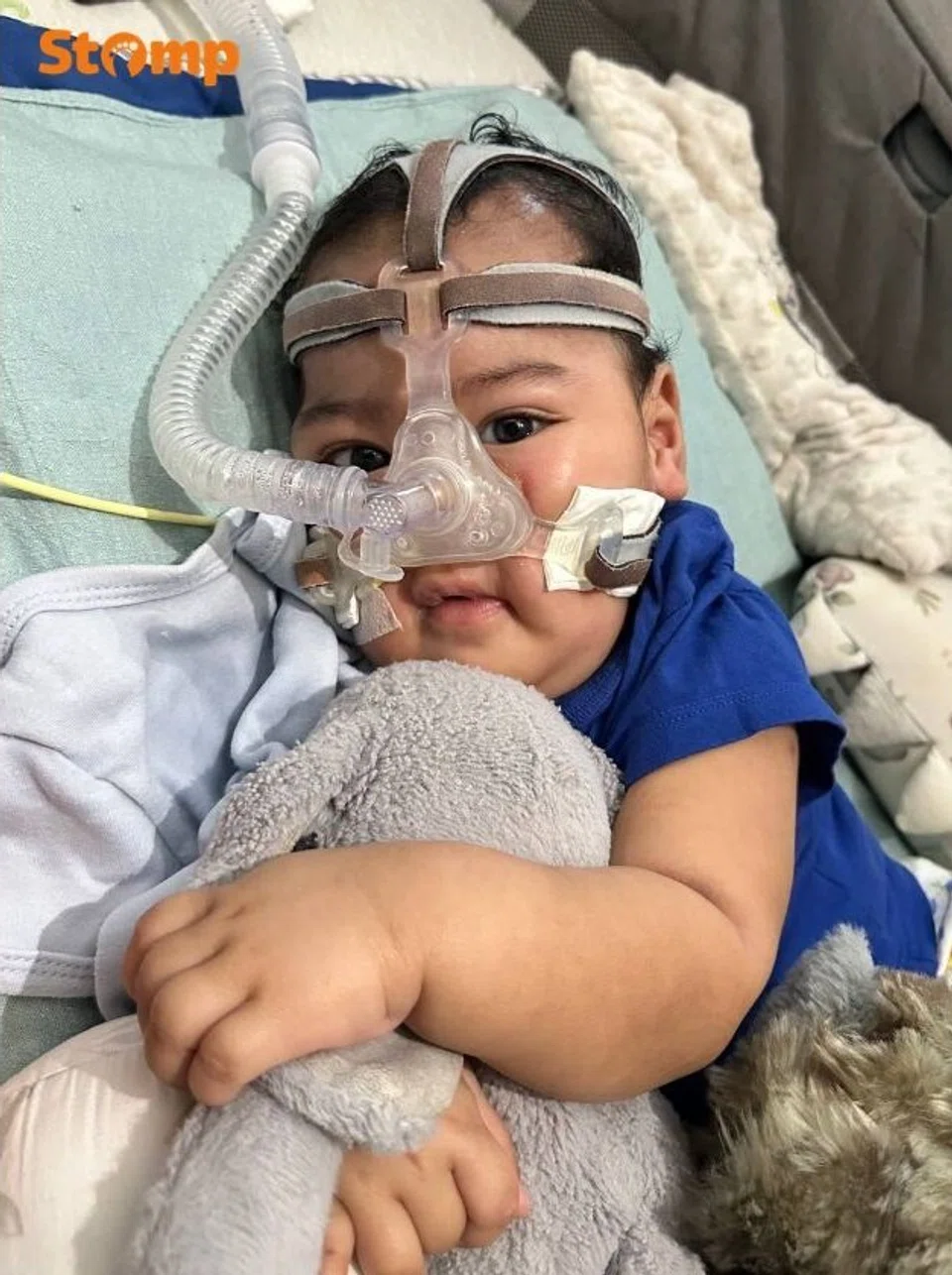
Zafir had to be placed on a feeding tube and given IV fluids, describing the experience as “very unpleasant” and “painful” to witness. He also struggled to pass stools, often crying due to the pain and deterioration of the muscles involved.
Considered crowdfunding for $2.4million treatment
While exploring their options, doctors informed the couple about other children with SMA whose families had successfully raised $2.4 million through crowdfunding to fund treatment.
The treatment, Zolgensma, is the world’s most expensive drug and administered as a one-time gene therapy infusion.
However, the couple’s plans to crowdfund for the treatment came to a halt when doctors told them that Zafir’s condition had deteriorated significantly, and the damage caused by the disease could not be reversed.
Even if he received the treatment, he would remain bedridden for the rest of his life.
“My heart just sank,” said Humaira.
“I wanted a different future for Zafir, but when the doctors told us that he’s going to be bedridden for his whole life, that was something I couldn’t handle.”
The couple eventually decided that palliative care would be the best course of action for their son.

‘I wish I had SMA instead’
The first time Humaira broke down in tears after Zafir’s diagnosis was when a nurse approached her and asked if she was okay. There was even a time she told her husband she wished she had been diagnosed instead.
“I wish I had SMA instead. God, please give me SMA and not him,” she said tearfully.
“I don’t mind passing away and sacrificing for him. Let him have his future.”
Despite the challenges, Humaira and her husband did their best to ensure Zafir was well cared for and comfortable. They tried maintaining some semblance of normalcy by taking him out for meals, visits to the zoo and even staycations.
Whenever they took Zafir out, he still needed to be connected to a breathing machine and feeding tube, often drawing stares from those around them.

At home, the couple also had to regularly suction his saliva as he had become unable to swallow it on his own.
Zafir’s condition eventually worsened, with the time he could spend outdoors shortening from an hour to just 20 minutes. He also began losing consciousness due to the intense pain he often experienced.
However, the couple never expected their son’s final day to come so soon.
One morning in April, Humaira had taken Zafir out for breakfast and a walk. Later that evening, as she was preparing to head to the gym, he began crying and his face started turning dark.
She soon became concerned when his crying persisted and his heart rate continued to rise. She and her husband quickly connected him to his oxygen machine in an attempt to stabilise him.

Eventually, Zafir stopped crying and appeared to fall asleep.
About an hour later, the couple realised they could not wake Zafir and called the doctor, who instructed them to check whether his chest was moving after disconnecting the oxygen machine.
When they found no movement, the doctor informed them that their son had passed away.
Zafir died on April 28 at just eight months old with both his parents by his side.
“I didn’t know that would be his last day,” she said. “I was so hopeful that he was going to at least make it to his first birthday.”
Although the loss was “extremely heartbreaking”, she was relieved that his suffering was over and told him: “Have fun and be happy, I’ll be there with you one day.”

Second baby had the same condition
Humaira unexpectedly fell pregnant again a month after Zafir’s death, and said she and her husband were happy about the news.
When she was four months pregnant, the doctor suggested that they undergo genetic testing to check whether her second baby had SMA. He said it was rare for consecutive pregnancies to be affected, but would be worth the reassurance.
An amniotic fluid test later confirmed that their second son had the same condition.
Not wanting to go through the same ordeal they had experienced with Zafir, they made the difficult decision to terminate the pregnancy at five months.
“The baby’s features were all fully developed. We even knew the gender,” she said.
Humaira admitted to feeling “angry” after everything she had been through, but held out hope that she and her husband would one day be able to grow their family.

Began running to cope with grief
Although Humaira had always led an active lifestyle, she said she lost interest in going to the gym while caring for Zafir. After his death, she turned to running as a way to process her grief.
“After my son passed, I started running longer and longer,” she said, describing it as a way of moving forward even though she felt stuck in time.
She can now comfortably run half-marathon distances.
Having documented her running journey on social media, Humaira said she hopes to inspire more women to take up the sport. She also works as a fitness coach part-time, conducting two sessions a week while fitting in her own training regularly.
More recently, Humaira has started pursuing her interests, including working on her own activewear brand, Gleora.
“Right now, I’m just continuing to show up for myself,” she said.
After Zafir’s death, she admitted that she had wanted to give up, questioning the point of pursuing her ambitions.
But Humaira eventually realised that this was not what Zafir would have wanted for her.
When asked whether she received support from her family during this difficult period, Humaira said she had always been independent and disliked asking for help as she did not want to burden others.
Despite this, she remains close to her mother and said becoming a mother herself had deepened her empathy for her.
Growing up, Humaira regarded her mother as a “superhero” who single-handedly provided for the family, often working two to three jobs without letting her children see how much it affected her.
Motherhood, she said, is about “pushing through while also loving someone more than you love yourself, to the point where you don’t even care about your emotions or energy”.
Dedicates Berita Harian-Maybank award to her son
Earlier this month, Humaira received the Berita Harian-Maybank Perkasa Award,in recognition of her resilience in overcoming significant socioeconomic challenges.
Humaira said she was surprised to be nominated for the award, as she did not feel deserving of the recognition at the time.
She later found out that it was her husband who had put her name forward.

Grateful for the award, she said it meant that her story had been heard and that she would use it to raise awareness among parents facing similar challenges.
“I dedicate this award to my baby,” she said, adding that the experience of having Zafir had shaped her.
“Being with him was one of the most beautiful experiences of my life.”

Explore more on these topics
See something interesting? Contribute your story to us.
