3rd-generation owner of 80-year-old restaurant jokes his dad doesn't get why Google reviews matter

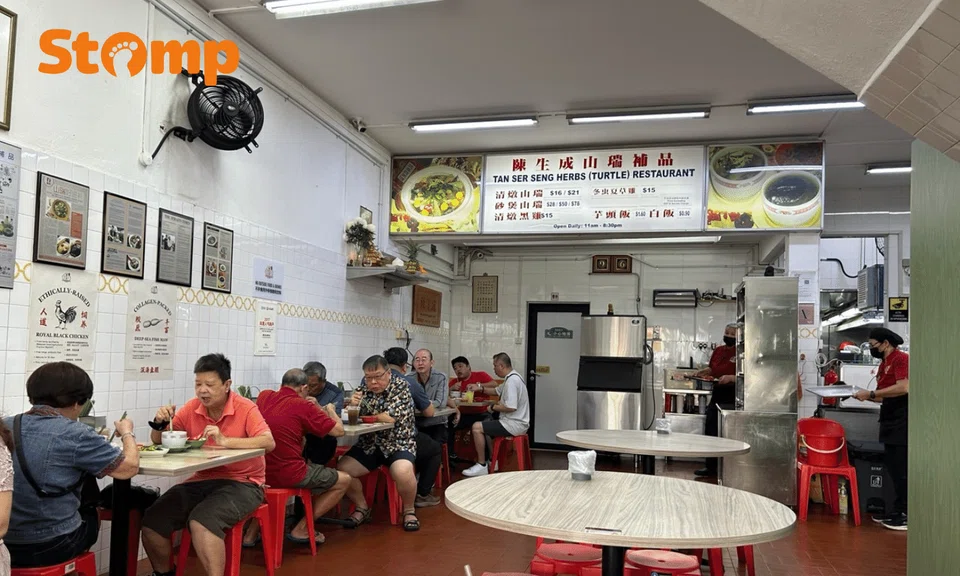
Tan Ah Sai founded Tan Ser Seng Herbal Soup in 1946 with one signature dish on the menu — turtle soup, brewed to give coolies strength.
Almost 80 years later, the restaurant is in the hands of its third generation owner, Tan Ah Sai’s 34-year-old grandson Allan Tan, who is aggressively trying to modernise the brand while shouldering its immense legacy.
A tough job, it might seem, in a year that’s seen many food and beverage (F&B) businesses closing down.
Stomp spoke to Allan from his office (and former bedroom) on the second floor of the restaurant at Lorong 21 Geylang, where his family used to live.
His earliest memory of the restaurant was when he was five or six. The family had just moved to Geylang from Eunos, and the restaurant’s dining area and kitchen doubled as his playground.
Allan remembers sweeping the floors during school holidays, occasionally knocking into customers and getting yelled at by them. His mother would smooth over those mini-accidents with frantic apologies.
With his parents juggling long hours and a formidable age gap of 15 years between him and his sister, the shop became the place he wandered, played and eventually worked for extra pocket money to fund his travels.
“My entire childhood was here,” said the soft-spoken owner.
Unlike many traditional family businesses, Allan’s parents did not force him to take over.
“I think that my mum actually didn't want me to take over because she thinks that the F&B business is very tough,” said Allan.
Allan admits his job isn’t “sexy”. A typical day begins at 3am and continues long after that – broths are simmered for 12 hours and then double boiled for an additional two hours.
Despite the challenges, he made the decision to run the family business “purely” on his own.
Sister didn't have choice
His sister, however, didn’t have the same luxury. While completing an internship after university, their father had “randomly” called her and threatened to sell off the business if she did not join.
Allan said sheepishly: “So she really had to literally quit her job on the spot and then come to take over the business the next day.”
Based on his easy-going manner, one gets the sense that there’s no hard feelings between the family members. Today, Allan’s sister oversees R&D while her husband manages operations and human resources.
Together with Allan, they are the only three people who know the recipe that’s traditionally been passed down only within the family.
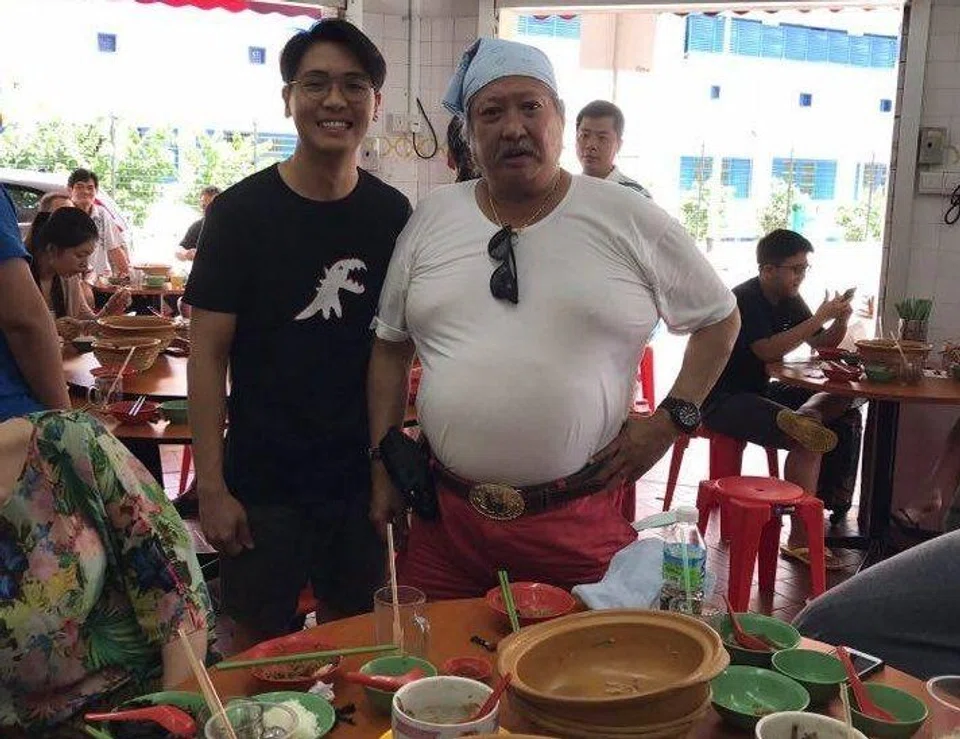
By now, Tan Ser Seng has fed the likes of Sammo Hung, but when Allan officially stepped into the business at 26, the gig was far from ideal.
The restaurant was doing well, but “chaotic”, in Allan’s words. There were no protocols and much of the restaurant operated on an “old mentality” — “if there’s nothing wrong, then don’t fix it.”
“I felt that the efficiency wasn't up to pace,” Allan says. “The full potential couldn't meet my expectations, so I had to redo the entire process.”
Over the next eight years, the quiet but driven heir modernised the kitchen and worked on improving processes. He also took on the tricky task of bringing the heritage brand into the present, a process that required navigating generational differences at home.
Allan jokes about how his father, for instance, still cannot understand why online Google reviews matter.
“During his time, if customers asked for more things or complained, he would just ask them to ‘eff off’,” Allan laughs. “But they would still come back the next day.”



His father would constantly advise him to ignore negative reviews. After all, if someone did not have a good experience, that's their subjective experience.
But as any digital native will know, reviews on Google and social media are crucial to helping a business stay afloat.
Young diners want Instagram vibes, not just soup
Allan’s well aware that his soups can feel “old school” to younger customers.
Many mistakenly assume he uses endangered sea turtles, a misconception he wastes no time in correcting during the interview.
“In fact, sea turtles are poisonous. We are using fresh water turtles, like soft shell turtles that are bred for consumption,” he clarifies.
He displays a keen awareness of how intimidating the restaurant’s star soups can be to newcomers, so he never forces it onto them. Instead, he usually tells first-timers to try the broth before deciding if they want to move on to the meat.
To him, the taste of turtle meat sits “somewhere between chicken, pork and fish — sweet, collagen-rich, slightly herbal.”
Over the years, Allan has noticed a clear generational divide.
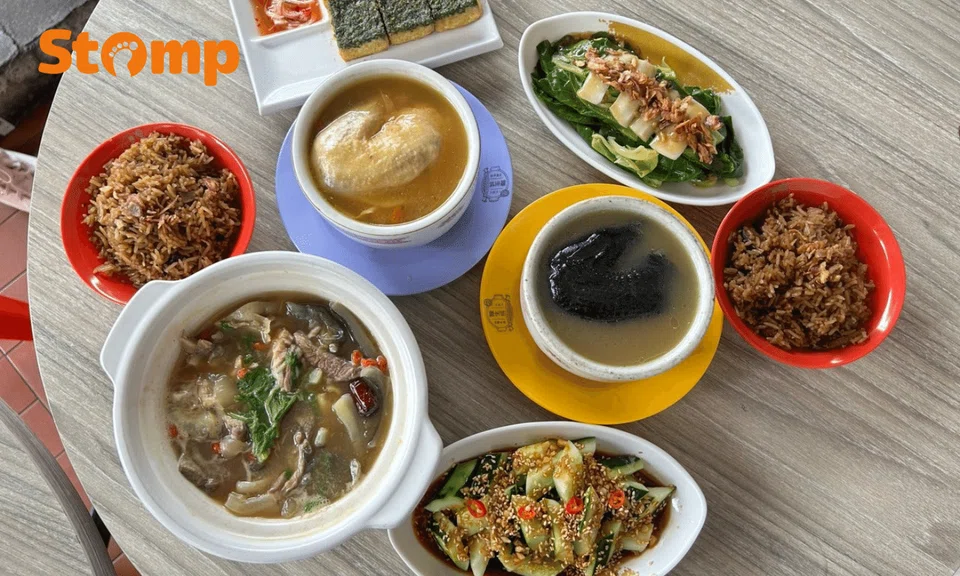
Older diners prioritise honest, hearty food and care less about ambience or service. Younger diners want the whole package: good flavours, quality service and dishes that photograph well.
Like any forward-looking business owner, the turtle soup heir is adapting accordingly.
Tan Ser Seng’s upcoming outlet, slated to open next year, will introduce new dishes inspired by a variety of traditional Chinese medicine remedies, updated crockery and a more modern presentation.
It will still be traditional at its core, but friendlier to the Gen Z diners that the business is courting.
Who will take over after him?
With Singapore’s aging hawkers and declining birth rate, many heritage brands have vanished simply because no successor came forward. Earlier this year, Very Lucky Turtle Soup at Berseh Food Centre shuttered due to its founder’s health problems.
Does any of this make Allan worry about the long-term sustainability of his career choice and his family’s legacy? This question seemed to give Allan some pause.
“I haven't thought about it this far, but I guess I will just continue doing what I do for as long as I can,” he eventually admitted.
“If my niece is interested in the future, I’m open,” he added before floating the possibility that the business, including the family’s secret recipes, could also be passed down to any trustworthy person who shares his passion for food and heritage.
To Allan, the more pressing concern is the long-term loss of food culture.
With the constant announcements of F&B closures every year, and the influx of foreign businesses reshaping the local food scene, Allan worries that future generations may grow up disconnected from the dishes that shaped Singapore’s distinct culinary identity.
“Many places are closing. If we don’t appreciate our food culture, it will disappear,” he says.
“One day, the next generation might not even know what char kway teow is.”
For now, the legacy of heritage businesses like Tan Ser Seng may seem uncertain, but it looks like Allan is determined to carry on with his grandfather’s good work for as long as humanly possible.

Explore more on these topics
See something interesting? Contribute your story to us.
