Praise or party? Viral concert-style service raises questions on modern worship

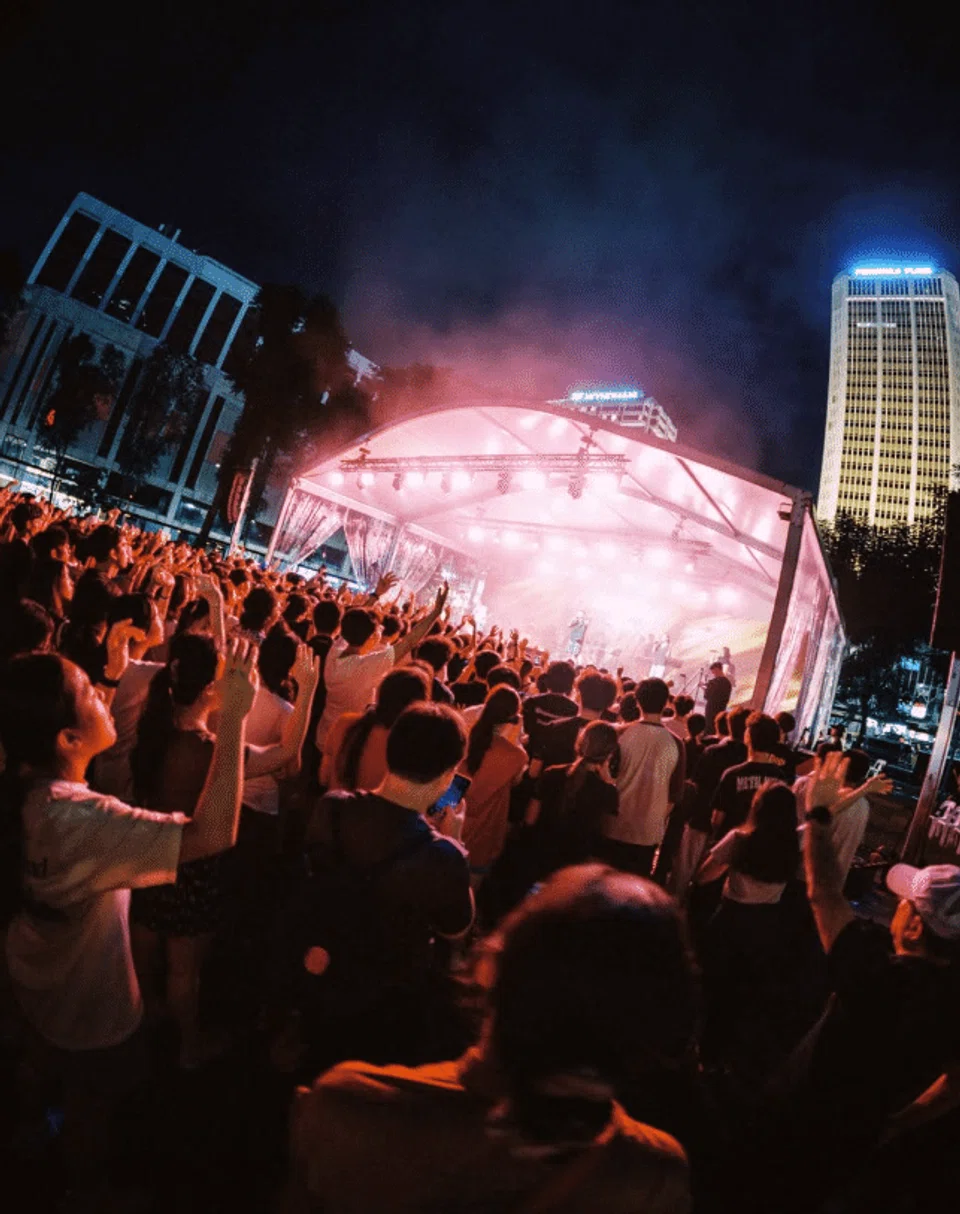
A viral TikTok of a Christian outdoor worship event — complete with flashing lights, loud music and thousands of jumping youths — has reignited debate about how worship in Singapore is evolving.
The clip posted by @thir.st and filmed at the Festival of Praise (FOPx) on Oct 25 at St Andrew’s Cathedral’s West Lawn, left some viewers wondering: “What’s the difference between this and a nightclub?”
But churches aren’t alone. Temples, mosques and Buddhist groups in Singapore are also rethinking how worship looks, sounds and feels — especially when engaging younger believers raised on TikTok, Spotify and YouTube.
'What’s the difference between this and a nightclub?'
According to FOPx’s website, the annual worship and prayer night has been held since 2017, describing it as a “mid-year huddle on National Youth Day", where they come together to "throw a celebration like none other".
Across Singapore, many contemporary Christian services already use live bands, lighting effects and multimedia elements, based on Stomp’s checks of various churches’ social media pages.
While such formats are designed to engage younger congregants, some religious leaders emphasise that modern expressions must still be grounded in the meaning and discipline of worship.
They also say looks can be deceiving: modern styles don’t automatically mean shallow worship.
Are Christian churches becoming concert halls?
Dr Judith Laoyan-Mosomos, director of worship and church music at the Methodist School of Music (MSM), told Stomp that Christian churches today span a wide range of worship styles.
Each congregation’s style, she noted, has “developed over time in response to its context and people”.
However, music must still serve a “theological and pastoral function”, added Dr Laoyan-Mosomos, who's a member of Kampong Kapor Methodist Church.
She acknowledged the “valid concern” that flashy services can risk becoming entertainment, but stressed that planning must start with theology, not taste.
TK Teo, worship ministry lead and music director at Paya Lebar Chinese Methodist Church (PLCMC), told Stomp that the church primarily uses a “contemporary worship style”, featuring a full band, modern arrangements and songs from both local and international ministries.
The 28-year-old — also a Christian content creator known as @thatworshipkeyboardist — said this approach has “developed naturally” over the past decade. He added that the risk of worship turning into entertainment is something many churches “continue to wrestle with”.
Young Christians bring “energy, authenticity and digital fluency”, he said, and the challenge is to channel that toward reverence rather than spectacle.
Dr Laoyan-Mosomos added that as congregations continue shaping worship around their contexts, any changes must be carefully guided through communication, teaching, and pastoral care.
Young Hindus embracing more expressive worship styles
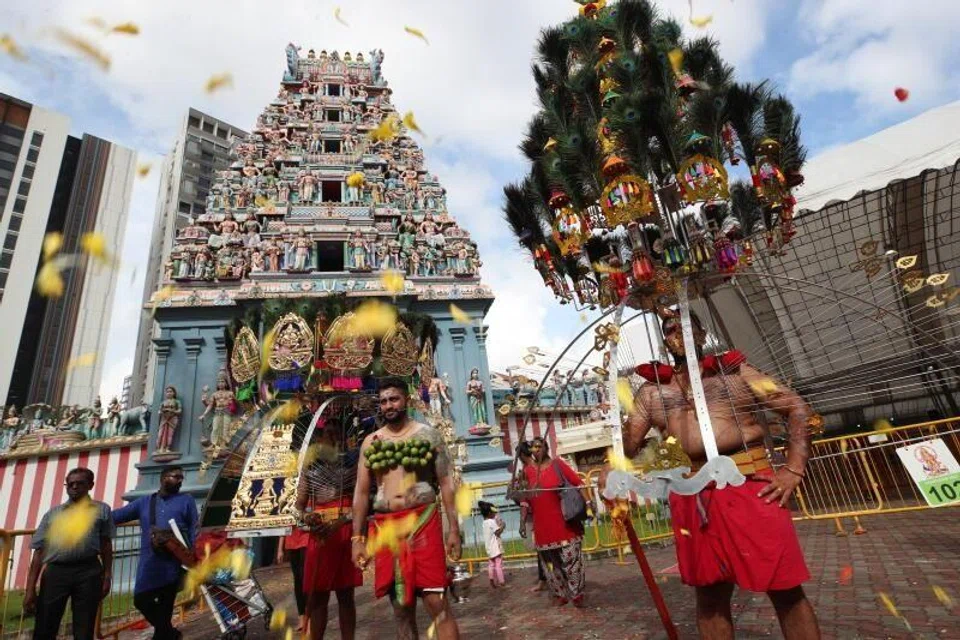
In Hindu communities, devotional practices are also shifting.
Tirupathi Karthik, 57, a Vedanta teacher and Hindu Centre management committee member, said Hindus have always had “complete flexibility” in choosing how to express devotion, whether through rituals, temple worship or festival celebrations.
But younger Hindus today are gravitating toward a more “evocative and expressive style of devotion", he said. This includes devotional gatherings that are often perceived as bhajan concerts or music festivals, blending tradition with contemporary expression, and even Indian dance forms incorporating yoga asanas.
This mix, he said, “sheds the tag of tradition while preserving its intent — both in spirit and musical form", and appears to resonate with younger devotees.
The Hindu Centre actively monitors these shifts and adjusts its youth engagement accordingly to stay relevant.
While he acknowledged there's a “gradual weakening” of some ancient traditions, music continues to play a central role. While Bollywood-inspired music attracts younger audiences, Mr Karthik emphasised that classical forms like Carnatic and Hindustani still offer a deeply spiritual path rooted in bhakti (devotion).
“Many youngsters today have an open mind,” he said, “and want to understand the reasons behind rituals and the rationale for their performance.”
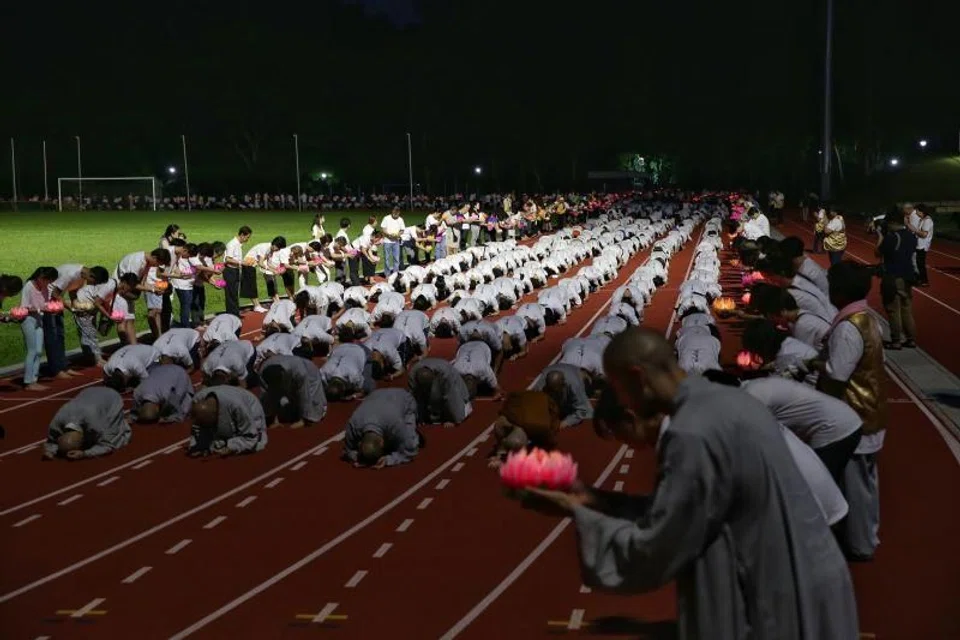
Buddhist temples reaching out to younger audiences via social media
Buddhism, meanwhile, is adapting in quieter ways.
Dav, 36, a lifelong Buddhist, said worship in Buddhism looks very different from the energetic forms seen elsewhere: the focus is not on worshipping a deity — or even the notion of worship itself.



Instead, said the public servant, it is about following the teachings (Dhamma) of the Buddha, what they mean, and how they can be applied in daily life. These teachings include gratitude, respect and compassion.
Chanting and bowing help steady the mind and cultivate respect or humility, while offerings such as flowers serve as reminders of the "impermanence of life", he added.
Over-the-top displays and indulgent practices are unlikely to take root, he explained, because they run “against the grain” of Buddhist values of encouraging a simple way of life.
While interpretations of these practices can vary across denominations, there is no pressure for practitioners "to pray or behave in a certain way".
At the same time, Buddhist societies and temples, such as the Golden Pagoda, now use social media, live-streamed ceremonies and youth programmes to connect with younger Singaporeans.
However, Dav cautioned that attempts to appear “hip and trendy" might end up "blurring the core beliefs and principles of a religion".
"People end up being more invested in these hip and trendy things without understanding or even associating them with religion," he said.
Islamic worship 'simple and focused'
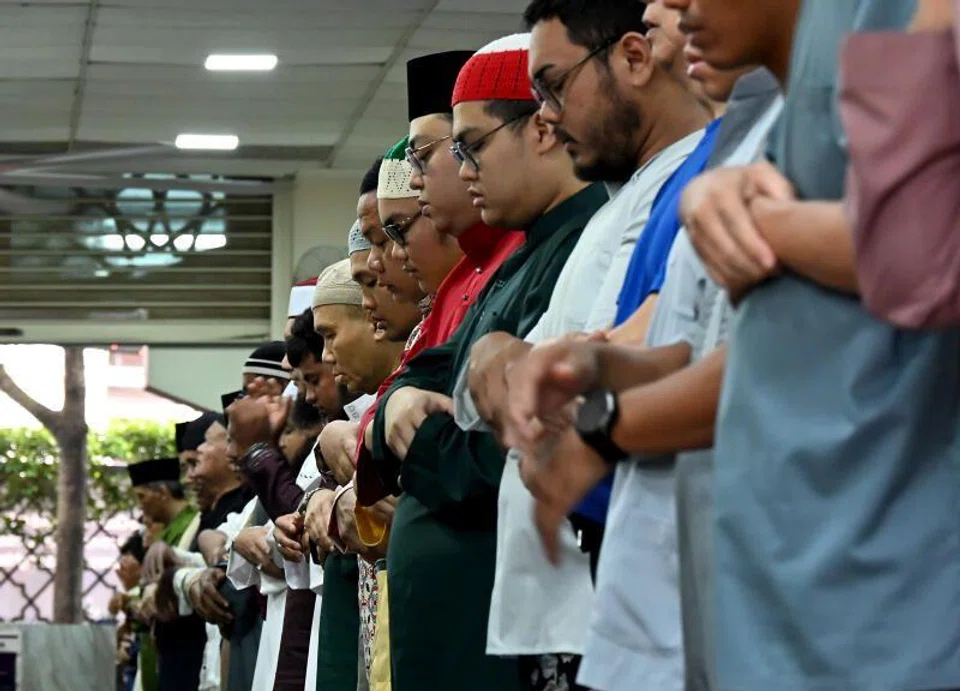
For Muslims, worship tends to remain "simple and focused", typically without incorporating music in prayer spaces, said Omar, a 57-year-old engineer.
The emphasis, he explained, is on "sincerity, humility, and remembering God without distractions. Emotional expression is still there, just in a quieter way".
The structure of Islamic worship keeps believers "grounded," he said, noting that life is chaotic and unpredictable and that the rhythm of worship provides an "anchor".
But mosques are also expanding their digital presence — through youth programmes, social media outreach and talks — to reach younger Muslims.
"There's an effort to meet young Muslims where they already are," he said.
"Worship is worship," Omar said. "Every faith has its own way of connecting to the divine. I don't judge how others find meaning. I think for me, what matters is sincerity."
Devotion and entertainment can coexist
Religious expert Ng Teng Kuan of Singapore Management University noted that worship has become "increasingly digitised" over the past decade, with many believers now learning rituals and practices through online platforms.
He explained that while religious traditions have long shaped wider culture, worshippers have also continually “drawn on, adapted to, and been transformed by broader culture”.
It is therefore natural, he said, that worship today “reflects prevailing styles and genres of performance”.
In Singapore, large-scale Christian worship concerts have typically been held indoors, at venues such as the National Stadium or Singapore Indoor Stadium. Outdoor events like FOPx may simply signal churches' desire to make a bold "public statement of their faith" or to reach people through music in a more visible way.
From a religious studies perspective, Prof Ng said scholars do not draw normative lines between “authentic" worship and "entertainment". Instead, they examine how the two often coexist.
Prof Ng suggested that a “pragmatic effect” is valued across many traditions — that what ultimately matters are the "practical, embodied consequences of worship", regardless of its outward form.
The “performativity of worship” today signals an ongoing pluralisation — a widening of what religion can look like, sound like, and where it can be encountered.
As a result, he said, religious communities are becoming more open to styles of worship that might have once been dismissed as "unauthentic or improper".
Worship in Singapore is evolving
This shift doesn’t necessarily dilute devotion.
As Prof Ng and other worshippers note, Singapore’s religious communities are finding new ways to engage younger generations while preserving the core of their practices.
For many believers, the blend of tradition and contemporary expression simply reflects how faith adapts to changing times — and how worship continues to evolve while staying meaningful.

Explore more on these topics
See something interesting? Contribute your story to us.
